• → European Space Agency

      • Space for Europe
      • Space News
      • Space in Images
      • Space in Videos
    • About Us

      • Welcome to ESA
      • DG's News and Views
      • For Member State Delegations
      • Business with ESA
      • ESA Exhibitions
      • ESA Publications
      • Careers at ESA
    • Our Activities

      • Space News
      • Observing the Earth
      • Human Spaceflight
      • Launchers
      • Navigation
      • Space Science
      • Space Engineering
      • Operations
      • Technology
      • Telecommunications & Integrated Applications
    • For Public

    • For Media

      • Media
      • ESA TV
      • Videos for professionals
      • Photos
    • For Educators

    • For Kids

    • ESA

    • Launch Special

    • Herschel

    • Planck

    • ESA Science

    • About Herschel

      • Herschel at a glance
      • Science objectives
      • Herschel highlights
      • History of infrared astronomy
    • The infrared Universe

      • Why the infrared?
      • More about the infrared
      • The infrared revolution
    • Spacecraft and telescope

      • Vital stats
      • The largest infrared space telescope
      • Instruments
      • Cutting-edge spacecraft
    • The mission

      • Journey
      • Early operations
      • Operating Herschel
    • Meet the team

      • Herschel Project Scientist: An interview with Göran Pilbratt
      • Herschel and Planck Programme Manager: An interview with Thomas Passvogel
    • Multimedia
    • Herschel images
    • Herschel videos

    ESA > Our Activities > Space Science > Herschel

    Herschel resolves the cosmic infrared fog

    Previously unseen galaxies revealed to ESA's Herschel
    6 May 2010

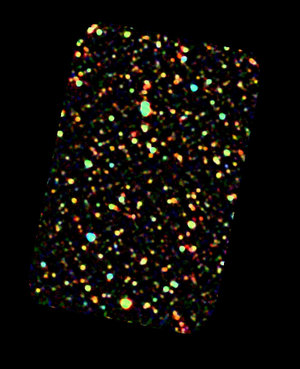
    ESA’s Herschel space telescope has discovered that previously unseen distant galaxies are responsible for a cosmic fog of infrared radiation. The galaxies are some of the faintest and furthest objects seen by Herschel, and open a new window on the birth of stars in the early Universe.

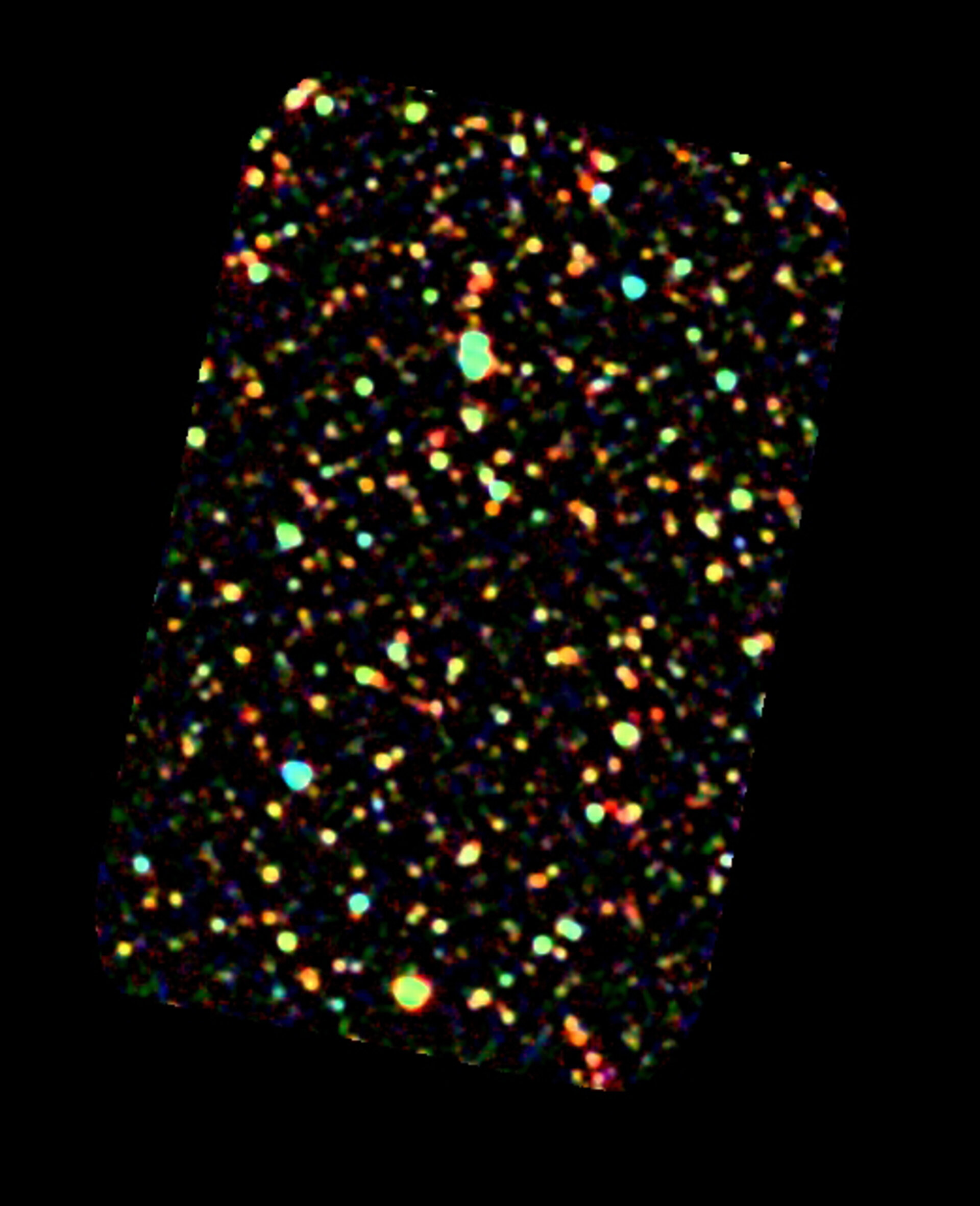
    In the mid-1990s, astronomers discovered that a faint fog of infrared radiation bathes the Universe, and termed it the cosmic infrared background. Herschel is the first telescope to resolve most of the blur into individual celestial objects.

    Herschel made its observations in October 2009 and January 2010. It targeted two regions of the sky, one known as GOODS-North, the other GOODS-South. The latter is the most sensitive far-infrared image yet taken by Herschel. The GOODS fields are designated for studying the distant Universe and have been extensively investigated by other observatories. Neither contains nearby celestial objects, allowing telescopes to see straight out into the deepest regions of space. Herschel resolved the cosmic infrared background into 300 previously unseen galaxies in GOODS-N, and 800 of them in GOODS-S. Together, these galaxies contribute more than half the power to the infrared background in these regions.

    The galaxies are young, some of them seen at a time when the Universe was just 16% of its present age. They are forming young stars, in some case up to thousands every year. Our own Galaxy forms an average of just three per year.

    “We can use these results to study what controls star formation in these distant galaxies, and how galaxies like our Milky Way formed,” says Dieter Lutz of the Max Planck Institute for Extraterrestrial Physics, Garching, Germany, head of the PEP European collaboration that obtained the data.

    Contact

    Dieter Lutz
    Max Planck Institute for extraterrestrial Physics
    Tel: +49 89 30000 3614
    Email: lutz @ mpe.mpg.de


    Editors’ Note

    GOODS stands for Great Observatories Origins Deep Survey.

    Rate this

    Views

    Share

    • Currently 0 out of 5 Stars.
    • 1
    • 2
    • 3
    • 4
    • 5
    Rating: 0/5 (0 votes cast)

    Thank you for rating!

    You have already rated this page, you can only rate it once!

    Your rating has been changed, thanks for rating!

    94
    Tweet
    • Herschel: ESA's giant infrared observatory
    • More on Herschel First Results
    • Herschel overview
      • Notes to editors
        • Other Herschel First Science Stories
        • Online Showcase of Herschel Images OSHI
        • Herschel on YouTube
        • Inside Herschel
        • Herschel mission objectives
        • Related articles
          • Herschel spots comet massacre around nearby star
            • Fledgling stars flicker in the heart of Orion
              • A New View of an Icon
                • Herschel and Planck win the French Grand Prix
                  • Herschel finds a hole in space
                    • Herschel reveals the hidden side of star birth
                      • Herschel takes the temperature of an interstellar cloud
                        • Tracing the Milky Way’s hidden reservoirs of gas
                          • Herschel resolves the cosmic infrared fog
                            • Baby stars in the Rosette cloud
                              • Inside the dark heart of the Eagle
                                • Herschel views deep-space pearls on a cosmic string
                                  • Herschel and Planck pass in-orbit 'exam'
                                    • Herschel images promise bright future
                                      • Herschel’s daring test: a glimpse of things to come
                                        • Herschel cryocover is open
                                        • Read more
                                          • Observations: Seeing in infrared wavelengths
                                            • Why infrared astronomy is a hot topic
                                              • L2, the second Lagrangian Point
                                              • In depth
                                              • This article in depth
                                              • Herschel in depth
                                              • Herschel first science results in depth
                                              • Herschel Science Centre

    Connect with us

    • RSS
    • Youtube
    • Twitter
    • Flickr
    • G+
    • Facebook
    • Livestream
    • Subscribe
    • App Store
    • LATEST ARTICLES
    • · Rare merger reveals secrets of gal…
    • · Watching for hazards: ESA opens as…
    • · ESA astronaut Timothy Peake set fo…
    • · Space drives e-mobility
    • · Proba-V opens its eyes
    • FAQ

    • Jobs at ESA

    • Site Map

    • Contacts

    • Terms and conditions