Herschel readies itself for the Orion Nebula
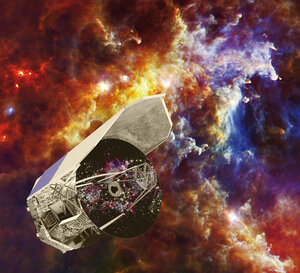
ESA’s Herschel observatory is back to full operation following the reactivation of its HIFI instrument. HIFI, having been offline for 160 days while engineers investigated an unexpected problem in the electronic system, is now perfectly placed to resume its study of forming stars and planets.
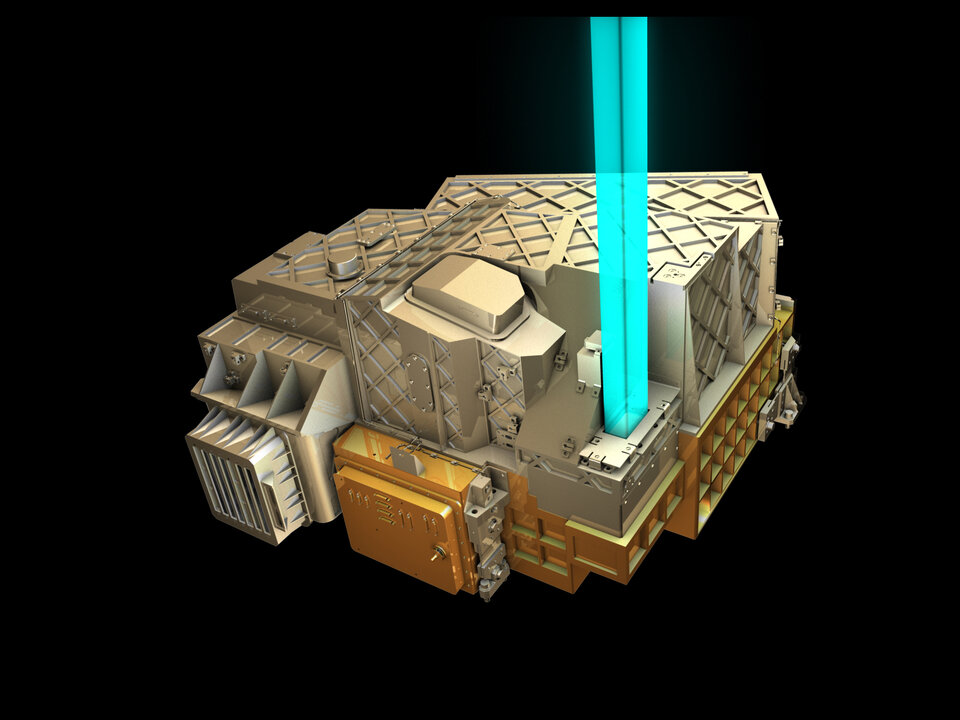
HIFI, the Heterodyne Instrument for the Far Infrared, was built specifically to observe water in a variety of celestial objects. Its first observation, on 22 June 2009, showed that it was performing beyond its design specification. However, by 3 August 2009, something was clearly wrong and the instrument team and ESA had to decide what to do.
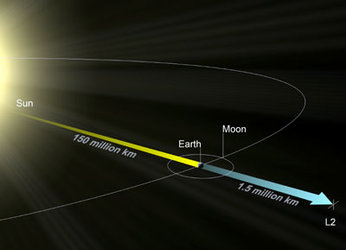
Herschel is stationed 1.5 million kilometres from Earth, directly away from the Sun, and way out of the reach of astronauts. “With Herschel we can’t just go up there and fix it, we have to nurse it back to health,” says David Southwood, ESA’s Director of Science and Robotic Exploration. That nursing took 160 days of concentrated effort from an expert team of engineers.
Firstly, the decision was made to shut down the instrument and begin a ‘forensic’ investigation to discover what had caused the problem. By December, it was apparent that an electronic component called the Local Oscillator Control Unit (LCU) had been damaged by an unexpected voltage surge, probably the result of a cosmic ray having interfered with an onboard computer.
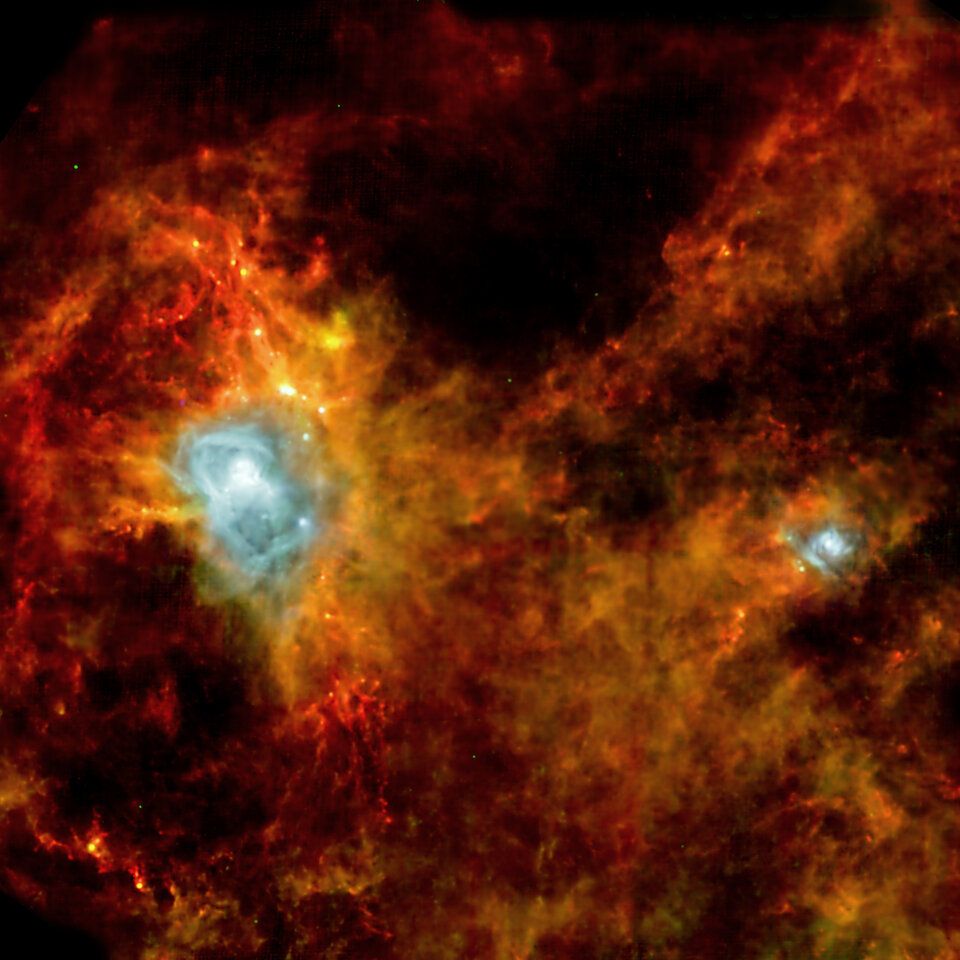
By a piece of cosmic good fortune, HIFI’s priority targets were out of view during the investigation. This is because Herschel sees different parts of the Universe throughout the year, as it orbits the Sun. “We knew our priority targets were only coming into view from late January onwards. So the teams took a deliberate decision not to rush the rescue attempt,” says Prof. Southwood.
Secondly, once the problem had been identified, new software was written to prevent a similar event causing another voltage spike. Then the painstaking reactivation sequence was started, using Herschel’s backup LCU. Now, the instrument is fully functional once again.
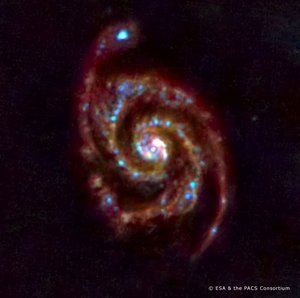
“Thanks to rescheduling of targets, virtually no science data will be lost,” says Prof. Southwood. Whilst HIFI was down, mission controllers made full use of the other two instruments, PACS and SPIRE.
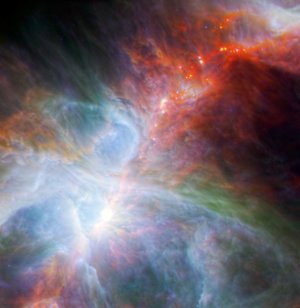
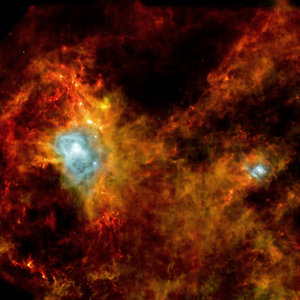
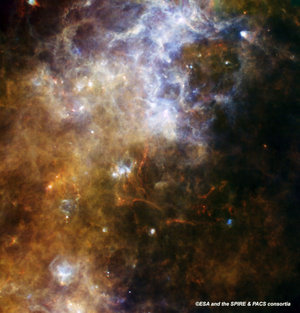
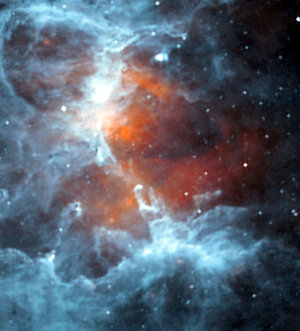
Now it is payback time. HIFI will be used extensively during the coming months to study star forming regions in our Galaxy. In particular, the nearby Orion Nebula, a large star-forming region, will become visible towards the end of the month. HIFI was built specifically to investigate the role of water in the formation of stars and planets, and in the evolution of galaxies.
“It is great to have HIFI back, Herschel is complete once more,” says Göran Pilbratt, Herschel Project Scientist.