About the International Space Station
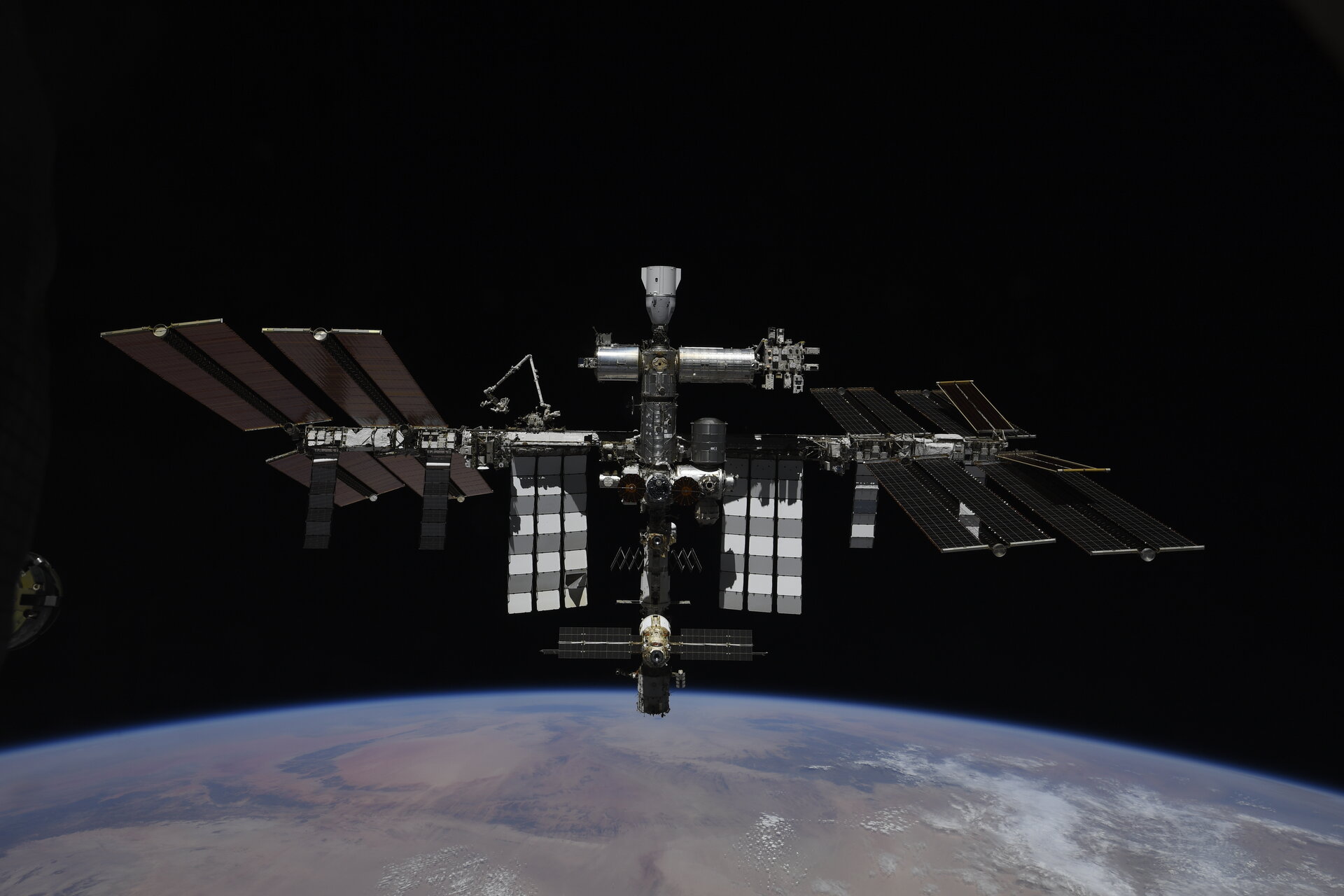
In partnership with the United States, Russia, Japan and Canada, Europe is sharing in the greatest international project of all time - the International Space Station. The 420-tonne International Space Station has more than 916 cubic metres of pressurised space - enough room for its crew of six persons and a vast array of scientific experiments.
Station construction began in November 1998 with the launch of Russia’s Zarya module. Assembly was delayed due to the tragic loss of Space Shuttle Columbia, which also resulted in the decision to retire all Space Shuttles after completion of the Station. The last major part of the Space Station delivered by a Space Shuttle was the AMS-02 instrument in May 2011.
In 2021 Russia’s Nauka Multipurpose Laboratory Module arrived as a new module for the International Space Station is as big as Zarya and Zvezda. It was installed on the Earth-facing docking port of the Zvezda module and includes the European Robotic Arm.
European participation

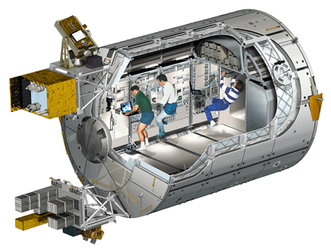
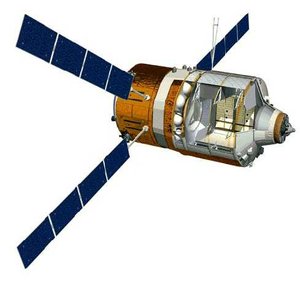
ESA is responsible for two key Station elements: the European Columbus laboratory and the Automated Transfer Vehicles (ATV).
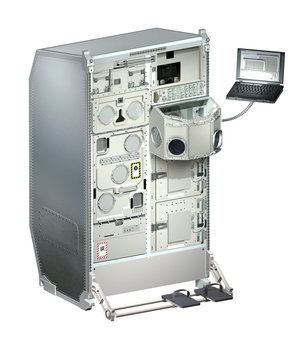
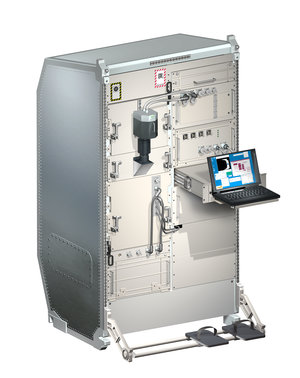
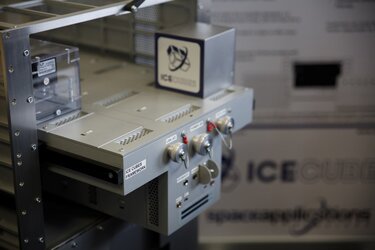
The Columbus laboratory forms a substantial part of the Station's research capability. Fitted with ten interchangeable payload racks, Columbus is a multifunction laboratory that specialises in research in fluid physics, materials science and life sciences.
Europe's second biggest contribution was the Automated Transfer Vehicle, a supply ship lifted into orbit on an Ariane-5 launcher.

ATV carried up to 7 tonnes of cargo including provisions, scientific payloads and propellant. Once docked, the craft used its engines to boost the Station to a higher orbit counteracting the faint drag of Earth's atmosphere.
After the first spacecraft, ATV Jules Verne, ATV Johannes Kepler was launched in 2011 and the next one ATV Edoardo Amaldi was launched in 2012. The fourth, ATV Albert Einstein, was launched in 2013 and the fifth and final ATV, Georges Lemaître was launched in 2014.

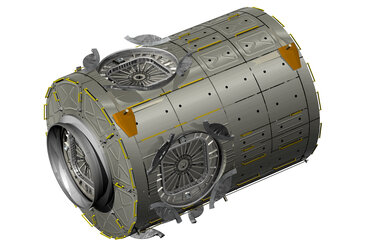
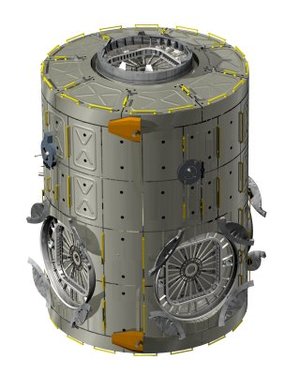
European scientists and engineers contribute to equipment and design across much of the International Space Station. More than a third of pressurised Station elements are designed and built in Europe.
The European-made Cupola is a dome-like structure with a panoramic window that is used as a control room for astronauts operating Station equipment. Cupola’s circular top window is 80 cm in diameter making it the largest window ever to fly in space, while six side windows open the view to all directions.

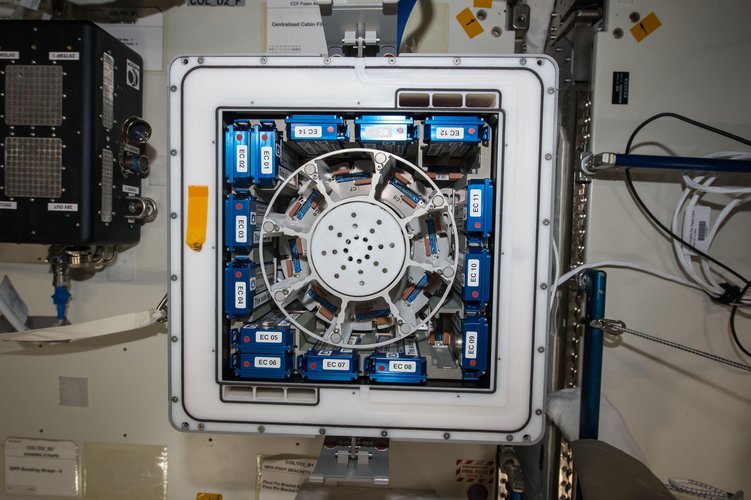
In fact, European technology plays an important part in most Station sections. For example in the United States Destiny module, Europe installed a material science rack and freezer units. The Japanese module Kibo also uses a European freezer.
European astronauts and users

The first European astronaut flew in space in 1983 and the European Astronaut Centre in Cologne has been training men and women for missions since 1998. The first European to serve a tour of duty on the International Space Station was Umberto Guidoni who visited the Station in April 2001.
Only a tiny fraction of the Europeans working on the Space Station will ever go to space. Large dedicated teams of engineers, scientists, technicians and support personnel make spaceflight possible. European mission control centres run experiments and share Station command with Russia and the United States. Astronauts will always be part of a large scientific team on Earth.
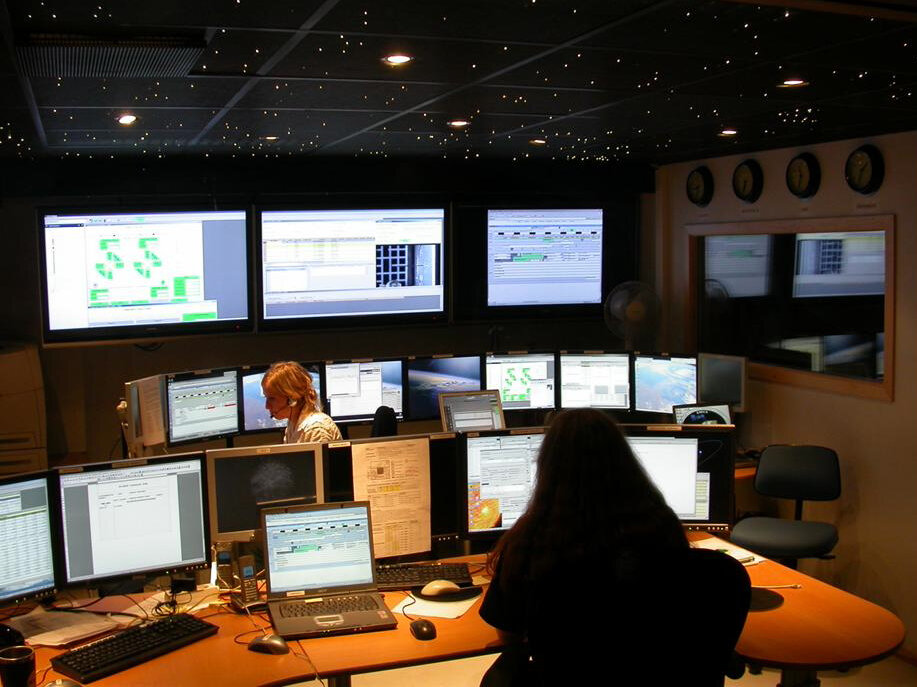
User Support and Operation Centres in Europe are responsible for the use and implementation of European payloads on the International Space Station. Under ESA management, the Operation Centres conduct tasks needed to prepare and operate experiments. They act as the link between science teams on ground and the Space Station.
Participation in the International Space Station allows thousands of Europe's brightest people at hundreds of universities and companies in ESA's Member States to work on the leading edge of science and engineering.
Now that the Station is fully assembled and astronauts spend more time on science people European scientists are among the first to benefit from the space research facilities they have helped to build.