The Columbus Mission
Named after one of the greatest explorers of all time, the European Columbus laboratory has been transferred to the cargo bay of the Space Shuttle Atlantis and now awaits its historical flight into orbit

 Play now
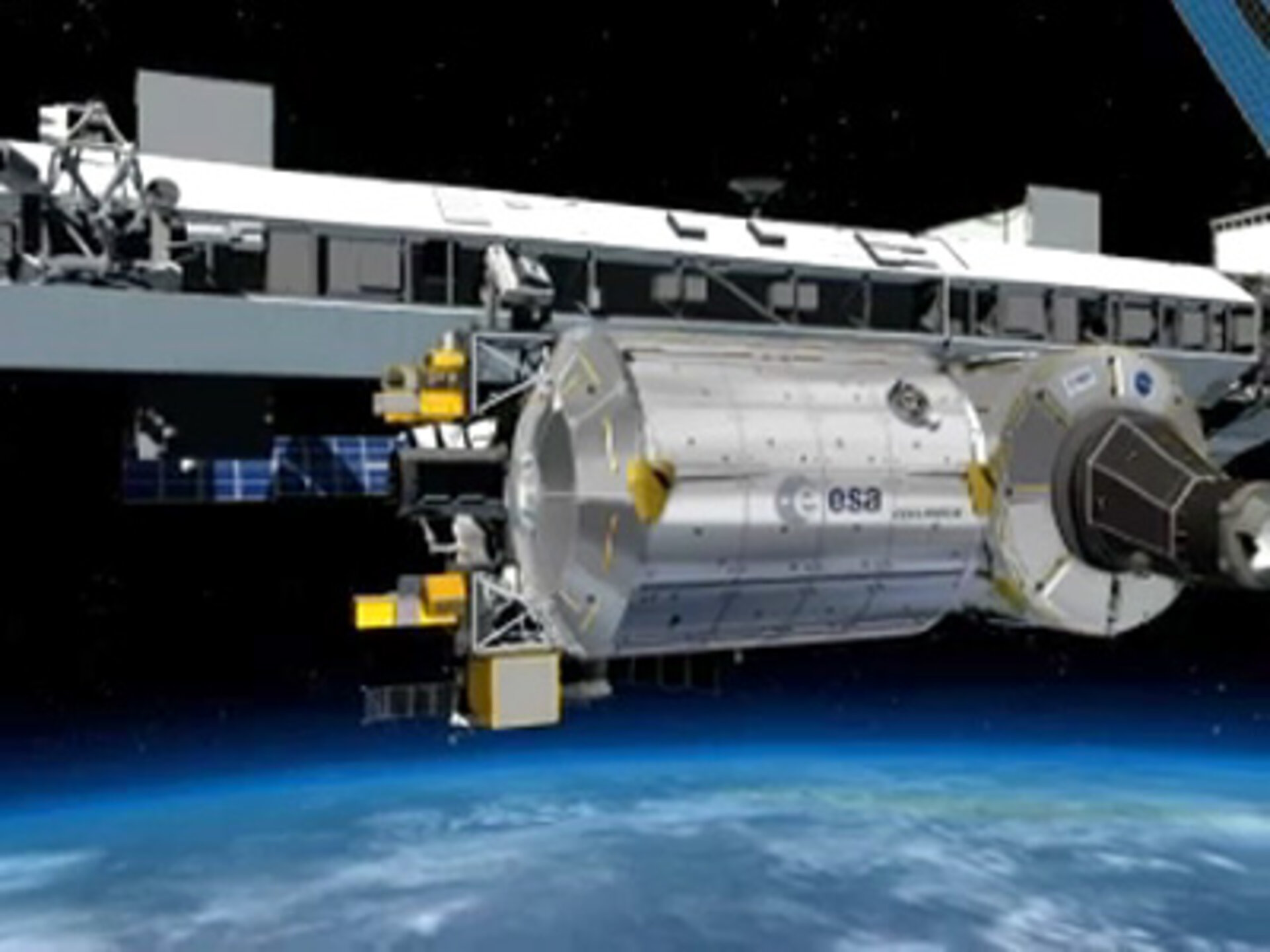
Columbus, with its planned operational lifetime of ten years, is Europe's first laboratory for long-term research in space conditions. Scientific experiments will be performed on board in the weightlessness of orbit.
Once in orbit, Columbus will be taken out of the cargo bay by the Shuttle’s robotic arm. The European laboratory will then be moved to the Italian-built Node 2 connector, where it will be permanently fixed to the Station.
Each rack inside Columbus is a laboratory in its own right. Experiments in life sciences, physiology and physics can all be carried out within the one structure. These facilities are pre-installed inside Columbus so experiments can start immediately after it arrives at the ISS.
Experiments can also be mounted outside Columbus, to examine the effects of exposure to the space environment. Two such experiments will be launched along with the laboratory.