 |  |  |  |  |
| |  | |  | |
 |
Space Science About Space ScienceESA's 'Cosmic Vision'Science & Technology in-depthMultimedia Science imagesScience videosAnimationsDownloadsSounds from spaceRSS feeds Media centre Press ReleasesPress kitsESA TelevisionResources Reference sectionGlossaryFAQs Science missions Services HelpLegal disclaimerCommentsSubscribe
|  |  |  |  | | | Echus Chasma 14 July 2008
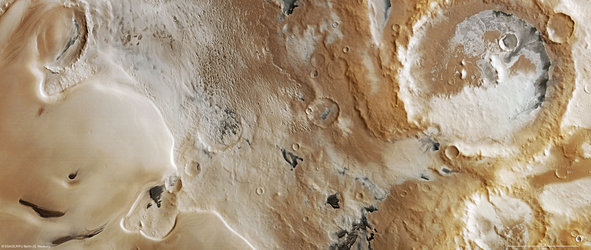
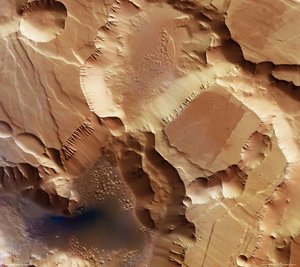
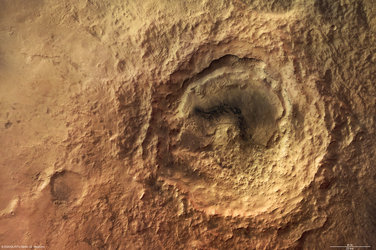
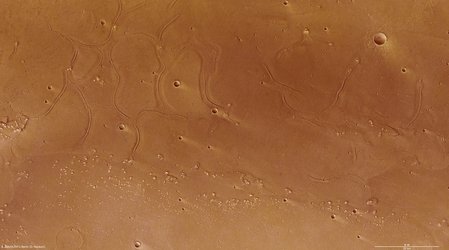
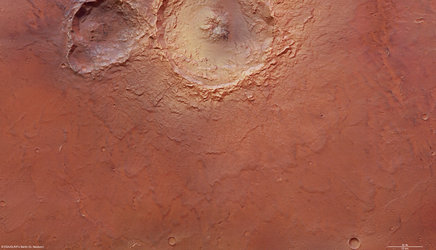
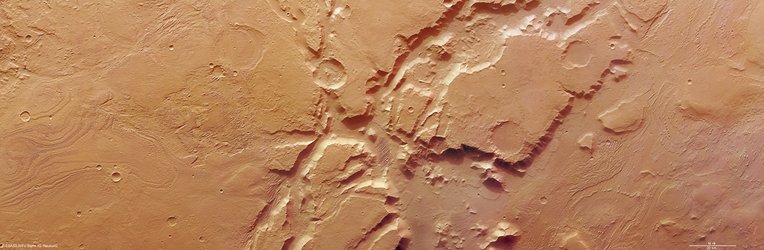
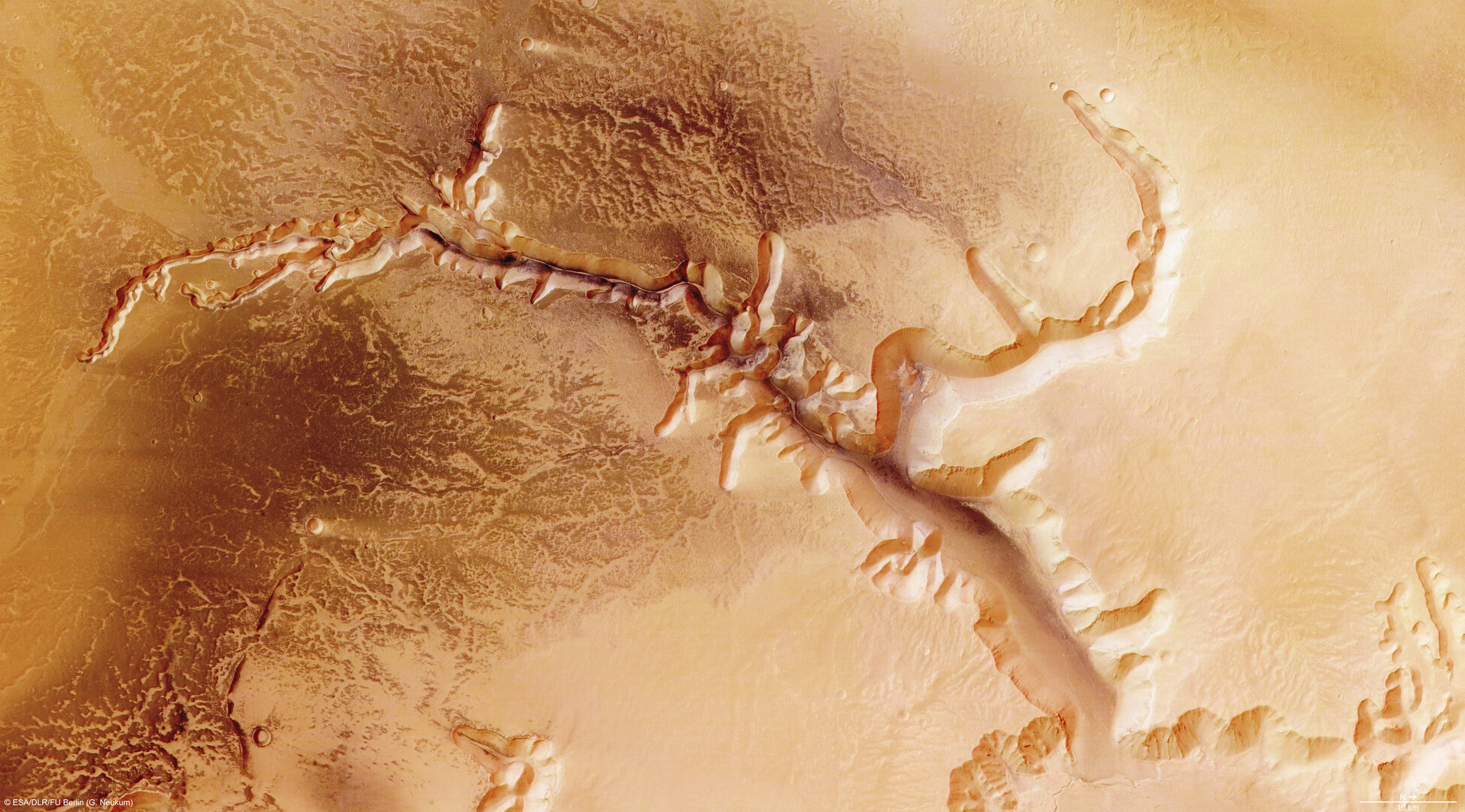
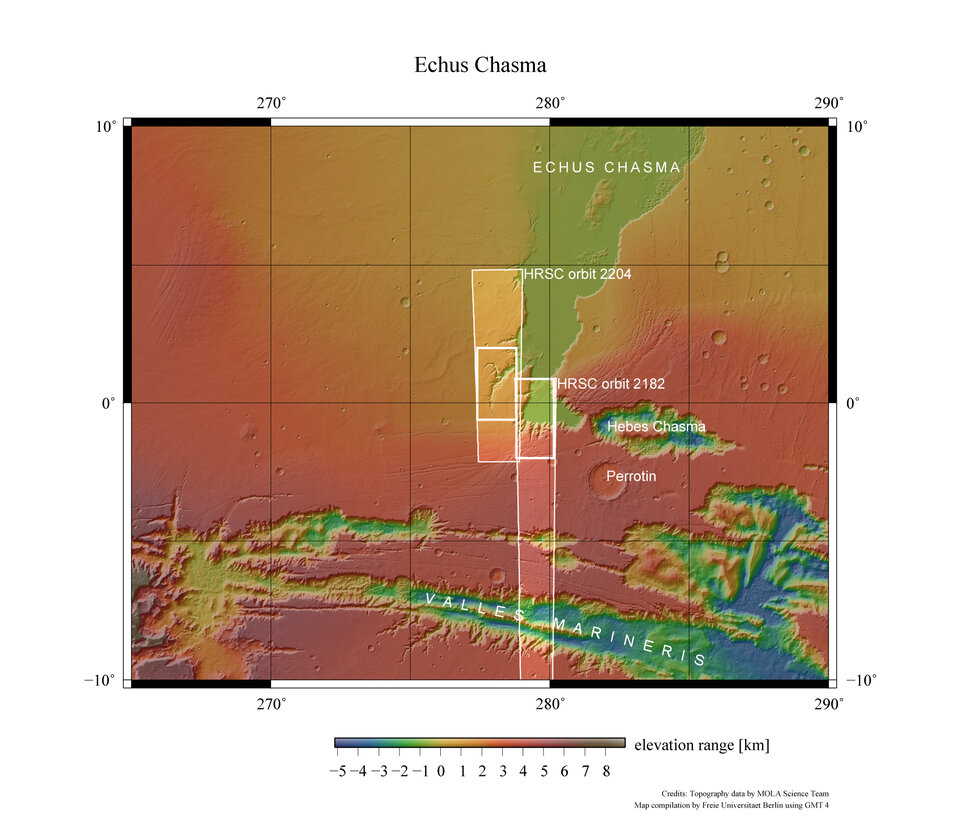
 | The High-Resolution Stereo Camera (HRSC) on board ESA’s Mars Express has returned images of Echus Chasma, one of the largest water source regions on the Red Planet. Echus Chasma is the source region of Kasei Valles which extends 3000 km to the north. The data was acquired on 25 September 2005. The pictures are centred at about 1° north and 278° east and have a ground resolution of approximately 17 m/pixel.
Credits: ESA/ DLR/ FU Berlin (G. Neukum) |  |  |  |  |
| | | |  | The High-Resolution Stereo Camera (HRSC) on board ESA’s Mars Express has returned images of Echus Chasma, one of the largest water source regions on the Red Planet. Echus Chasma is the source region of Kasei Valles which extends 3000 km to the north. The data was acquired on 25 September 2005. The pictures are centred at about 1° north and 278° east and have a ground resolution of approximately 17 m/pixel.
Credits: FU Berlin/ MOLA |  |  |  |  |
| | | |  | The High-Resolution Stereo Camera (HRSC) on board ESA’s Mars Express has returned images of Echus Chasma, one of the largest water source regions on the Red Planet. Echus Chasma is the source region of Kasei Valles which extends 3000 km to the north.
The data was acquired on 25 September 2005. The pictures are centred at about 1° north and 278° east and have a ground resolution of approximately 17 m/pixel.
Credits: ESA/ DLR/ FU Berlin (G. Neukum) |  |  |  |  |
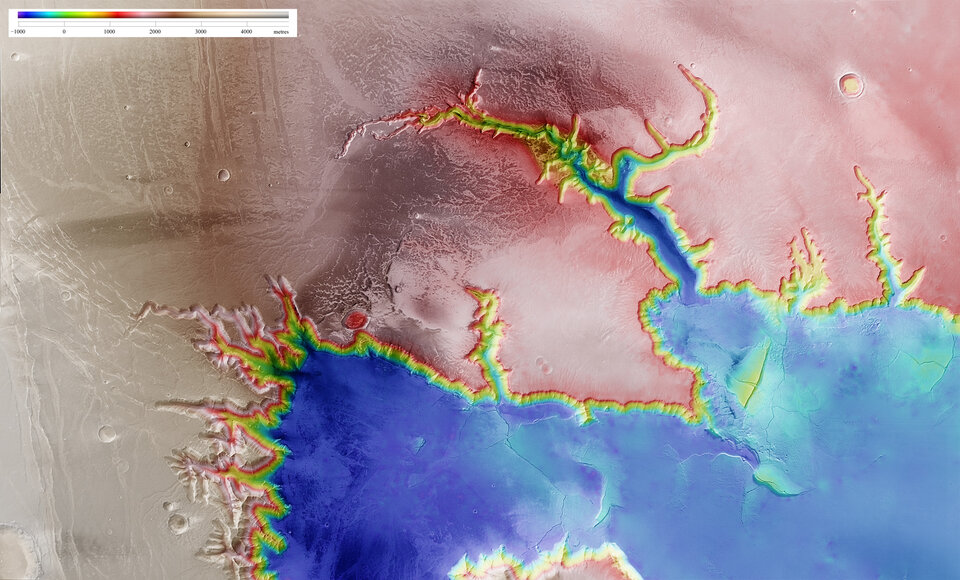
| | | |  | Ortho-image of Echus Chasma.
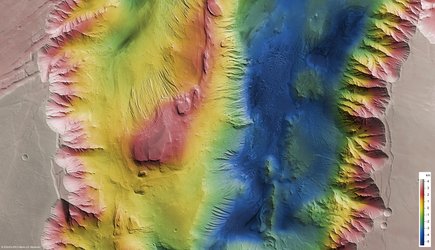
The High-Resolution Stereo Camera (HRSC) on board ESA’s Mars Express has returned images of Echus Chasma, one of the largest water source regions on the Red Planet. Echus Chasma is the source region of Kasei Valles which extends 3000 km to the north. The data was acquired on 25 September 2005. The pictures are centred at about 1° north and 278° east and have a ground resolution of approximately 17 m/pixel.
The ortho-image was rectified using elevation data derived from a high-resolution Digital Terrain Model, or DTM (obtained from HRSC data), such that distortions introduced during imaging are corrected. Such an image can be used to derive maps. Elevation data from the DTM has been colour-coded and overlain on the ortho-image so that elevation data and the image itself are displayed in a single scene.
The scale is in metres.
Credits: ESA/ DLR/ FU Berlin (G. Neukum) |  |  |  |  |
| | | |  | The High-Resolution Stereo Camera (HRSC) on board ESA’s Mars Express has returned images of Echus Chasma, one of the largest water source regions on the Red Planet. Echus Chasma is the source region of Kasei Valles which extends 3000 km to the north. The data was acquired on 25 September 2005. The pictures are centred at about 1° north and 278° east and have a ground resolution of approximately 17 m/pixel.
The images show valleys that are about 10 km long and 1000 m deep (1). The main valley, Kasei Valles, is about 4 km in depth. The smaller valleys, also called sapping canyons, originate from the discharge of groundwater.
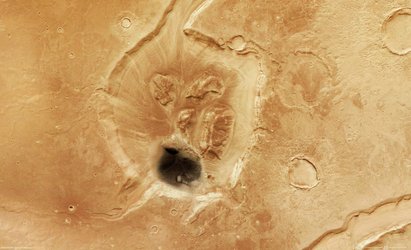
A prominent, sickle-shaped (about 25 km-long) dike is visible in the centre of the image (2). Dikes form when magma rises up through fissures in the overlying rock or penetrates existing rock layers. This indicates that the region must have been volcanically active in the past. The magmatic rock is usually quite resistant to weathering and is able to endure erosion.
Two impact craters with a diameter of approximately 8 km are located south-east of the dike (3). The eastern crater was partly eroded as the valley formed. A large portion of the crater collapsed into the valley and its debris was removed.
The dark material shows a network of light-coloured, incised valleys (4) that look similar to drainage networks known on Earth. It is still debated whether the valleys originate from precipitation, groundwater springs or liquid or magma flows on the surface.
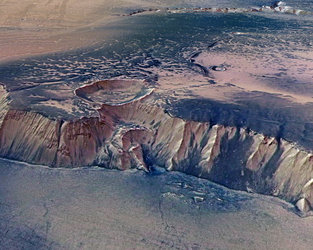
An impressive cliff, up to 4000 m high, is located in the eastern part of Echus Chasma(5). Gigantic water falls may once have plunged over these cliffs on to the valley floor. The remarkably smooth valley floor was later flooded by basaltic lava.
Credits: ESA/ DLR/ FU Berlin (G. Neukum) |  |  |  |  |
| | | |  | The High-Resolution Stereo Camera (HRSC) on board ESA’s Mars Express has returned images of Echus Chasma, one of the largest water source regions on the Red Planet. Echus Chasma is the source region of Kasei Valles which extends 3000 km to the north. The data was acquired on 25 September 2005. The pictures are centred at about 1° north and 278° east and have a ground resolution of approximately 17 m/pixel.
Credits: ESA/ DLR/ FU Berlin (G. Neukum) |  |  |  |  |
| | | |  | The High-Resolution Stereo Camera (HRSC) on board ESA’s Mars Express has returned images of Echus Chasma, one of the largest water source regions on the Red Planet. Echus Chasma is the source region of Kasei Valles which extends 3000 km to the north. The data was acquired on 25 September 2005. The pictures are centred at about 1° north and 278° east and have a ground resolution of approximately 17 m/pixel.
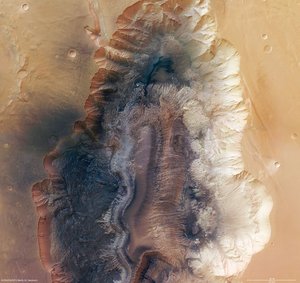
The dark material shows a network of light-coloured, incised valleys that look similar to drainage networks known on Earth. It is still debated whether the valleys originate from precipitation, groundwater springs or liquid or magma flows on the surface.
Credits: ESA/ DLR/ FU Berlin (G. Neukum) |  |  |  |  |
| |
|  | Mars Express image browser Related articles Echus Chasma, page twoCrater in martian valley Mamers VallesHebes Chasma, a trough in the Grand Canyon of MarsIcy Promethei PlanumDeep valleys of Candor ChasmaESA presents Mars in 3DTraces of the martian past in the Terby craterNoctis Labyrinthus, labyrinth of the nightHummocky and shallow Maunder craterThe mysterious ridges at the mouth of Tiu VallesImpact Craters in Tyrrhena TerraTectonic signatures at Aeolis MensaeRelated links High Resolution Stereo CameraBehind the lens...Frequently asked questionsFor specialists ESA Planetary Science archive (PSA)NASA Planetary Data SystemHRSC data viewer
|