Caroline and William Herschel: Revealing the invisible
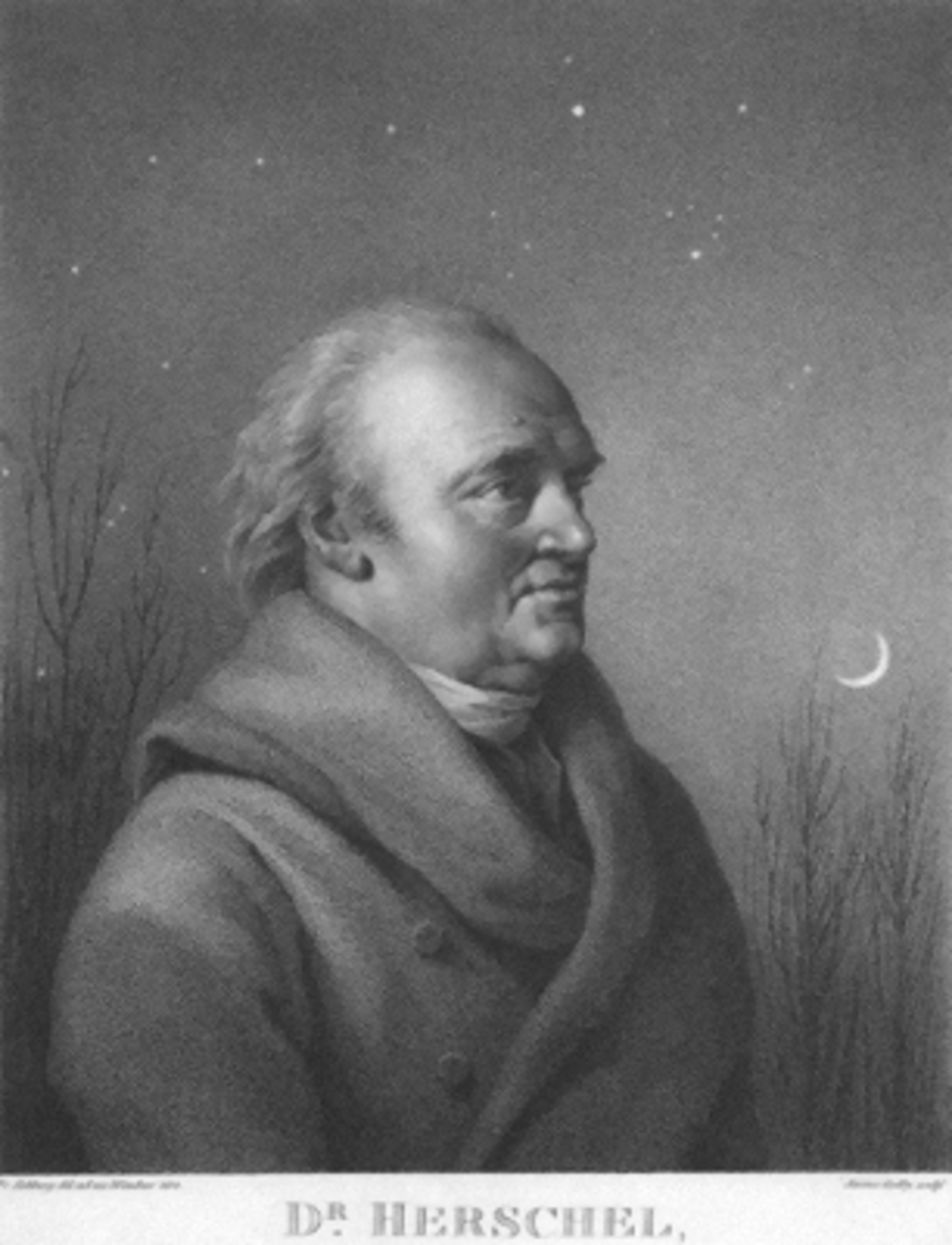
The Herschels were pioneers of the systematic classification and investigation of the heavens. William Herschel was one of the first 'professional' astronomers, and discovered infrared radiation. His sister Caroline helped him to develop the modern mathematical approach to astronomy.
William, son of a musician, was born in Hanover, Germany, in 1738. He followed in his father's footsteps, joining the Hanoverian Guard band to play the oboe, but moved to England to teach music in 1755, eventually settling in Bath in 1766.
He became interested in astronomy, and started to build his own telescopes. He developed and refined Isaac Newton‘s designs to avoid problems with poor glass optics. Herschel cast and polished his own mirrors, producing ever bigger and better telescopes.
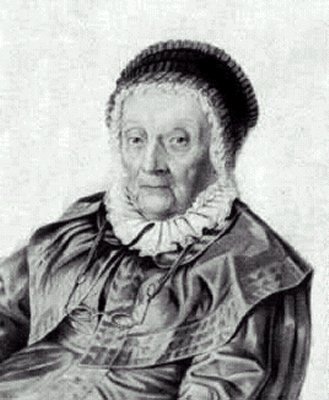
In 1772, he invited Caroline to join him as his assistant. She moved to Bath and soon found herself equally captivated by the night sky. In 1781, while working alone, William discovered the planet Uranus. He originally named it 'Georgium Sidus' in honour of the British King.
The discovery of the new planet inspired Herschel to cease his career as a musician and teacher and concentrate solely on astronomy. King George III appointed William his private astronomer in 1782, and the Herschels moved to Slough, near Windsor, England.
His paper 'On the Construction of the Heavens', published in 1784, modelled the formation of our Galaxy, the Milky Way, and marked the beginnings of Herschel's life-long interest in the cataloguing of the Universe.
By 1789, Herschel had built a 12-metre-long reflector, the largest telescope of its day. Meanwhile in 1786 Caroline had become the first woman to discover a comet, finding seven more in the years between up to 1797, and she also discovered three nebulae. In 1787 she was granted a salary of £50 by the King to act as her brother's assistant. Caroline worked hard in her own right, and in 1798 she published the 'Index to Flamsteed's Observations of the Fixed Stars', a list of corrections and 560 additional stars. This was an addition to the posthumously published catalogue of John Flamsteed, who had been the first Astronomer Royal in England, in the later 17th/early 18th century.
After discovering moons around Saturn and Uranus, Herschel turned his attention from the planets to the stars. He drew up a catalogue of double stars and showed that some were orbiting pairs.
In 1800, Herschel described how the various coloured filters through which he observed the Sun allowed different levels of heat to pass. He performed a simple experiment to study the 'heating powers of coloured rays': he split the sunlight with a glass prism into its different constituent colours and measured the temperature of each colour. He observed an increase as he moved the thermometer from the violet to the red part of the 'rainbow'.
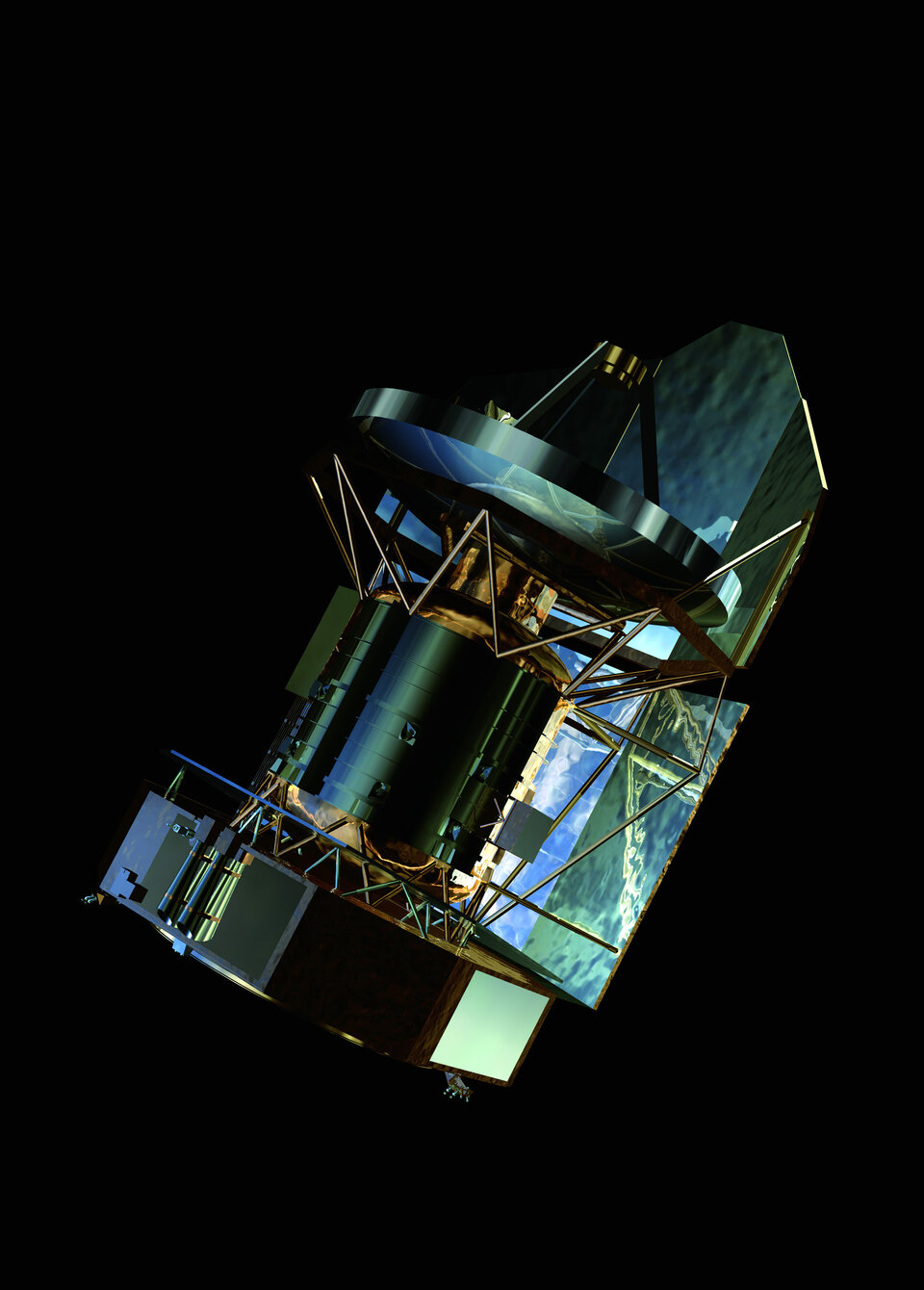
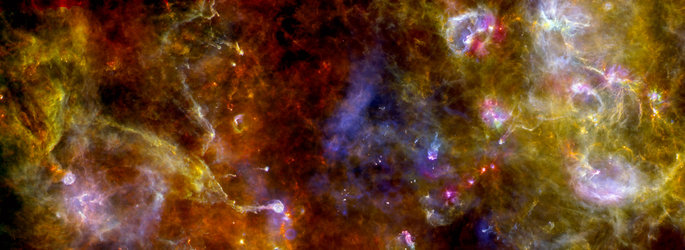
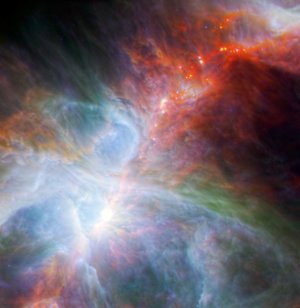
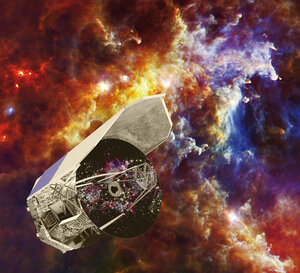
Herschel also measured temperatures in the region just beyond the red colour where no light was visible and, to his surprise, recorded an even higher temperature there. He deduced the presence of invisible 'calorific' rays, now called 'infrared' radiation, and provided the reason for naming ESA's infrared space observatory after him. During the rest of his life, Herschel produced lists of thousands of nebulae and star clusters, and he was the first to distinguish between distant clusters and dusty nebulae.
After William's death in 1822, Caroline returned to Hanover and re-organised his catalogues into one extensive book, for which she was awarded a Gold Medal by the Royal Astronomical Society, who later elected her a member in 1828. An asteroid was named Lucretia in 1889 in honour of her second name. This was a fitting tribute to someone who had contributed so much yet disliked the praise directed towards her when it detracted from her brother.