SMART-1 view of crater Sulpicius Gallus
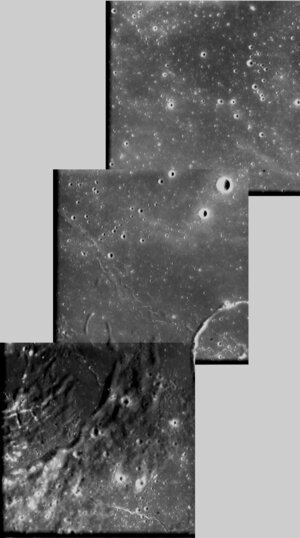
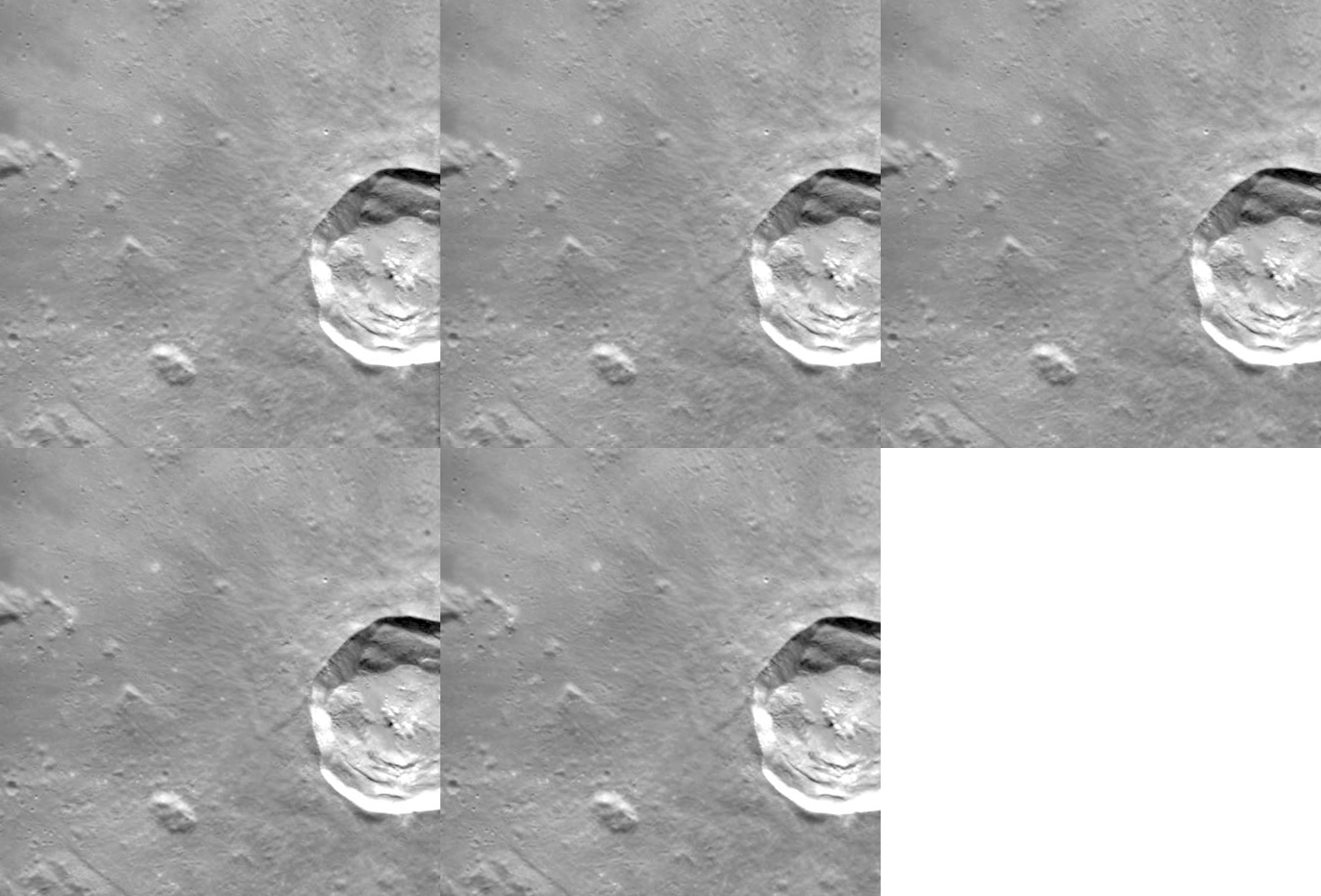
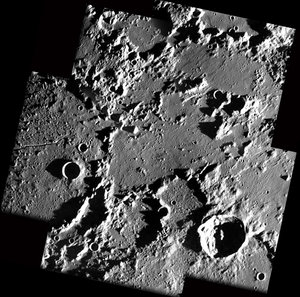
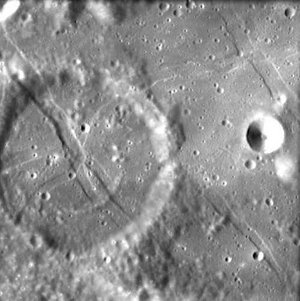
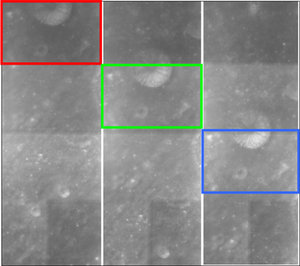
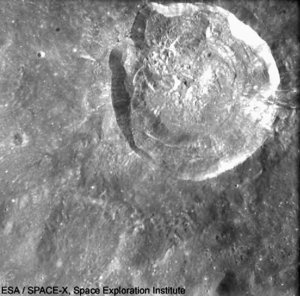
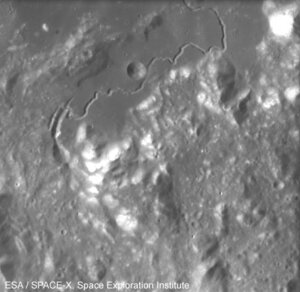
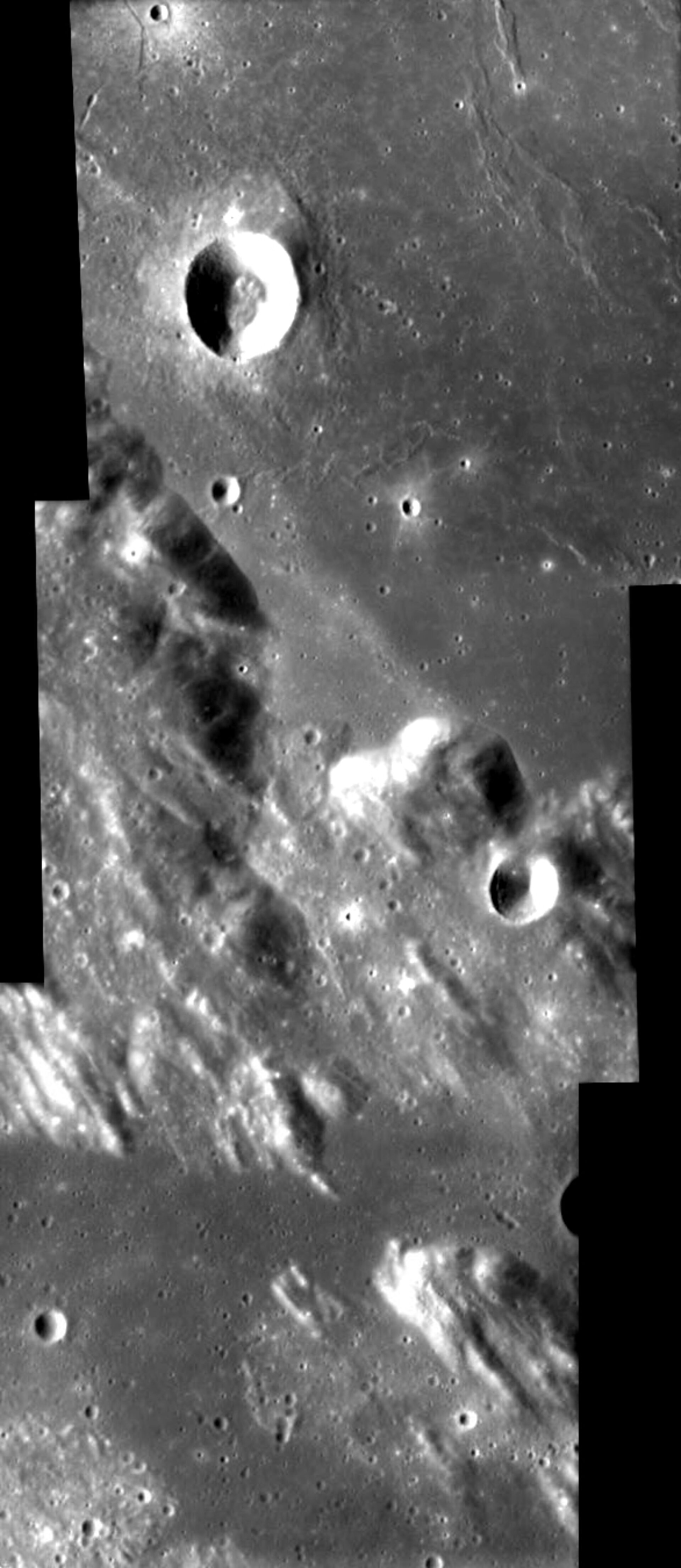
This mosaic of three images, taken by the advanced Moon Imaging Experiment (AMIE) on board ESA's SMART-1 spacecraft, shows the area close to the Sulpicius Gallus crater on the Moon.
AMIE obtained this sequence on 18 March 2006, from a distance of 1200 kilometres from the surface, with a ground resolution ranging from 110 to 114 metres per pixel.
The area shown in the top image is centred at a latitude of 19.7º North and longitude 12.2º East; the image in the middle is centred at a latitude of 18.2º North and longitude 12.3º East; the bottom image is centred at a latitude of 16.7º North and longitude 12.5º East.
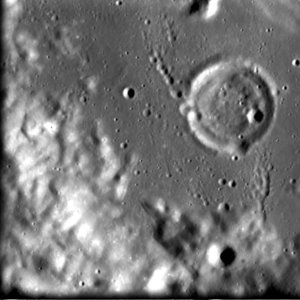
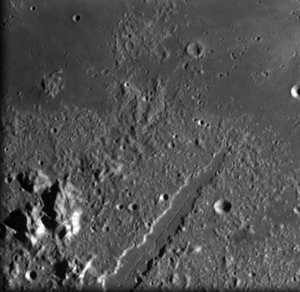
The prominent crater on the upper left area of this mosaic is called Sulpicius Gallus. It is a fairly fresh, bowl-shaped crater with a diameter of roughly 12 kilometres. The flat lava plains surrounding it belong to the Mare Serenitatis (the 'Sea of Serenity') on the north-eastern side of the Moon facing Earth. The mountains going diagonally through the middle part of the mosaic are called Montes Haemus. They are denoting the edge of the huge impact crater which formed the Mare Serenitatis.
The area around Sulpicius Crater is very interesting for lunar scientists – it is one of the most geologically and compositionally complex areas of the nearside of the Moon. The geologic history of this region has been shaped by impacts of different scales and epochs, by volcanism of variable style and composition with time, and by limited tectonics. Specific findings (Bell and Hawke, 1995) include the detection of relatively fresh highlands materials in the crater.
Good spectroscopic data (that is relative to the mineralogical composition) are available both from the Clementine mission and from ground-based observations, allowing to better constrain the geological evolution of our closest cosmic neighbour.
The area has been suggested to contain mixtures of glassy and black beads generated when large impacts melted part of the lunar surface. However, modelling the spectral properties of material similar to lunar material does not allow to unambiguously match the composition of the material to the measured data.
Colour observations of the AMIE camera will help in further clarifying these issues. So, the combination of high spatial resolution imaging and high spectral resolution spectroscopy from datasets from SMART-1, Clementine and ground based telescopes will finally allow to better model mineral mixtures on the Moon.

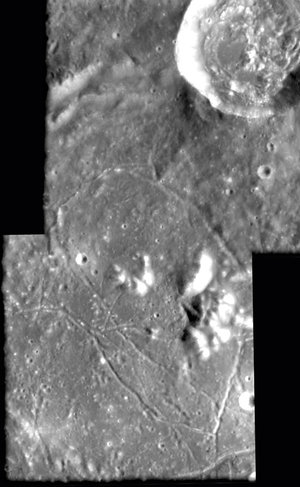
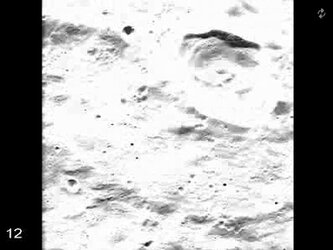
The stereo anaglyph view is composed from the set of images taken on 18 March 2006 (orbit 2083) and another one of the same area taken on the same day, two orbits or about 10 hours later (orbit 2085), from 1200 kilometres altitude.
The crater Sulpicius Gallus is named after a Roman general, state man and orator. He is famous for having predicted an eclipse of the moon on the night before the battle of Pydna (168 BC). A man of great learning, in his later years he devoted himself to the study of astronomy.
For more information
Bernard H. Foing, ESA SMART-1 Project Scientist
Email: bernard.foing @ esa.int
Jean-Luc Josset, AMIE Principal Investigator
SPACE-X Space Exploration Institute
Email: jean-luc.josset @ space-x.ch