CM25 – Explore and discover
Space research was at the heart of ESA when it was formed 50 years ago. Since then, great discoveries have been made: imagination, perspiration and creative problem-solving have been combined to make missions that have transformed our understanding of our place in the Universe.


Access the video
The next generation of science in space
Right now, the big questions are being tackled by the Cosmic Vision plan – including Juice’s mission to the icy moons of Jupiter, Euclid’s mapping of the sky to understand where dark matter and dark energy are hiding, and the soon-to-be-launched Smile (investigating Earth’s magnetic environment), and Plato and Ariel (providing data on exoplanets). Now being built, LISA will detect gravitational waves in space; while NewAthena will be the largest X-ray observatory in history – and is going through in-depth study to prepare unique technology.
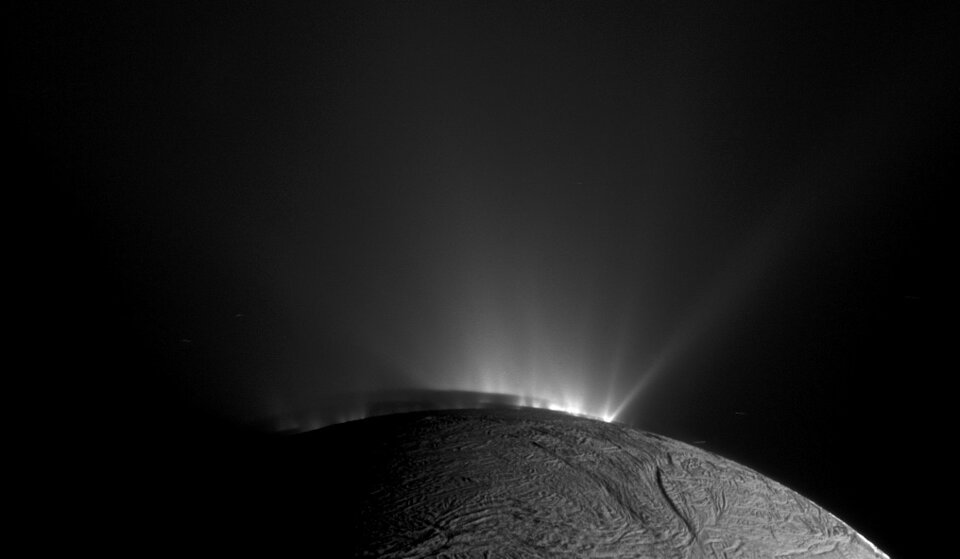
So what comes next? ESA worked with scientists and the general public to compose the next plan – Voyage 2050 – to see what important questions need to be answered by future missions. This includes sending a spacecraft to Saturn’s moon Enceladus in search of life in its subsurface ocean. But without increased funding, science cannot move quickly enough to keep missions flying. As part of the fundamental commitment of ESA’s Member States, Science needs an uplift in funding to make sure we will still have missions delivering world-class data in the coming decades. Our teams have adapted by introducing new concepts for missions that can be delivered more quickly, but without funding, they cannot be delivered at all.
Closer to home, the Earth observation programme’s Next Generation Gravity Mission, will help us to understand the distribution of water around the planet, while new instruments and techniques are pioneered by the Earth Explorer missions.
ESA missions are crucial to everyday life and business, but without the wonder and curiosity that science brings to our lives, we would be living on a much emptier planet.
Boldly going to space and working there

Humans dream of voyaging through space to discover other worlds. Science fiction is becoming fact as we learn to live and work off-world and use the orbital environment to benefit life on Earth. ESA’s goal is to build on the experience gained in flying on the International Space Station to continue to operate in low Earth orbit, while also targeting exploration of the Moon, and as a long-term goal, Mars. In the meantime, robots are sent as precursors and scouts.
The International Space Station is an extraordinary resource and symbol of cooperation that is coming towards the end of its safe operating life. ESA is preparing for the post-ISS era while retaining use of the station and other microgravity platforms for ongoing experiments to prepare and de-risk deep space exploration and conduct research in areas such as life sciences and materials science. The future we will build in low Earth orbit includes a cargo return service, called LCRS (LEO Cargo Return Service), to develop European autonomous transportation, and possible contributions to other space-station type infrastructure, and a continued commitment to international collaboration.

The Moon is not only a scientifically interesting destination – for its own environment and for observations to be conducted from there, but is also an ideal location to test new technology for journeys farther into deep space. ESA continues to provide its contributions to the lunar Gateway and is in parallel developing the Argonaut lander for delivering payloads to the Moon’s surface. A new highlight is the proposal to develop Small Missions, providing a fast-tracked access to lunar orbit and the lunar surface.
The satellite applications that improve life on Earth will have their own versions on the Moon – the Lunar Pathfinder mission to be launched in 2026, followed by Moonlight, will support the exploration of the Moon by bringing together navigation and communications services. ESA is also introducing the NOVAMOON project this year, a payload to fly on Argonaut and deliver positioning, navigation and timing technology to the Moon, as well as the ASSIGN programme which envisages a type of internet for the Solar System.

One day such a system might be used by humans on Mars. For now, ESA is focusing on robotic exploration of the Red Planet, with the Rosalind Franklin rover set to launch in autumn 2028 on its search for ancient life on Mars. ESA is also proposing to study a re-oriented mission for the Earth Return Orbiter, a one-way mission to explore the martian atmosphere.