The Hera Spacecraft
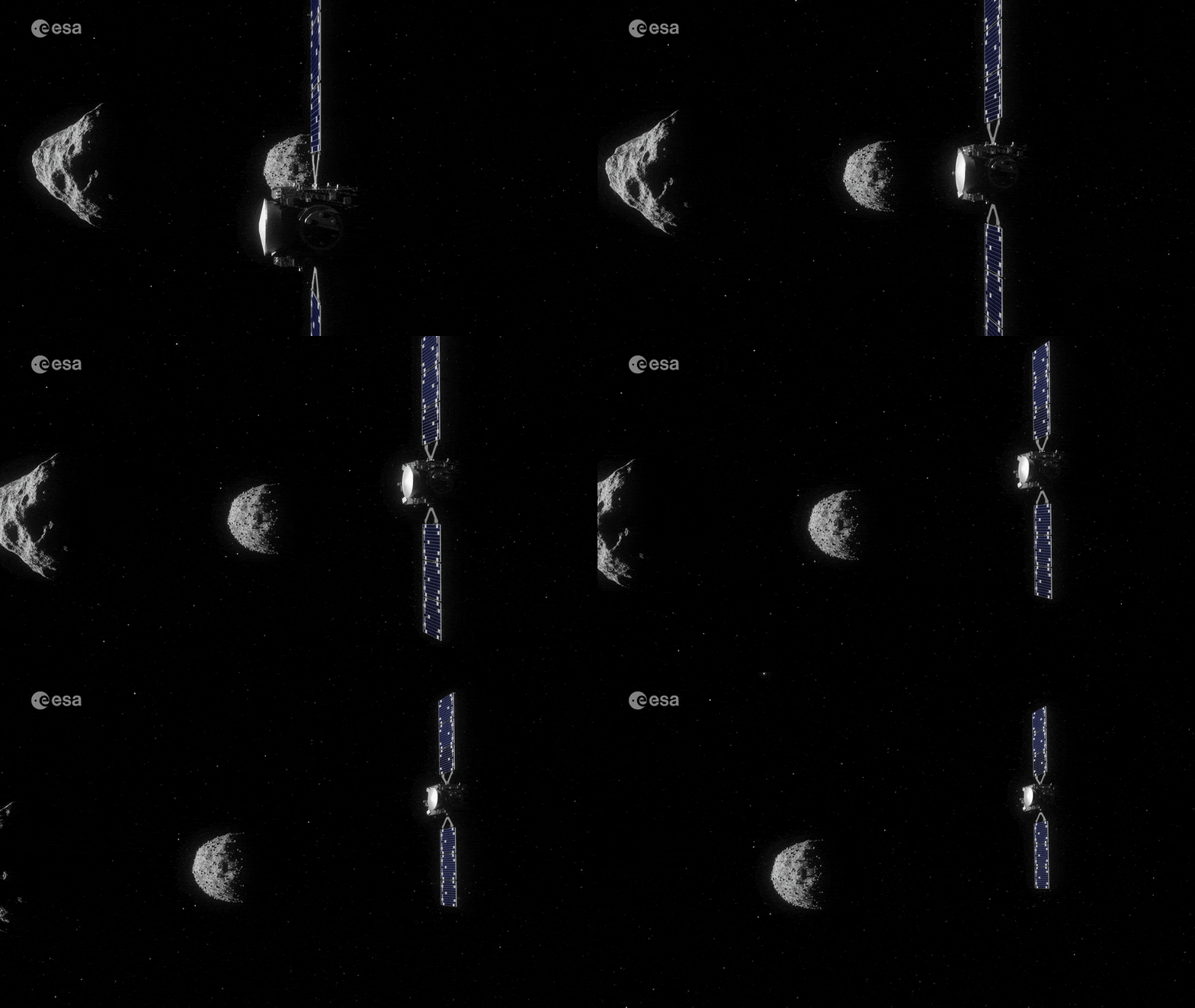
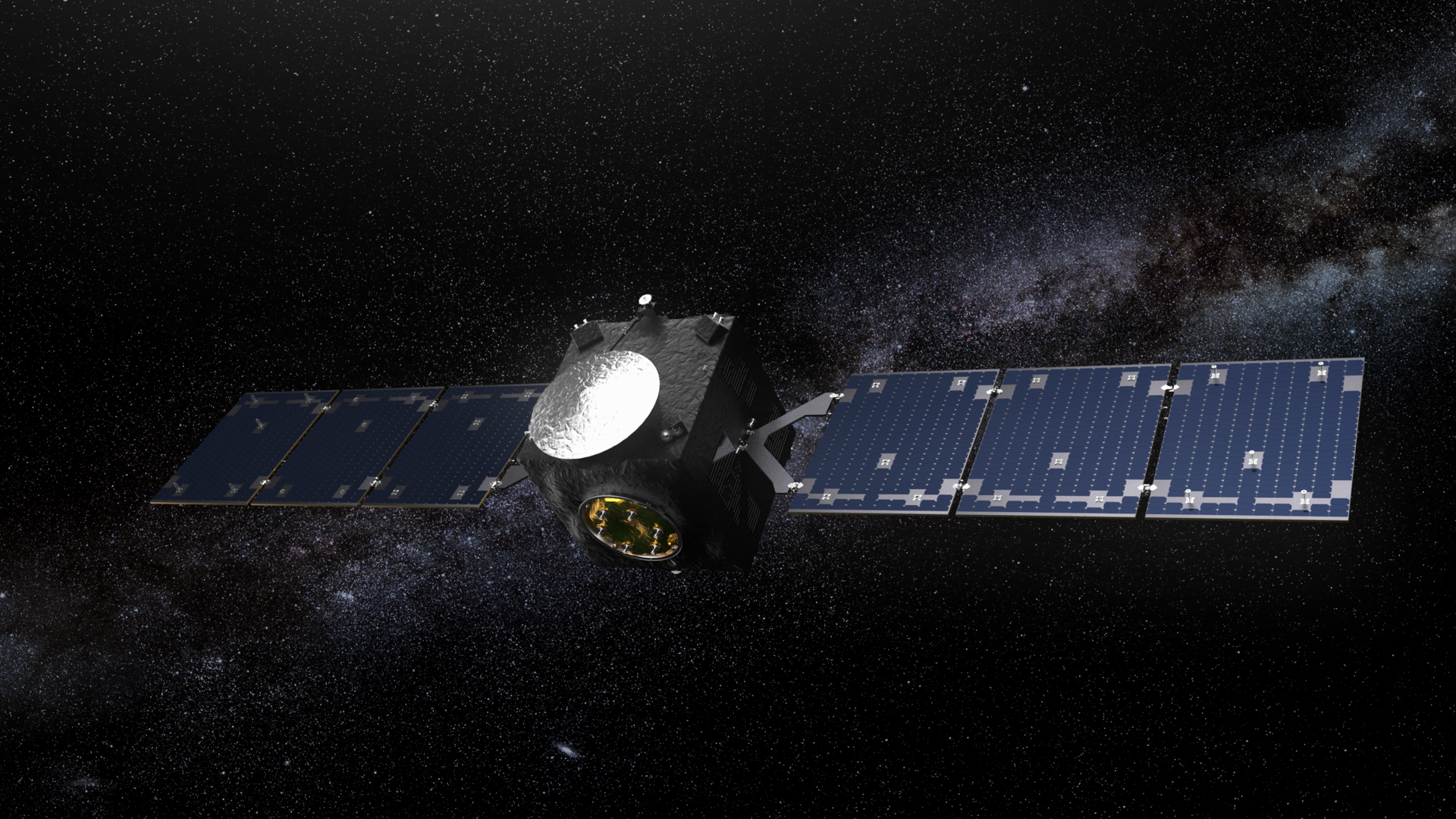
Hera is a small spacecraft for deep space possessing comparable autonomy to a self-driving car. Its optimised design has benefited from multiple ESA studies of asteroid missions across the last two decades, most recently the proposed Asteroid Impact Mission.
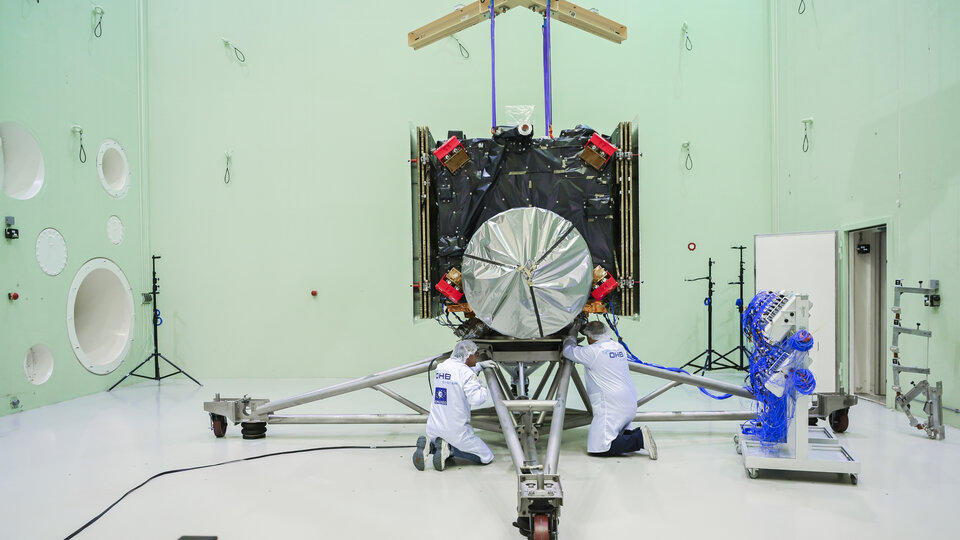
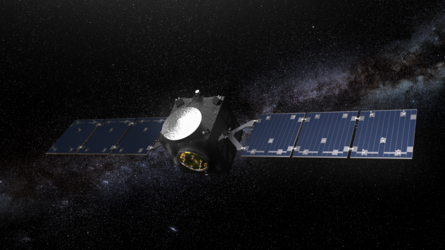
Powered by solar arrays with a hydrazine propulsion system, Hera will be a small-scale mission in interplanetary terms. The spacecraft's cube-shaped body measures 1.6 m across per side, plus solar arrays that stretch 11.5 m when fully deployed. Hera is roughly the size of a small car and weighs in about 1214 kg fully-fuelled – which is compact compared to the van-sized, 3 tonne Rosetta comet-chaser.
Hera’s modern design means it will perform its guidance, navigation and control (GNC) tasks through an innovative strategy of data fusion, combining inputs from multiple sensors to build up a detailed picture of its surroundings in space.
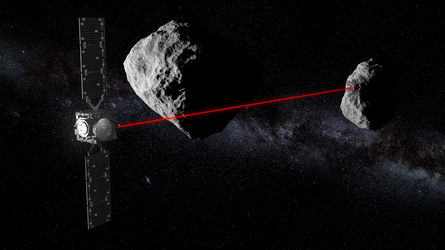
This would mean, for instance, bringing together the second-by-second visual tracking of distinctive features on the asteroid surface with lidar-based altimeter readings plus on board inertial sensors and star tracker measurements.
The mission has involvement of industry from Germany, Belgium, Romania, Luxembourg, Sweden, Portugal, Spain, Czech Republic, Austria, Finland, Poland and Switzerland.
Click the links to find out more about Hera's new technologies, its suite of scientific instruments and how the spacecraft is flown to and around the Didymos binary asteroid system.
Mission facts
| Hera size (without solar arrays) | 2.2x2x1.8 m approx |
| Hera solar array area | 8.7 sq. m in two wings |
| Hera mass | up to 1214 kg (fully fueled) |
| Hera launch date | October 2024 |
| Hera rendezvous with Didymos | November 2026 |
| Didymos binary system | 780-m diameter main body; 151-m diameter secondary body |
| Distance between bodies | 1.2 km |
| DART launch date | 24 November 2021 |
| DART collision date | 26 September 2022 |
Engineering data