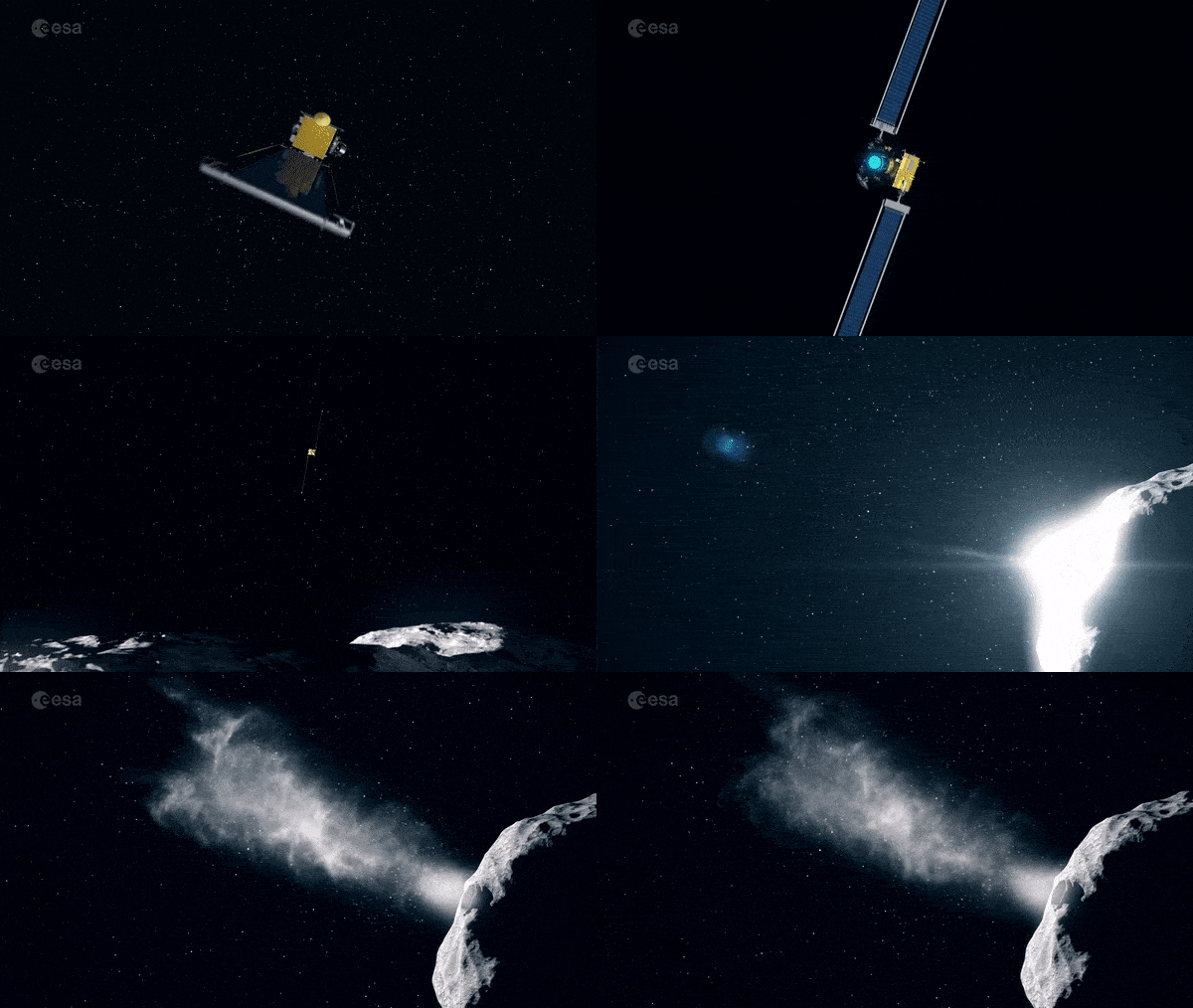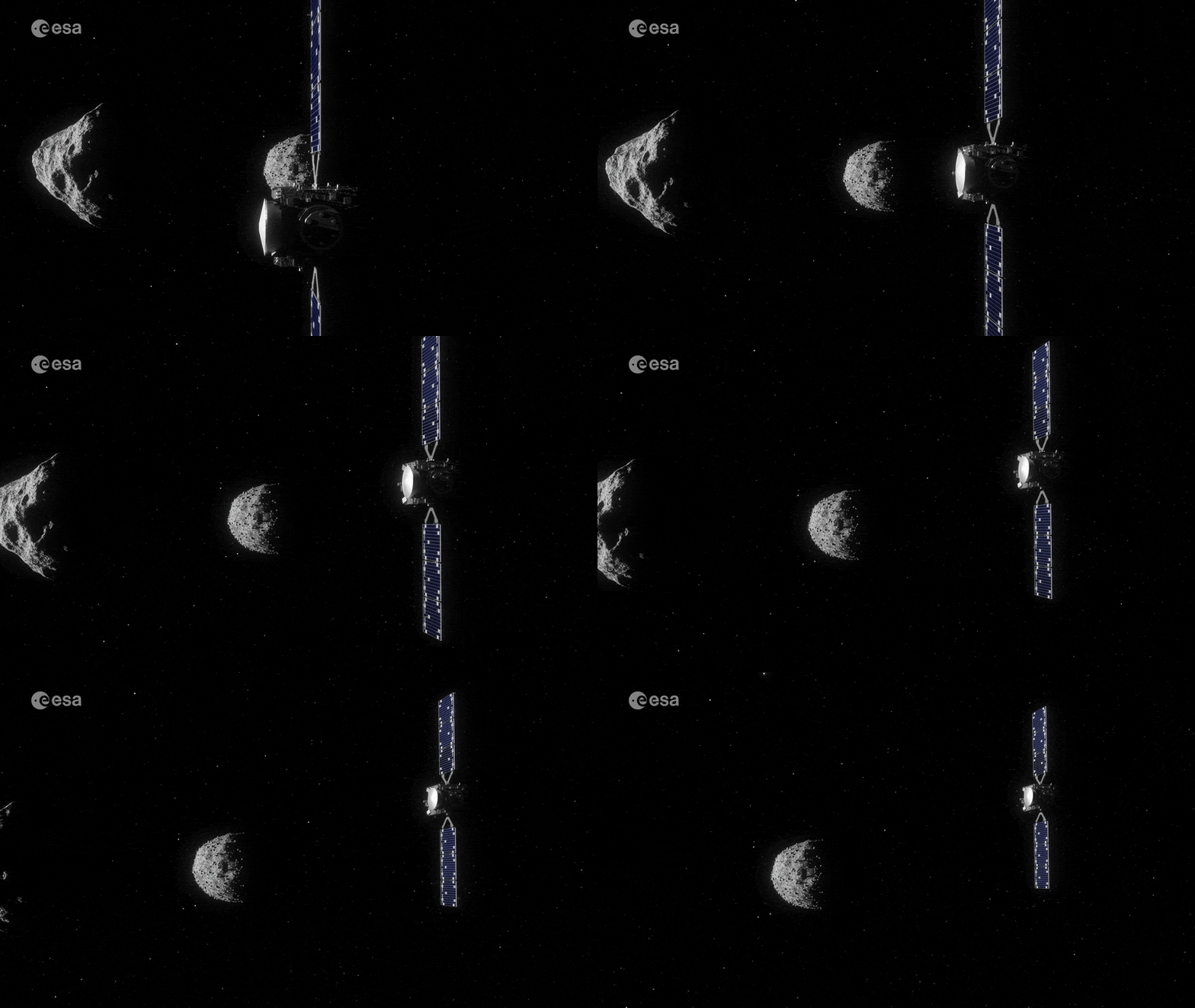
Hera mission overview
Hera – named after the Greek goddess of marriage – launched on 7 October 2024 and is travelling to the Didymos binary asteroid system.
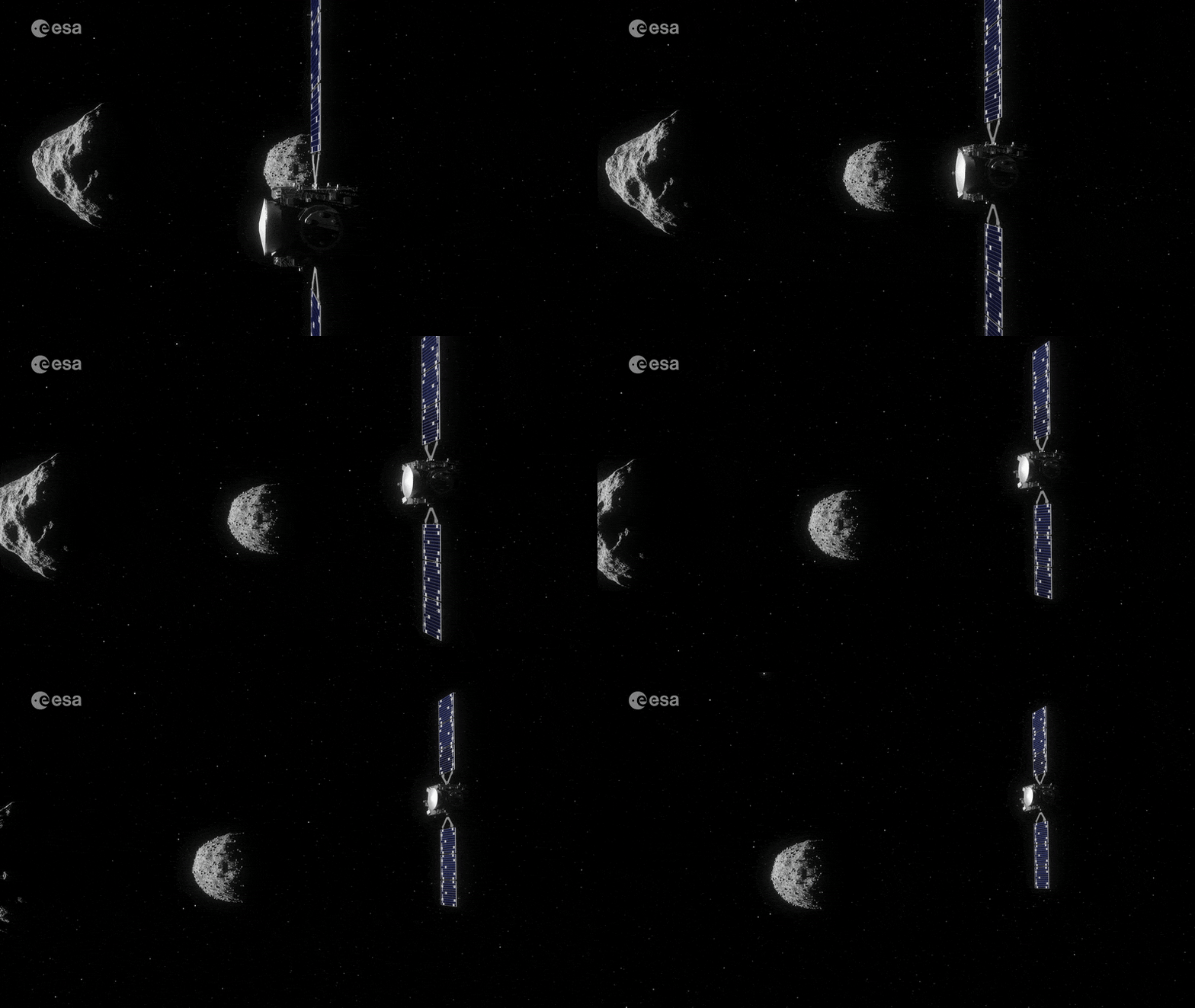
The 780 m-diameter, mountain-sized main body, Didymos, is orbited by a 151 m moon, Dimorphos, about the same size as the Great Pyramid of Giza.
Dimorphos is historically significant as the first object in the Solar System to have its orbit shifted by human effort in a measurable way, when NASA's Double Asteroid Redirection Test, or DART, collided with the asteroid on 26 September 2022.
Hera's detailed post-impact survey of the asteroids in 2026/2027 will turn this grand-scale kinetic impact experiment into a well-understood and repeatable technique for defending Earth from potentially hazardous asteroids.
Humans grew up in a violent cosmic neighbourhood; this is a basic fact that didn’t become fully clear until we started exploring space.
The craters pockmarking the Moon, Mars and other worlds mapped by space missions were evidence of a long history of random planetary impacts. In parallel, terrestrial geologists discovered that planet Earth is similarly scarred: our home world has suffered upwards of three million impacts causing craters larger than 1 km in diameter – the largest stretching more than 300 km across.
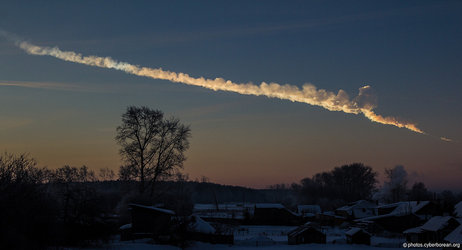
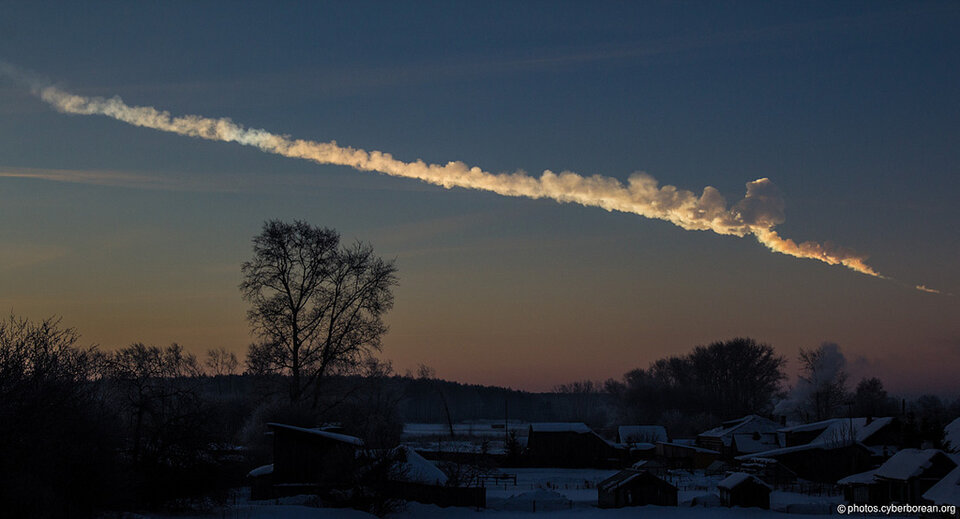
Much smaller objects can also do damage: the 1908 Tunguska impact in Siberia, the largest impact in recorded history, is thought to have been triggered by an incoming object of 30-40 m in diameter. The 2013 Chelyabinsk airburst, whose shockwave struck six cities across Russia, may have been caused by an asteroid just 20 m across.
Although the chance of a major asteroid impact is low, the potential consequences to our society could be very severe.
Having discovered that we live in a cosmic shooting gallery, space agencies decided to do something about it.
Working in conjunction with NASA and other international partners, ESA has set up infrastructure to methodically chart all Near-Earth Objects and assess their collision risk. Though what if a dangerous object does get spotted by this system? The whole point of the exercise is to be able to respond to a risky impactor heading our way.
In the 1990s, pioneer planetary defender Prof. Andrea Milani of Pisa University devised what became the international ‘Asteroid Impact and Deflection Assessment’ (AIDA) collaboration with the goal of testing the kinetic impact method of asteroid deflection – crashing into an asteroid to shift its direction away from us.
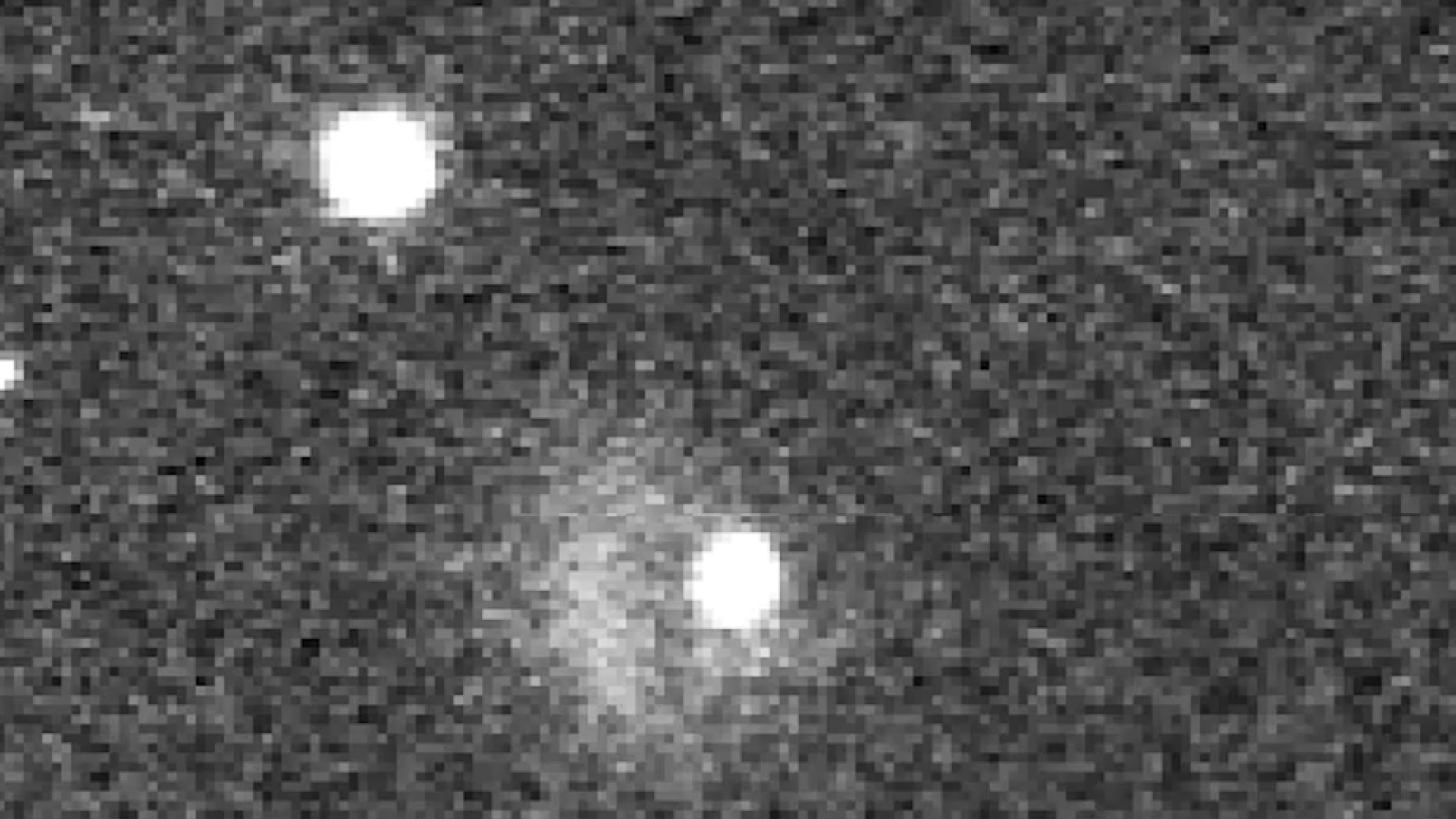
The first part of AIDA has already occurred: On 26 September 2022, NASA’s Double Asteroid Redirect Test, known as DART, spacecraft collided with a body named Dimorphos, a smaller object in orbit around the larger Didymos asteroid.
This test was successful! The rotation of Dimorphos around Didymos was indeed altered, as observed from Earth, and Dimorphos became the first Solar System body to have its orbit shifted by human effort in a measurable way.

Access the video
But many uncertainties remain; our best scientific models of the impact are still missing some vital pieces of information: the mass and make-up of Dimorphos and the impact crater shape, which are needed to assess the efficiency of ‘momentum transfer’ – a measure of how much energy was transferred to the object when the DART spacecraft hit.
This is where ESA’s Hera comes in.
By venturing to Dimorphos, measuring its mass as well as its shifted orbit from up close and performing its own ‘crash scene investigation’ of the asteroid moon’s impact crater and surrounding surface in great detail, Hera will sharpen our understanding of this grand-scale space experiment, turning kinetic impact into a well-understood and repeatable planetary defence technique that could one day be deployed for real if needed.

Access the video
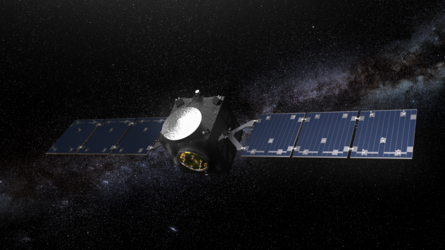
Hera is a small van-sized spacecraft for deep space whose design has benefited from the heritage of ESA’s Rosetta comet-chaser as well as two decades of ESA asteroid mission studies. Harnessing the latest technology, Hera possesses autonomy comparable to a self-driving car to manoeuvre itself safely through the double-asteroid system.
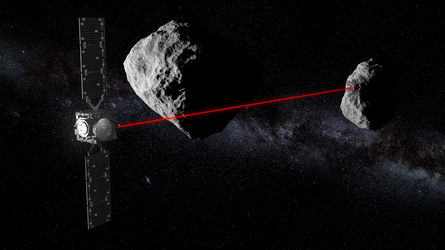
Hera will perform high-resolution visual, laser and radio science mapping of Dimorphos, which will be the smallest asteroid that humankind has visited so far, to build detailed maps of its surface and interior structure.
As well as gathering data for planetary defence research and conducting humankind's first close-up scientific survey of a binary asteroid system, the mission will give Europe experience of operating in an ultra-low gravity environment and in managing inter-satellite radio links.

Access the video
The latter is because Hera will carry with it two CubeSats which will deploy and then operate like drones, flying closer to the asteroid and taking more risks than their mothership.
These will be the first ESA CubeSats to operate beyond Earth orbit: Milani (named in memory of the professor who first conceived of the mission) will prospect the mineral make-up of Dimorphos while Juventas will perform the first radar sounding within an asteroid.

The CubeSats will end their missions by touching down on Dimorphos; the CubeSats carry sensors to return data on their historic touchdowns on the surface.
Hera will then proceed to studying the shape and sub-surface of the crater caused by DART’s impact. The mission lifetime, constrained by its propellant levels, is planned to end with a final descent onto the parent Didymos asteroid.