

Funding boost unlocks future space science programme
In its 50th anniversary year, European Space Agency (ESA) Member States have recommitted to space science. A historic budget increase for the Science Programme of 3.5% per year through to 2028, in addition to inflation, will enable some of the most ambitious missions ever, and bolster European leadership in space science.
The raise was agreed at the ESA Council meeting at Ministerial Level (CM25) on 26–27 November. It secures the Science Programme € 3787 million for the next five years, equivalent to about € 1.70 per European citizen per year.
For less than the price of a cup of coffee per person per year, Europe will continue to explore the biggest questions about the Universe and humankind’s place within it. But it goes much further than that. Through the Science Programme, ESA stimulates the development of novel technologies that have applications far beyond the space sector, creates thousands of jobs, and inspires future generations to follow careers in science and engineering.
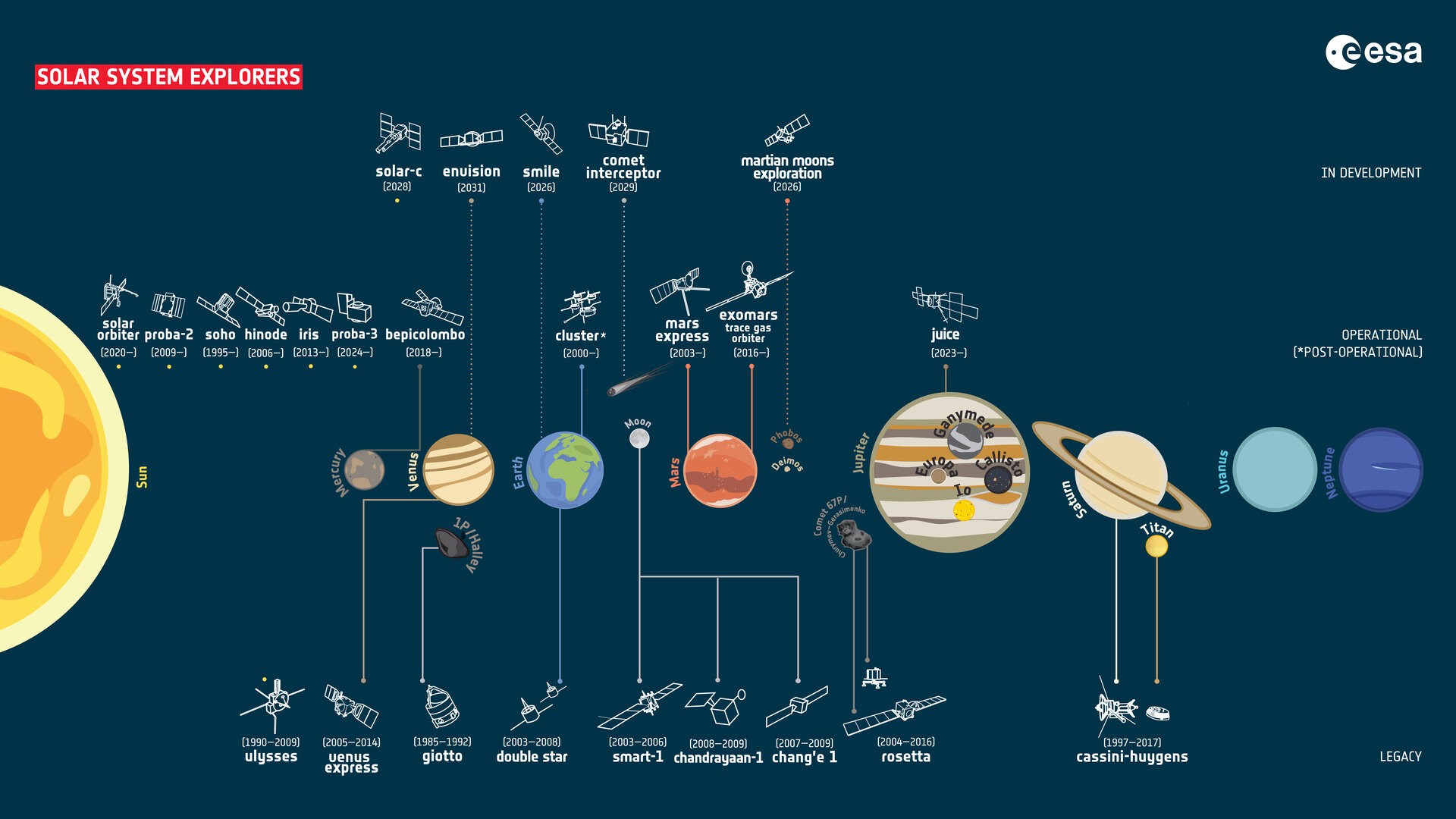
Over the last 20 years, the Science Programme has received a relatively stable budget, driving ESA to efficiently deliver some of the most iconic space science missions to date. From Rosetta to Euclid, Solar Orbiter to Juice, ESA has already built 53 missions that have resulted in over 94 000 scientific publications and generated over one million gigabytes of data shared with scientists around the world.
But to deliver the next generation of ambitious missions, the Science Programme needed a boost. This budget increase will allow ESA to take this next big step. And working in collaboration with companies and academic institutions across Europe, it will drive even more industrial and research capabilities across all ESA Member States.

What were the priorities for the Science Programme at CM25?
In advance of the meeting, ESA Director of Science Professor Carole Mundell said that “at CM25, everything is at stake for Science. We stand at a pivotal moment in history where we decide – as Europe – whether we will have the leadership, the independence and the creativity to lead for the future.”
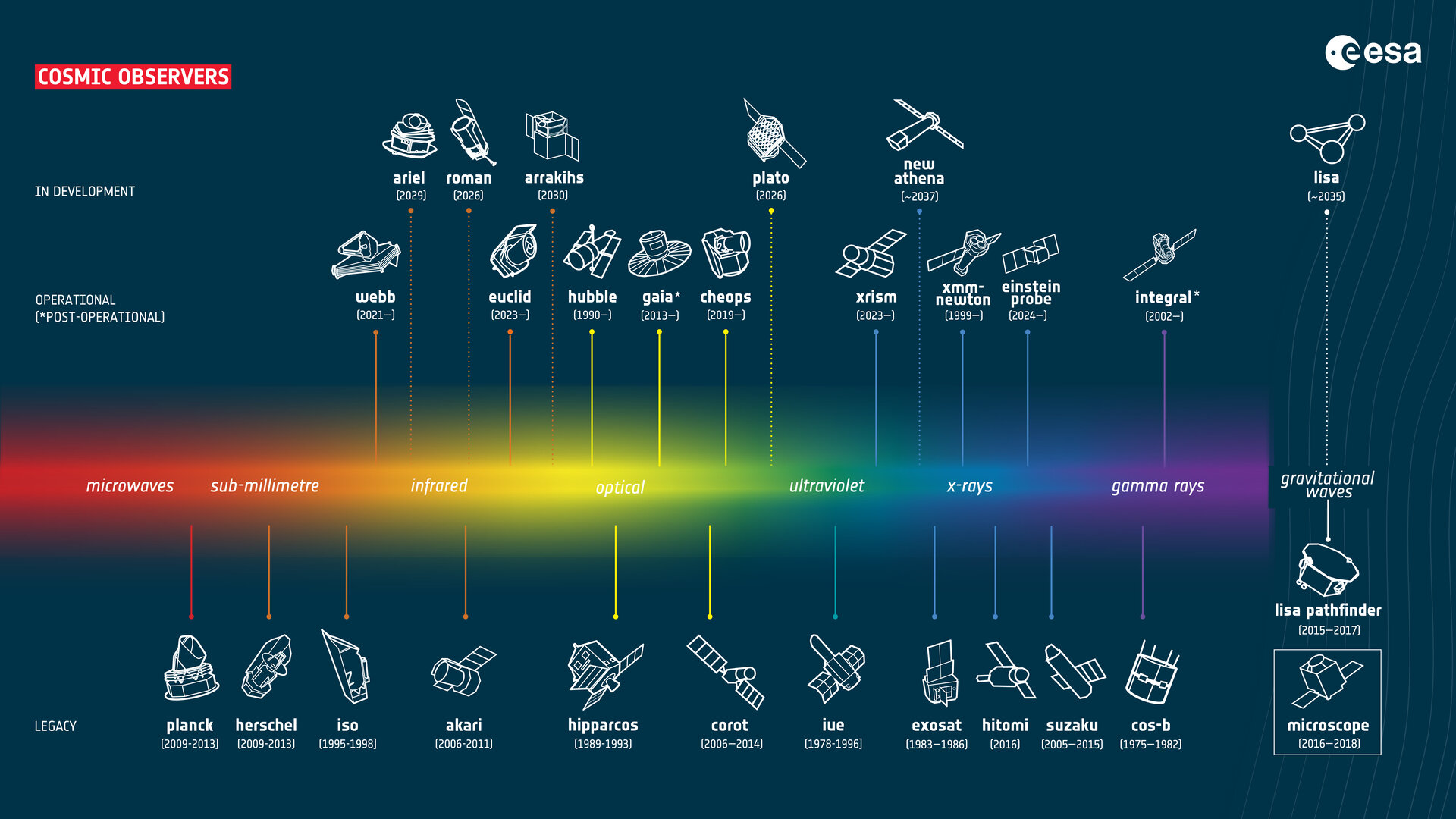
ESA's first priority was to receive enough funding to complete Cosmic Vision, our current mission planning cycle. Cosmic Vision includes: Juice – currently en route to the icy moons of Jupiter; LISA – which will detect ripples in the fabric of spacetime; and NewAthena – set to become the largest X-ray telescope in history.
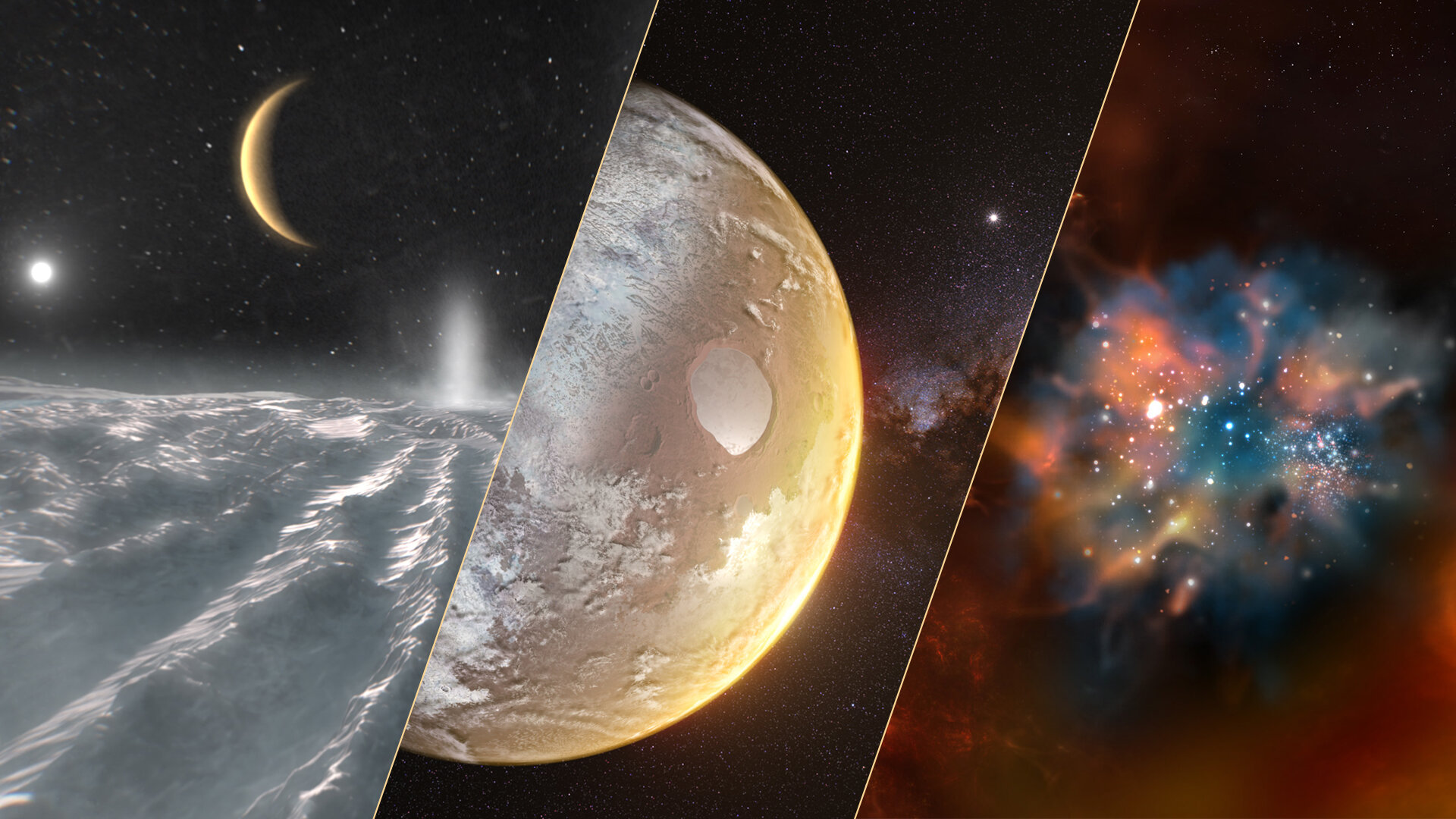
The second priority was to embark upon Voyage 2050 which will take us even further in our exploration of the Universe. The first Voyage 2050 large-class mission would be a daring endeavour to orbit and land on Saturn’s icy moon Enceladus in search of signs of life.
“In short, this ministerial is about delivering what we promised, and building the future,” said Carole, in advance of CM25.
What does the future of the Science Programme look like?
In the coming years, ESA will continue to operate the Cosmic Vision missions currently in space, whilst finalising those that haven’t yet left Earth. This includes readying Smile and Plato for launch in 2026 .
Simultaneously, but with a longer-term outlook, the new budget will help shape ESA's Voyage 2050 missions, for which ESA will work closely with science communities across ESA's 23 Member States. Together, we will define exciting new missions through an open, competitive process that lies at the heart of the Science Programme.
As headlined at CM25, the focus will be on moving forward with the fourth large-class mission, which will travel to Saturn, tour its icy moons and land on Enceladus to seek signs of life. While the mission concept is already in place, scientists and engineers will work together to develop the instruments and other technologies still needed to make this mission possible.
Member State industries are a critical pillar of ESA science mission success. Ambitious missions drive the invention of state-of-the-art technologies, and build new capability in national industries and economies. The insightful data ESA's future missions collect will be delivered into the hands of researchers across our Member States and, ultimately, around the world, allowing them to make breakthrough discoveries in astrophysics, planetary science, cosmology and heliophysics.
“The excellence of ESA's Science Programme is an ideal vehicle for international collaboration and partnership,” said Carole.
“Over the past 50 years since the founding of the European Space Agency, the Scientific Programme has matured to be a world leader, demonstrating Europe’s ability to innovate, inspire and deliver. The decisions taken at CM25 put us on the path to shape the next 25 years of European global leadership and international cooperation in frontier space science and technology.”
What’s coming up in the next three years?
2026:
- Launch of Smile in spring
- Euclid’s first Data Release in October
- BepiColombo’s arrival at Mercury in November
- Gaia’s fourth Data Release, expected December
- Preparing Plato for launch by the end of 2026
2027:
- Routine science operations begin for BepiColombo
- Solar Orbiter gets closer to the Sun’s poles
2028:
- Launch readiness review of Comet Interceptor