• → European Space Agency

      • Space for Europe
      • Space News
      • Space in Images
      • Space in Videos
    • About Us

      • Welcome to ESA
      • DG's News and Views
      • For Member State Delegations
      • Business with ESA
      • ESA Exhibitions
      • ESA Publications
      • Careers at ESA
    • Our Activities

      • Space News
      • Observing the Earth
      • Human Spaceflight
      • Launchers
      • Navigation
      • Space Science
      • Space Engineering
      • Operations
      • Technology
      • Telecommunications & Integrated Applications
    • For Public

    • For Media

    • For Educators

    • For Kids

    • ESA

    • Operations

    • Ground Systems Engineering

    • Space Debris

    • SSA

    • Operations
    • Operations home
    • Background
    • About Operations
    • The Right Stuff
    • Multimedia

      • Images
      • Videos
    • SSA programme
    • Space Situational Awareness
    • Teams on ground
    • Ground Systems Engineering
    • EGOS - Ground operation system
    • Missions in space
    • Solar and planetary
    • Astronomy & fundamental physics
    • Earth observation
    • Human spaceflight
    • Technology demonstration
    • Estrack operations
    • Past missions
    • ESA mission history
    • - Find a mission: A...Z
    • Mission control centres
    • ATV Control Centre (ATV-CC)
    • Columbus Control Centre (Col-CC)
    • Ground stations
    • Estrack tracking stations
    • ESTRACK Control Centre
    • - Find a station: A...Z
    • OPS Community
    • Advanced Operations Concepts Office
    • HSO Exchange
    • Knowledge Management at ESA's Operations team

    ESA > Our Activities > Operations

    Chandrayaan-1 now in lunar transfer trajectory

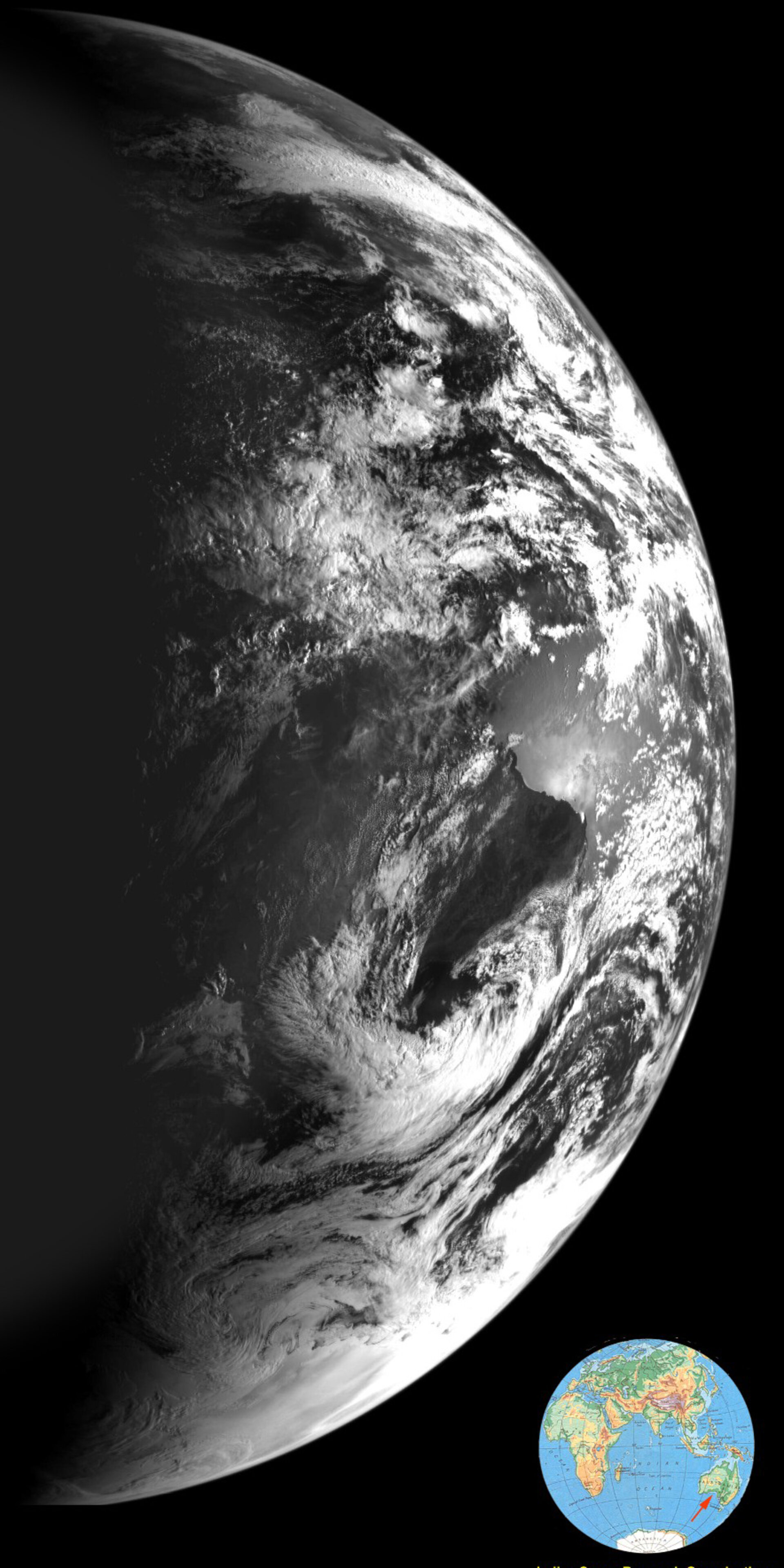
    Earth, seen from Chandrayaan-1
    5 November 2008

    Yesterday, following a fifth orbit-raising manoeuvre, the Chandrayaan-1 spacecraft successfully settled into a trajectory that will take it to the Moon.

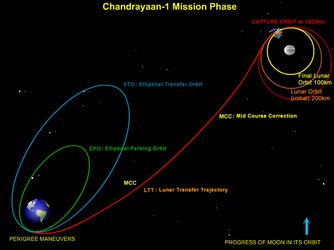
    After launch on 22 October, the spacecraft was first injected into an elliptical 7-hr orbit around Earth, between 255 km and 22 860 km above our planet. After five engine firings, Chandrayaan-1 spiralled outwards in increasingly elongated ellipses around Earth, until it reached its lunar transfer orbit on 4 November at 00:26 CET (04:56 Indian standard time).

    Lunar transfer orbit
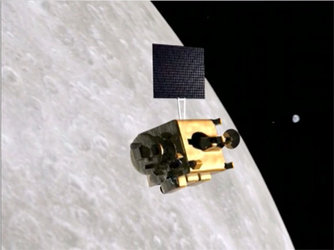
    Chandrayaan-1 lunar transfer orbit

    In the fifth and last orbit-raising manoeuvre, the spacecraft’s 440 Newton liquid-fuel propelled engine was fired for about two and a half minutes. The lunar transfer orbit’s farthest point from Earth is about 380 000 km.

    The spacecraft, which is being monitored from the Spacecraft Control Centre at the Indian Space Research Organisation’s ISRO Telemetry, Tracking and Command Network (ISTRAC) in Bangalore, is working very well. Chandrayaan-1’s Terrain Mapping camera (TMC) was successfully tested on 29 October and provided its first images, depicting Earth.


    Earth, from Chandrayaan-1
    Earth, from Chandrayaan-1

    Chandrayaan-1 will approach the Moon on 8 November 2008 when the spacecraft’s liquid-fuel propelled engine will be fired again. This manoeuvre, called lunar orbit insertion, will decelerate the spacecraft to allow the Moon’s gravity to capture it into an elliptical lunar orbit. A series of further manoeuvres will then progressively lower the altitude of Chandrayaan-1 around the Moon until it reaches its final 100 km circular orbit.

    Note for editors:

    The previous four orbit-raising manoeuvres took place on 23, 25, 26 and 29 October 2008, respectively.

    Chandrayaan-1, India’s first mission to venture beyond Earth’s orbit, is led by ISRO. ESA has coordinated and supported the provision of the three European instruments on board (C1XS, SARA, SIR-2), and assisted ISRO in areas such as flight dynamics and is supporting data archiving and processing. As a result of the collaboration, ESA and ISRO will share the data from their respective instruments. Other international partners in the mission include Bulgaria and the USA.

    For more information:

    Christian Erd, ESA Chandrayaan-1 Project Manager
    Email: Christian.erd @ esa.int

    Detlef Koschny, ESA Chandrayaan-1 Project Scientist
    Email: Detlef.koschny @ esa.int

    Rate this

    Views

    Share

    • Currently 0 out of 5 Stars.
    • 1
    • 2
    • 3
    • 4
    • 5
    Rating: 0/5 (0 votes cast)

    Thank you for rating!

    You have already rated this page, you can only rate it once!

    Your rating has been changed, thanks for rating!

    55
    Tweet
    • SMART-1
    • More about...
    • Chandrayaan-1
      • Chandrayaan-1 in a nutshell
      • Related news
        • Chandrayaan-1 successfully launched – next stop: the Moon
          • All set for Chandrayaan-1 launch
            • Europe all set for lunar mission Chandrayaan-1
              • Europe’s next ride to the Moon: Chandrayaan-1
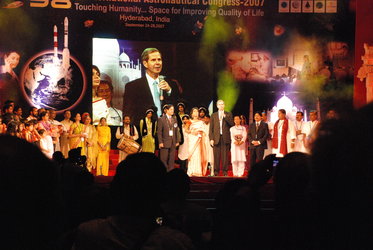
                • ESA and India tighten relations at IAC 2007
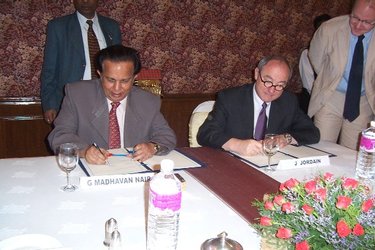
                  • Agreement signed for European instruments on Chandrayaan-1
                  • Related ESApod
                  • SHAR: the Indian launch base
                    • India – Europe cooperation
                      • Video overview of the Chandrayaan-1 mission
                      • Related links
                      • Indian Space Research Organisation
                      • Chandrayaan-1 at ISRO
                      • C1XS web page
                      • SIR-2 web page
                      • SARA web page

    Connect with us

    • RSS
    • Youtube
    • Twitter
    • Flickr
    • G+
    • Facebook
    • Livestream
    • Subscribe
    • App Store
    • ESA Operations Twitter

    Follow ESA operations

    • LATEST ARTICLES
    • · ESA astronaut Timothy Peake set fo…
    • · Space drives e-mobility
    • · Proba-V opens its eyes
    • · First new Galileo satellite arrive…
    • · Next destination: space
    • FAQ

    • Jobs at ESA

    • Site Map

    • Contacts

    • Terms and conditions