• → European Space Agency

      • Space for Europe
      • Space News
      • Space in Images
      • Space in Videos
    • About Us

      • Welcome to ESA
      • DG's News and Views
      • For Member State Delegations
      • Business with ESA
      • ESA Exhibitions
      • ESA Publications
      • Careers at ESA
    • Our Activities

      • Space News
      • Observing the Earth
      • Human Spaceflight
      • Launchers
      • Navigation
      • Space Science
      • Space Engineering
      • Operations
      • Technology
      • Telecommunications & Integrated Applications
    • For Public

    • For Media

    • For Educators

    • For Kids

    • ESA

    • Space Engineering

    • What we do
    • Directorate of Technical and Quality Management (TEC)
    • Electrical
    • Electrical engineering
    • Control Systems
    • Data Systems
    • Radio Frequency Payload Systems
    • Electromagnetics and Space Environment
    • Power and Energy Conversion
    • Mechanical
    • Mechanical engineering
    • Thermal Control
    • Structures and Mechanisms
    • Mechatronics and Optics, incl. robotics and life support
    • Propulsion and Aerothermodynamics
    • Systems
    • Systems and software engineering
    • Software Systems
    • Systems Engineering, incl. cost engineering
    • Technology programmes
    • Product Assurance
    • Product Assurance
    • Flight Safety
    • Dependability
    • Quality Management and Assurance
    • Materials and Processes
    • Electronic Components
    • Software Product Assurance
    • Standards
    • Requirements and standards
    • European Cooperation for Space Standardization (ECSS)
    • European Space Components Coordination (ESCC)
    • Services
    • ESA calendar of events
    • Subscribe

    ESA > Our Activities > Space Engineering

    Good vibrations for BepiColombo

    17 August 2012

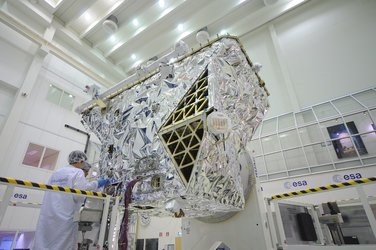
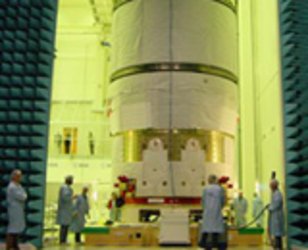
    Mimicking the intense vibrations experienced by a satellite during launch, the engineering model of the BepiColombo mission to Mercury has been subjected to similar forces at ESA’s spacecraft test facilities.

    Loading...

    BepiColombo vertical vibration test

    A major design issue for spacecraft arises from the intense environment experienced during launch, ranging from vigorous vibrations to deafening noise. It is essential to test spacecraft under similar conditions here on Earth, to ensure they will survive the violent ride to space.

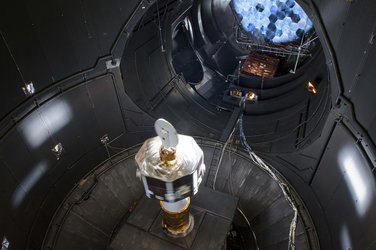
    In these videos of recent vibration tests, the BepiColombo structural and thermal model is in its launch configuration in the test facilities at ESTEC, ESA’s technical centre in Noordwijk, the Netherlands.

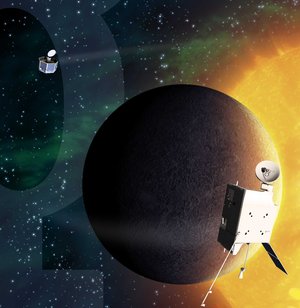
    BepiColombo is a joint mission between ESA and the Japan Aerospace Exploration Agency to explore the properties of Mercury, the enigmatic innermost planet in our Solar System.

    The spacecraft comprises a number of components. Seen here from top to bottom are the sunshield, which conceals the Japanese Mercury Magnetospheric Orbiter, with the European Mercury Planetary Orbiter below. Underneath is the Mercury Transfer Module, which will deliver the two scientific satellites into orbit around the planet.

    Loading...

    BepiColombo horizontal vibration test


    During the tests the spacecraft was mounted on a table where it was shaken up-and-down or from side-to-side to mimic the vibrations it will experience when it lifts off on an Ariane 5 launch vehicle in 2015.

    Each test lasted for 2.5 minutes during which the frequency of the vibrations was increased from 3 Hz to 100 Hz. At the lowest frequencies the spacecraft movement reached 10 cm, which decreased as the frequency continued to rise.

    Other mechanical tests to simulate the launch and voyage in space include exposing the spacecraft to the tremendous noise a rocket produces, the harsh vacuum of space, and scorching temperatures of some 450°C that the modules will endure as they orbit around the closest planet to the Sun.

    The engineering model will also be subjected to the shocks generated during the separation of BepiColombo from the launcher, the separation of the individual spacecraft modules and the deployment of its solar arrays and antennas.

    BepiColombo is scheduled to launch in 2015 and will arrive at Mercury in 2022. The two orbiters will study the planet’s composition, geophysics, atmosphere, magnetosphere, and geological history.

    As the nearest planet to the Sun, Mercury has an important role in the story of planet formation. Mercury together with Venus and Mars make up Earth’s rocky neighbourhood. Each planet holds information necessary for understanding how the innermost planets of our Solar System formed and evolved.
    Rate this

    Views

    Share

    • Currently 0 out of 5 Stars.
    • 1
    • 2
    • 3
    • 4
    • 5
    Rating: 0/5 (0 votes cast)

    Thank you for rating!

    You have already rated this page, you can only rate it once!

    Your rating has been changed, thanks for rating!

    319
    Tweet
    • Test Centre
    • test centre virtual tour
      test centre virtual tour
      Test Centre virtual tour
    • More about
    • BepiColombo
    • Mercury facts
    • For the media
    • BepiColombo media factsheet
    • BepiColombo images
    • BepiColombo animations
    • Related articles
      • Good vibrations for BepiColombo
        • ESA simulates scorching sunlight for BepiColombo mission to Mercury
          • How ESTEC turned up temperature for Mercury testing
            • ESA’s Mercury mapper feels the heat
            • Hot stuff: the making of BepiColombo
              • BepiColombo industrial contract signed
                • ESA gives go-ahead to build BepiColombo
                • In depth
                • BepiColombo in-depth
                • This article in depth
                • Related links
                • ESA BepiColombo team site
                • BepiColombo at JAXA

    Connect with us

    • RSS
    • Youtube
    • Twitter
    • Flickr
    • G+
    • Facebook
    • Livestream
    • Subscribe
    • App Store
    • LATEST ARTICLES
    • · Rare merger reveals secrets of gal…
    • · Watching for hazards: ESA opens as…
    • · ESA astronaut Timothy Peake set fo…
    • · Space drives e-mobility
    • · Proba-V opens its eyes
    • FAQ

    • Jobs at ESA

    • Site Map

    • Contacts

    • Terms and conditions