• → European Space Agency

      • Space for Europe
      • Space News
      • Space in Images
      • Space in Videos
    • About Us

      • Welcome to ESA
      • DG's News and Views
      • For Member State Delegations
      • Business with ESA
      • ESA Exhibitions
      • ESA Publications
      • Careers at ESA
    • Our Activities

      • Space News
      • Observing the Earth
      • Human Spaceflight
      • Launchers
      • Navigation
      • Space Science
      • Space Engineering
      • Operations
      • Technology
      • Telecommunications & Integrated Applications
    • For Public

    • For Media

    • For Educators

    • For Kids

    • ESA

    • Space Science

    • Our Universe
    • About Space Science
    • ESA's 'Cosmic Vision'
    • Science missions
    • Mission navigator
    • Target groups
    • For Media
    • For Scientists
    • For Kids
    • Multimedia
    • Science images
    • Science videos
    • Animations
    • Downloads
    • Sounds from space
    • Resources
    • Reference section
    • Services
    • FAQs
    • Glossary
    • Help
    • Portal terms of use
    • Comments
    • Follow us
    • RSS feeds
    • ESA Sci on Twitter
    • ESA Space Science Images on Flickr
    • ESA 3D on Flickr

    ESA > Our Activities > Space Science

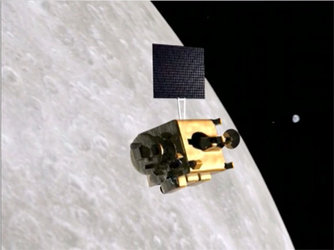
    Chandrayaan-1 starts observations of the Moon

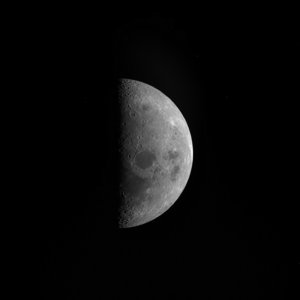
    The lunar surface, as seen by Chandrayaan-1
    24 November 2008

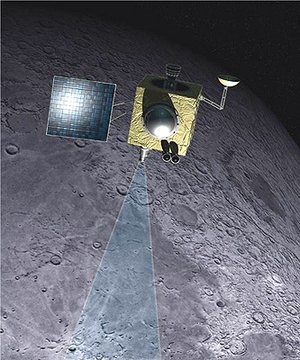
    The Indian Space Research Organisation’s lunar orbiter Chandrayaan-1 released a probe that impacted close to the lunar south pole on 14 November. Following this, the instruments on the spacecraft are being switched on to get the science observations started.

    The Moon Impact Probe was dropped close to Shackleton crater, a place close to the south pole, where ice may exist in areas that are never illuminated by the Sun. It carried three instruments: a video imaging system, a radar altimeter and a mass spectrometer. The imaging system took pictures of the Moon as it approached the surface, the radar was used to determine the altitude, and the mass spectrometer was used to study the thin lunar atmosphere.

    The Moon
    The Moon

    The probe was released from the spacecraft at 15:36 CET (20:06 Indian Standard Time), on 14 November and took 25 minutes to reach the surface. As it descended, the probe transmitted pictures to the orbiter that were later downloaded to Earth.
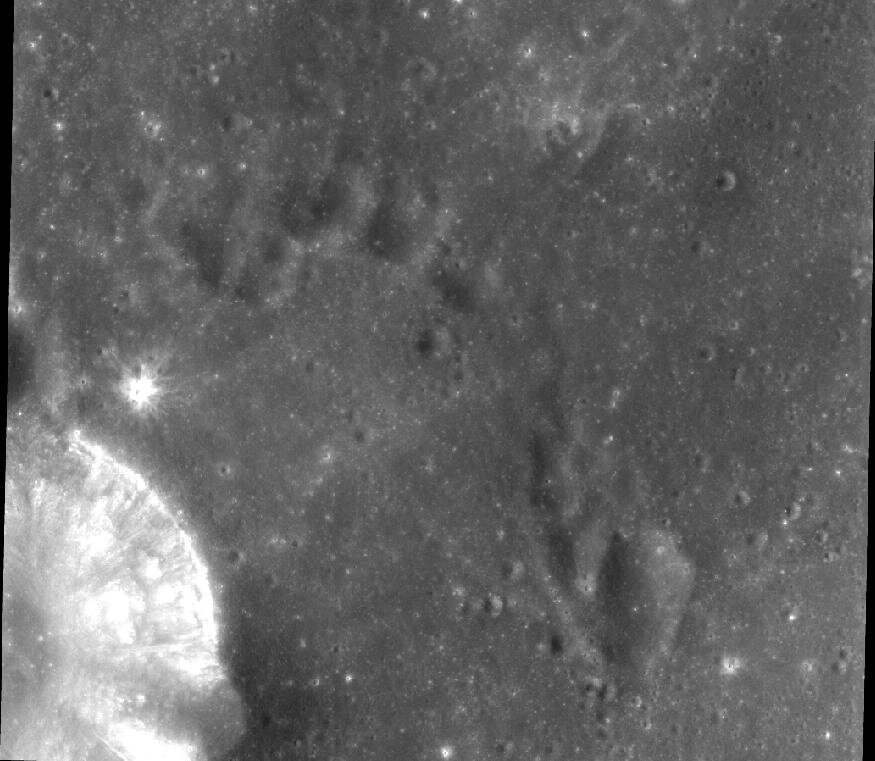

    Chandrayaan-1 image of the Moon's surface
    Chandrayaan-1 image of the Moon's surface

    The Terrain Mapping Camera, TMC, and the Radiation Dose Monitor, RADOM, were functional by that time on the orbiter. After the impact of the probe, the remaining orbiter instruments were switched on consecutively for their commissioning activities.

    Raw image of the lunar surface
    Raw image of the lunar surface

    During commissioning all standard operating modes of an instrument are exercised and the data and housekeeping parameters are examined to verify that everything is working properly.
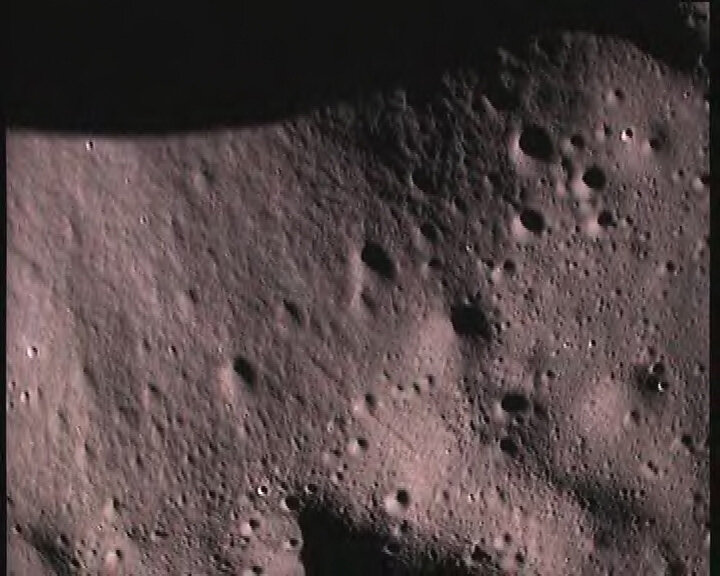
    Raw image of the lunar surface
    Raw image of the lunar surface

    The European near-infrared spectrometer SIR-2 was commissioned successfully on 19 November. The instrument was switched on and sent back housekeeping data indicating normal functionality. Science observations were started successfully on 20 November.

    The Chandrayaan-1 X-ray Spectrometer, C1XS, was first activated on 23 November, and its commissioning is in progress.

    The Sub-keV Atom Reflecting Analyser, SARA will be commissioned from 7 to 10 December. The commissioning for this instrument will take longer than usual because the instrument operates at a high-voltage, which will be increased in steps.

    Notes for editors:

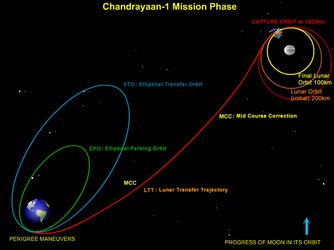
    Chandrayaan-1, India’s first mission to venture beyond Earth orbit, was launched on 22 October 2008. The mission is led by ISRO. ESA has coordinated and supported the provision of the three European instruments on board (C1XS, SARA, SIR-2), and assisted ISRO in areas such as flight dynamics and is supporting data archiving and processing. As a result of the collaboration, ESA and ISRO will share the data from their respective instruments. Other international partners in the mission include Bulgaria and the USA.

    For more information:

    Detlef Koschny, ESA Chandrayaan-1 Project Scientist
    Email: Detlef.Koschny @ esa.int

    Christian Erd, ESA Chandrayaan-1 Project Manager
    Email: Christian.Erd @ esa.int

    Rate this

    Views

    Share

    • Currently 0 out of 5 Stars.
    • 1
    • 2
    • 3
    • 4
    • 5
    Rating: 0/5 (0 votes cast)

    Thank you for rating!

    You have already rated this page, you can only rate it once!

    Your rating has been changed, thanks for rating!

    37
    Tweet
    • SMART-1 artist's impression
      SMART-1 artist's impression
      Looking at the Moon
    • Related ESApod
    • SHAR: the Indian launch base
      • India – Europe cooperation
        • Video overview of the Chandrayaan-1 mission
        • Related news
          • Lunar spacecraft reaches its final orbit
            • Chandrayaan-1 now in lunar orbit
              • Chandrayaan-1 now in lunar transfer trajectory
                • Chandrayaan-1 successfully launched – next stop: the Moon
                  • All set for Chandrayaan-1 launch
                    • Europe all set for lunar mission Chandrayaan-1
                      • Europe’s next ride to the Moon: Chandrayaan-1
                      • Related links
                      • Indian Space Research Organisation
                      • Chandrayaan-1 at ISRO
                      • C1XS web page
                      • SIR-2 web page
                      • SARA web page

    Connect with us

    • RSS
    • Youtube
    • Twitter
    • Flickr
    • G+
    • Facebook
    • Livestream
    • Subscribe
    • App Store
    • ESA Science Twitter

    Follow ESA science

    • LATEST ARTICLES
    • · ESA astronaut Timothy Peake set fo…
    • · Space drives e-mobility
    • · Proba-V opens its eyes
    • · First new Galileo satellite arrive…
    • · Next destination: space
    • FAQ

    • Jobs at ESA

    • Site Map

    • Contacts

    • Terms and conditions