Unusual geology seen during Enceladus fly-by
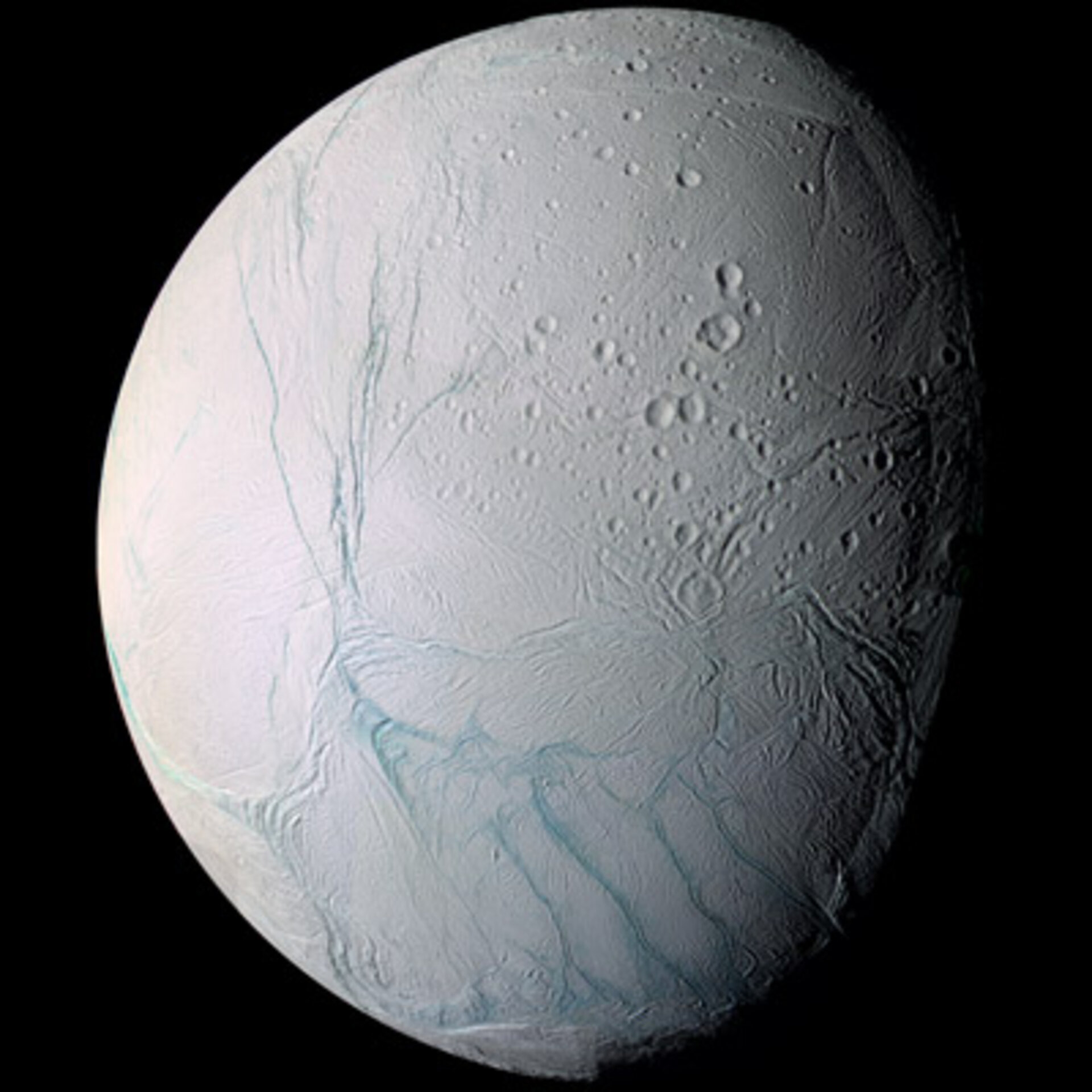
The NASA/ESA/ASI Cassini spacecraft has obtained detailed images of the south polar region of Saturn's moon Enceladus. They reveal distinctive geological features and the most youthful terrain seen on the moon, pointing to a very complex evolution.
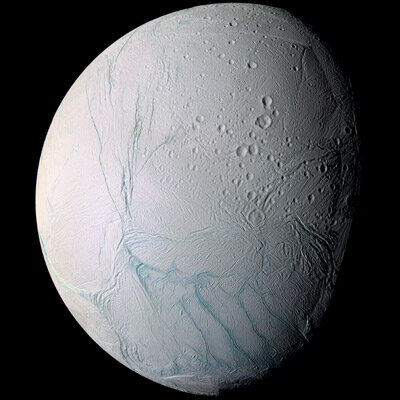
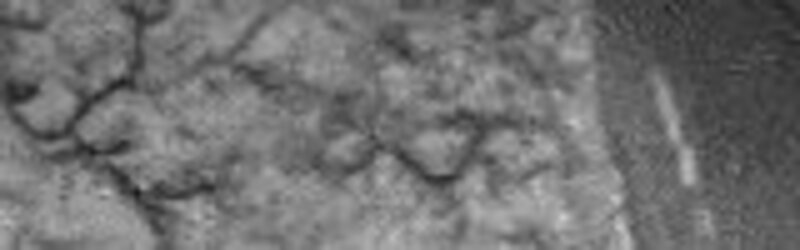
Cassini's fly-by of 14 July brought it within 175 kilometres of the surface of the moon. The close encounter revealed a landscape near the south pole almost entirely free of impact craters. The area is also littered with house-sized ice boulders carved by unique tectonic patterns found only in this region of the moon.
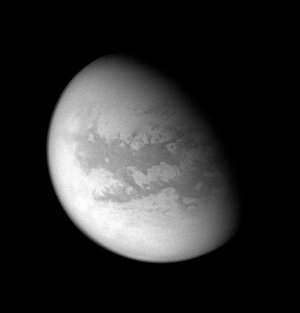
As Saturn's brightest, whitest satellite, Enceladus has the most reflective surface in the Solar System. Previous Cassini fly-bys revealed that, in contrast to Saturn's other icy moons, Enceladus has lightly cratered regions, fractured plains and ‘wrinkled’ terrain.
The new findings add to the story of a body that has undergone multiple episodes of geological activity spanning a considerable portion of its lifetime.
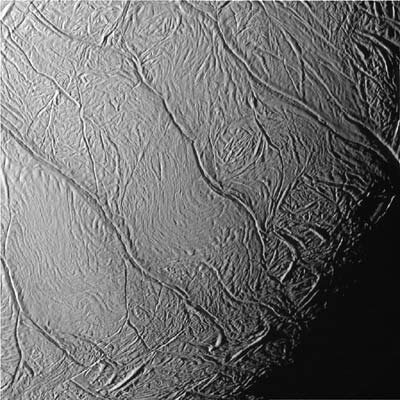
The moon's southernmost latitudes are likely to have seen the most recent activity. These same latitudes may also bear the scars of a shift in the moon's spin rate. If true, it may help scientists understand why Enceladus has a tortured-looking surface, with criss-crossing faults, folds and ridges.
The most remarkable images show ice blocks about 10-100 metres across in a region that unusually lacks the very fine-grained frost that seems to cover the rest of the moon.
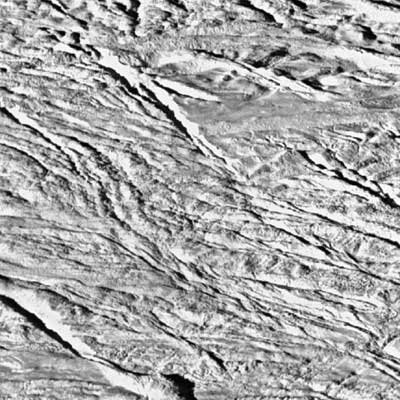
Scientists did not expect a landscape littered with building-sized blocks. The minimal cover of finer material and the preservation of small, crossing fracture patterns in the surrounding areas indicate that this region is young compared to the rest of Enceladus.
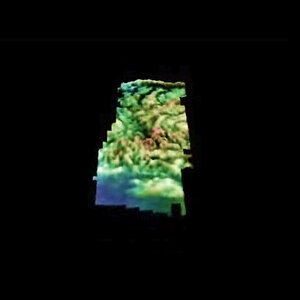
False colour composite views of this region, created from the most recent images, show the largest coverage of coarse-grained ice fractures seen anywhere on the moon, which also supports the notion of a young surface at southern latitudes.

The images also revealed examples of distinctive ‘Y-shaped’ tectonic features. In these elements, parallel ridges and valleys appear to systematically fold and deform around the south polar terrains.
These features define a boundary that isolates the young, south polar terrains from older terrains. Their position and orientation may tell us about how the rotation of Enceladus has evolved over time and what might have provided the energy for the geological activity that has wracked this moon.
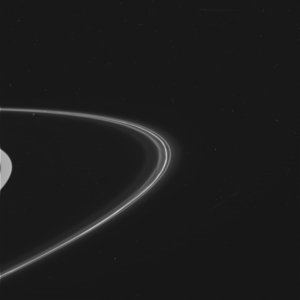
The apparent absence of sizable impact craters also suggests the south pole is younger than other terrain. All these indications of youth are of great interest to scientists, who have long suspected Enceladus as one possible source of material for Saturn's extensive and diffuse E ring, which coincides with the moon's orbit. Young terrain requires a means to generate the heat needed to modify the surface.
Other Cassini instrument teams are working to understand data about its temperature, composition, particles and magnetic field. Together with image interpretation, these data can create a more complete picture of this moon.
For more information:
Carolina Martinez, NASA Jet Propulsion Laboratory, Pasadena, California, USA
Tel: 001 818 354 9382
Preston Dyches, Cassini Imaging Central Laboratory for Operations
Space Science Institute, Boulder, Colorado, USA
Tel: 001 720 974 5859