ESA    Life in Space    Expanding Frontiers    Improving Daily Life    Protecting the Environment    Benefits for Europe  
   
Media Centre
Press ReleasesESA TelevisionLaunch Media CornerExhibitions
Services
CalendarPublicationsFrequently asked questionsESA-sponsored ConferencesHelpSite CreditsPortal terms of useCommentsSubscribe Bookmark and Share


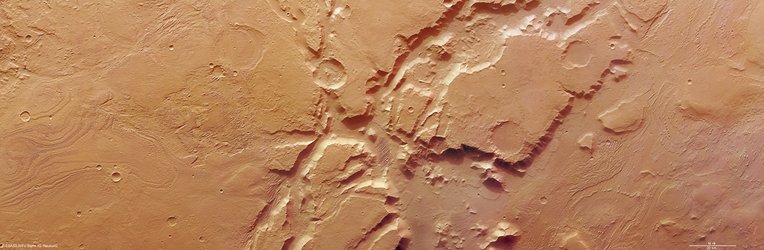
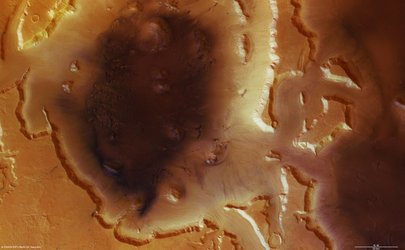
Impact Craters in Tyrrhena Terra
 
31 July 2007

Tyrrhena Terra Impact Crater
Download:
 HI-RES JPEG (Size: 18 475 kb)  HI-RES TIFF (Size: 42 692 kb)
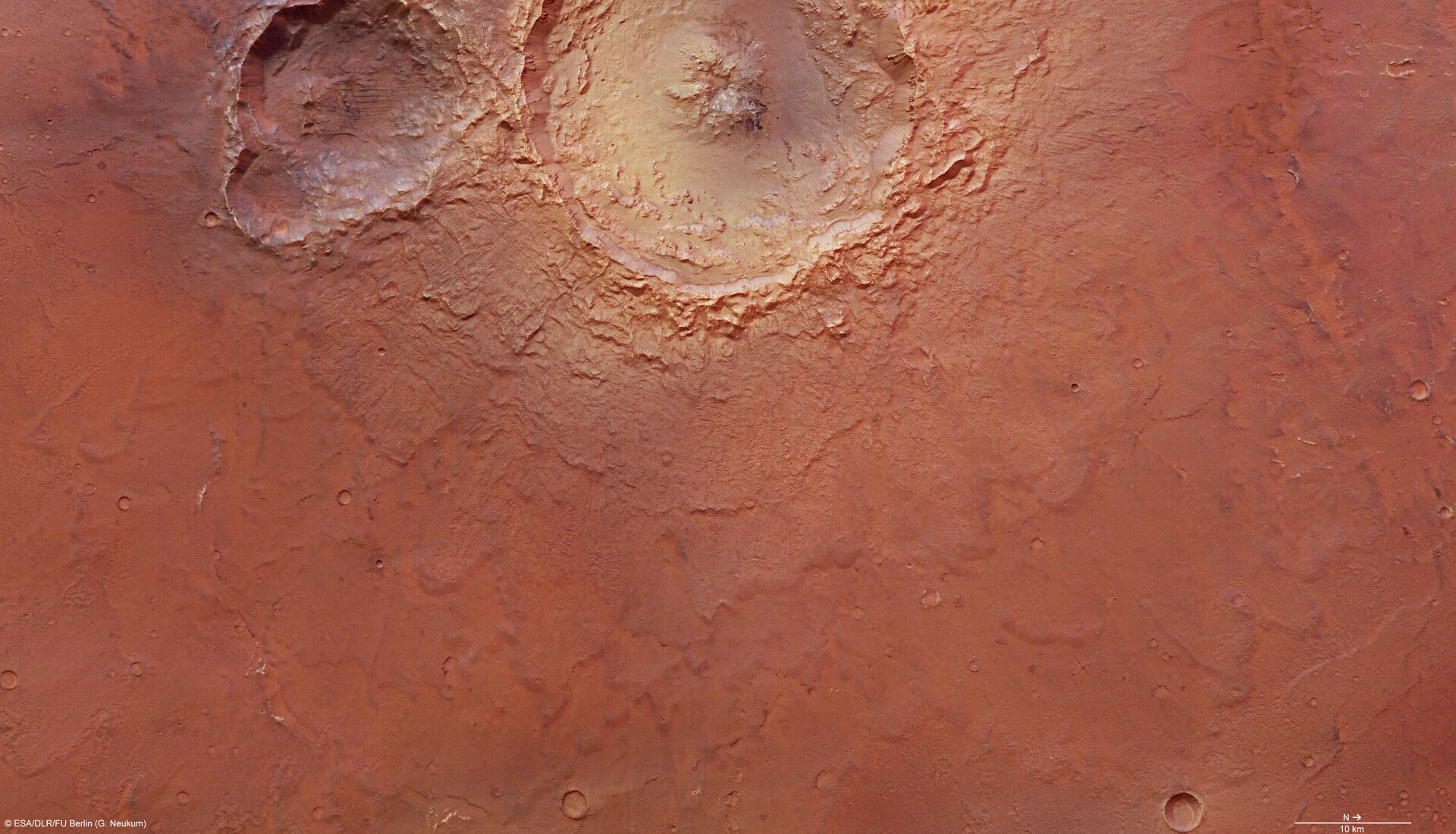
The High Resolution Stereo Camera (HRSC), ESA’s Mars Express obtained images of the Tyrrhena Terra Impact region on Mars.

On 10 May 2007, the spacecraft was in orbit number 4294 when it snapped pictures of the region located at 18° South and 99° East with a ground resolution of approximately 15 metres per pixel.
The colour scenes have been derived from the three HRSC-colour channels and the nadir channel.

The Sun illuminates the scene from the south-west (from top-left in the image).

Credits: ESA/DLR/FU Berlin (G. Neukum)


Tyrrhena Terra
Download:
 HI-RES JPEG (Size: 1541 kb)  HI-RES TIFF (Size: 3320 kb)
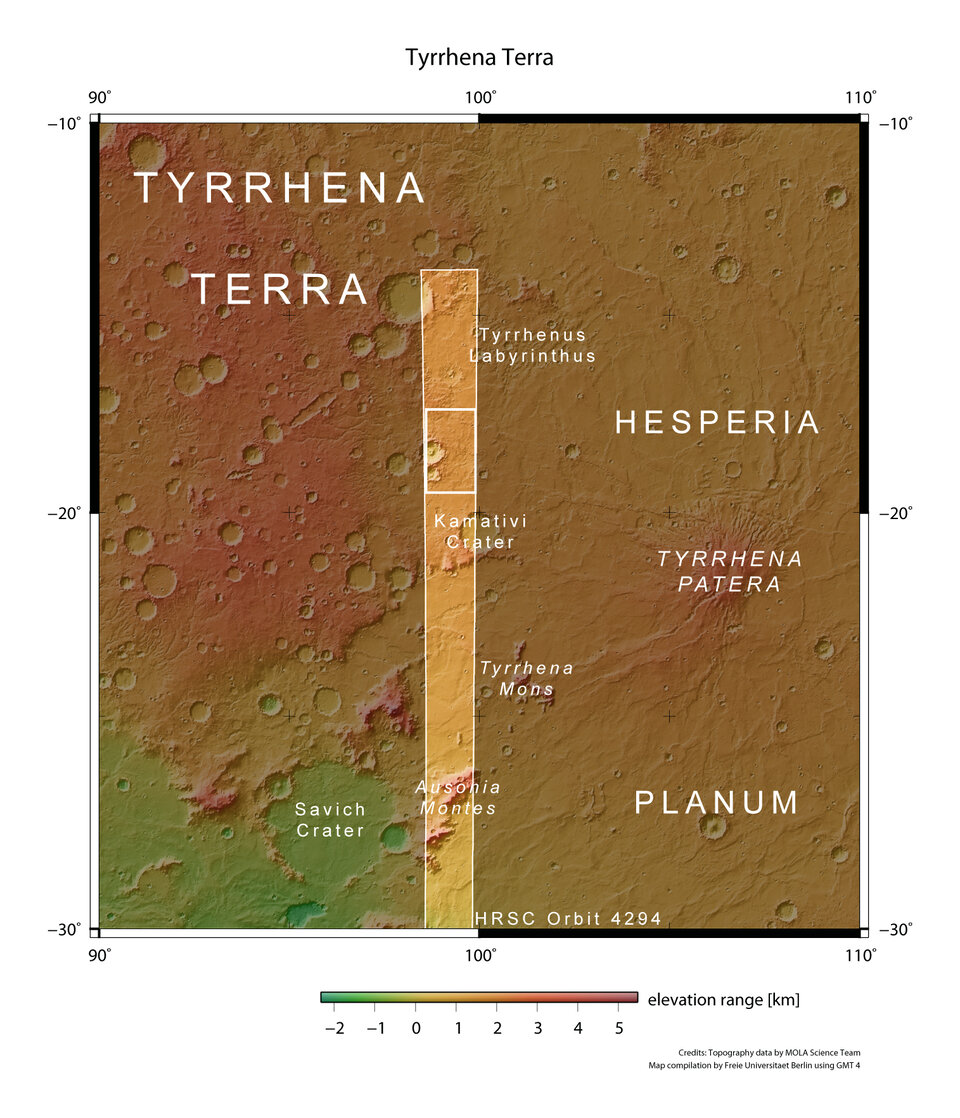
The High Resolution Stereo Camera (HRSC) on board ESA’s Mars Express obtained images of the Tyrrhena Terra Impact region on Mars.

On 10 May 2007, the spacecraft was in orbit number 4294 when it snapped pictures of the region located at 18° South and 99° East with a ground resolution of approximately 15 metres per pixel.

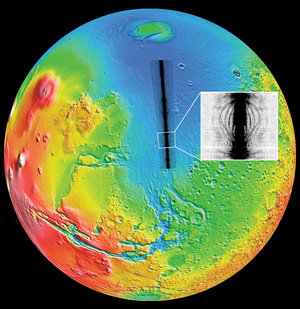
Tyrrhena Terra is part of the ancient, heavily cratered southern Martian highlands. The region is located north of Hellas Planitia, the largest impact basin on Mars. The image scene exhibits three impact craters, located at the eastern border of Tyrrhena Terra with Hesperia Planum.

Credits: FU Berlin/MOLA


Tyrrhena Terra, perspective view
Download:
 HI-RES JPEG (Size: 11 299 kb)  HI-RES TIFF (Size: 21 200 kb)
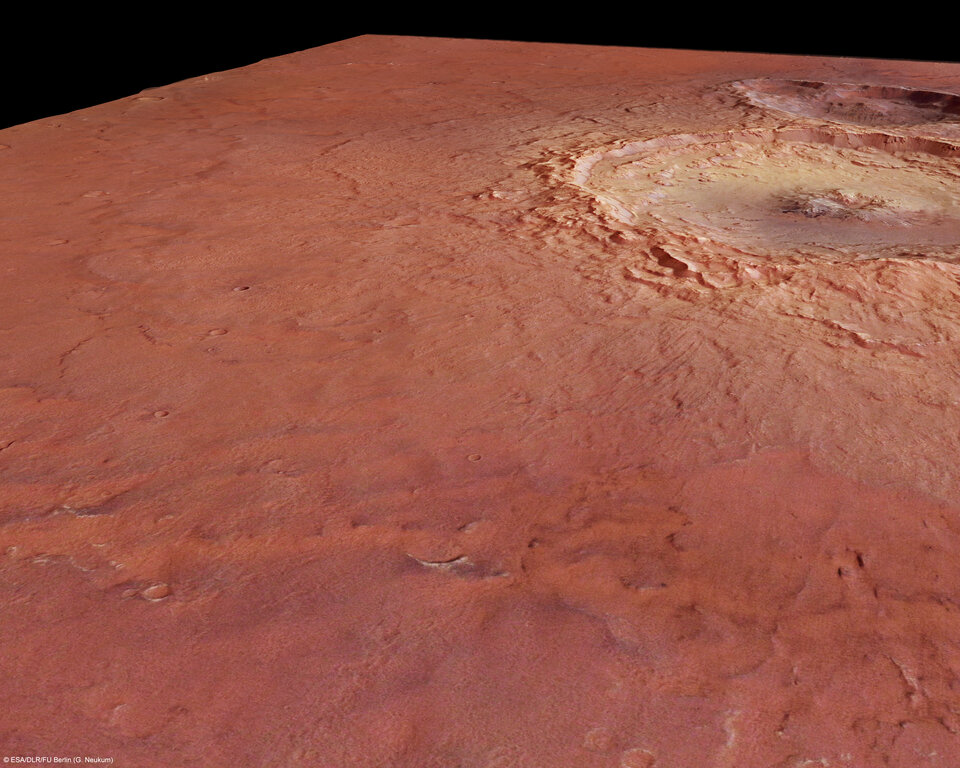
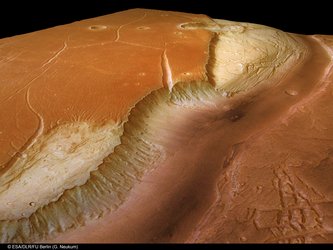
The western part of the scene is dominated by a 35 kilometre-wide and approximately 1000 metre-deep impact crater with an extremely steep rim.

The rim rises up to 400 metres above the surrounding plain. The crater is surrounded by multiple layers of material that was ejected during the impact. These so called ’ejecta blankets’ spread up to 50 kilometres around the crater. Their round, lobate appearance hints at possible ice- and water-rich subsurface material.
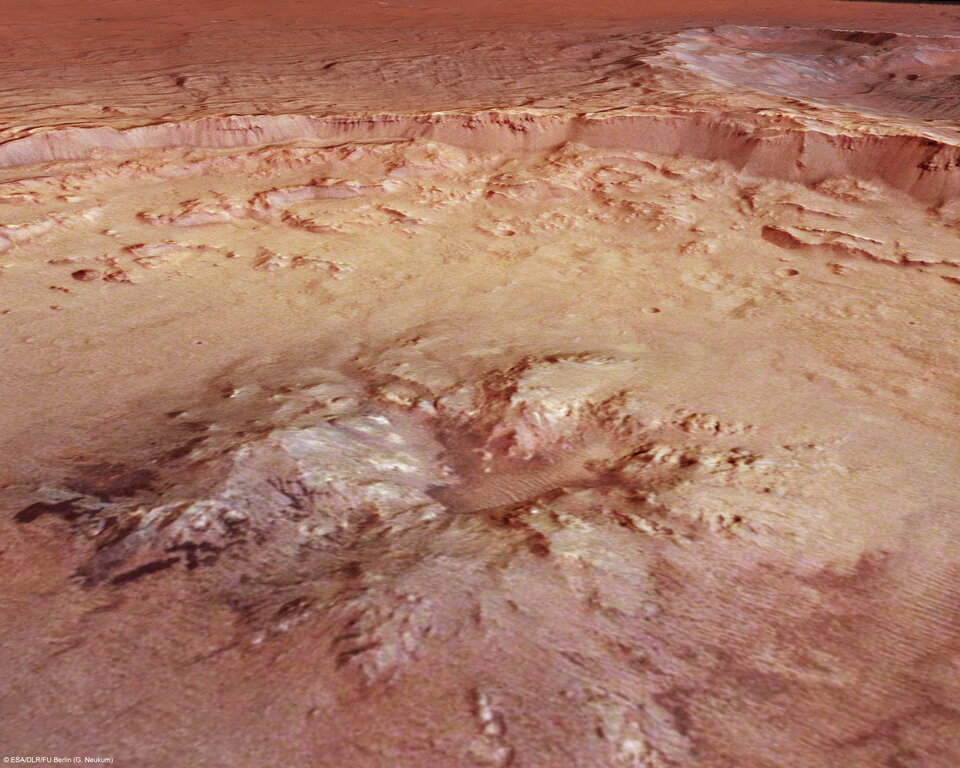
The High Resolution Stereo Camera (HRSC) on board ESA’s Mars Express obtained images of this region on 10 May 2007.

This perspective view has been calculated from the Digital Terrain Model derived from the HRSC stereo channels.

Credits: ESA/DLR/FU Berlin (G. Neukum)


Tyrrhena Terra perspective view
Download:
 HI-RES JPEG (Size: 9172 kb)  HI-RES TIFF (Size: 17 800 kb)
The western part of the scene is dominated by a 35 kilometre-wide and approximately 1000 metre-deep impact crater with an extremely steep rim.

The rim rises up to 400 metres above the surrounding plain.. The crater is surrounded by multiple layers of material that was ejected during the impact. These so called ’ejecta blankets’ spread up to 50 kilometres around the crater. Their round, lobate appearance hints at possible ice- and water-rich subsurface material.

The raised feature in the centre of the crater most likely originated from the elastic rebound of compressed subsurface material after the impact. This is comparable to what happens when a drop of water hits a puddle.

The High Resolution Stereo Camera (HRSC) on board ESA’s Mars Express obtained images of this region on 10 May 2007.

This perspective view has been calculated from the Digital Terrain Model derived from the HRSC stereo channels.

Credits: ESA/DLR/FU Berlin (G. Neukum)


Tyrrhena Terra
Download:
 HI-RES JPEG (Size: 11 465 kb)  HI-RES TIFF (Size: 14 768 kb)
The High Resolution Stereo Camera (HRSC) on board ESA’s Mars Express obtained images of the Tyrrhena Terra Impact region on Mars.

On 10 May 2007, the spacecraft was in orbit number 4294 when it snapped pictures of the region located at 18° South and 99° East with a ground resolution of approximately 15 metres per pixel.

This view has been derived from the nadir channel which provides the highest level of detail. The Sun illuminates the scene from the south-west (from top-left in the image).

Credits: ESA/DLR/FU Berlin (G. Neukum)


Tyrrhena Terra perspective view
Download:
 HI-RES JPEG (Size: 11 944 kb)  HI-RES TIFF (Size: 22 500 kb)
This image provides a persective view of Tyrrhena Terra.

The western part of the scene is dominated by a 35 kilometre-wide and approximately 1000 metre-deep impact crater with an extremely cliffy and chiseled edge.

Another, 18 kilometre-long and approximately 750 metre-deep impact crater, in all likelihood a ‘double impact crater’, is located south of the large crater. These ‘double impact craters’ develop when two objects, part of a binary, hit the surface almost simultaneously.

The High Resolution Stereo Camera (HRSC) on board ESA’s Mars Express obtained images of this region on 10 May 2007.

This perspective view has been calculated from the Digital Terrain Model derived from the HRSC stereo channels.

Credits: ESA/DLR/FU Berlin (G. Neukum)


Tyrrhena Terra 3D image
Download:
 HI-RES JPEG (Size: 24 701 kb)  HI-RES TIFF (Size: 37 200 kb)
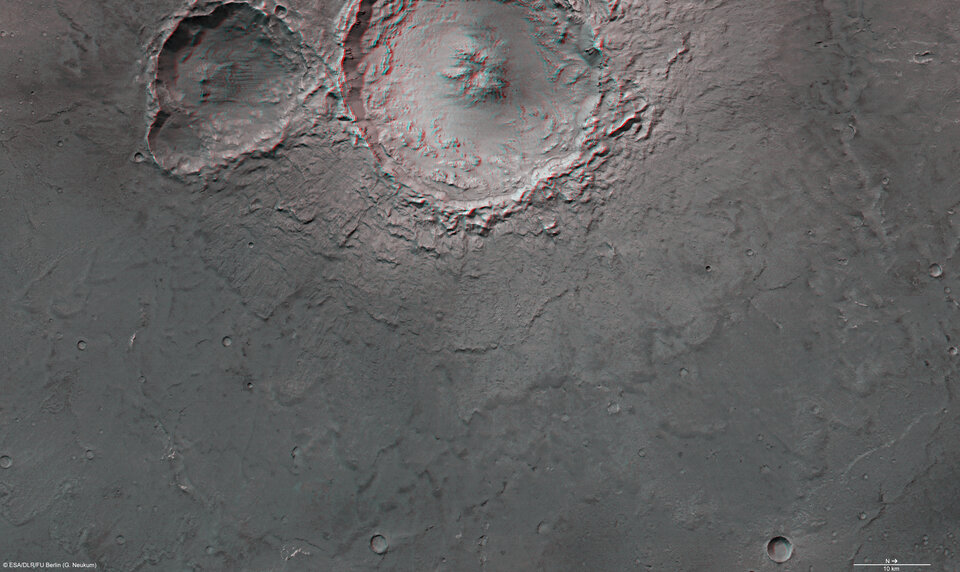
This is an anaglyph (3D) image of Tyrrhena Terra.

The High Resolution Stereo Camera (HRSC) on board ESA’s Mars Express obtained images of the Tyrrhena Terra Impact region on Mars.

On 10 May 2007, the spacecraft was in orbit number 4294 when it snapped pictures of the region located at 18° South and 99° East with a ground resolution of approximately 15 metres per pixel.

The western part of the scene is dominated by a 35 kilometre-wide and approximately 1000 metre-deep impact crater with an extremely cliffy and chiseled edge.

Another, 18 kilometre-long and approximately 750 metre-deep impact crater, in all likelihood a ‘double impact crater’, is located south of the large crater. These 'double impact craters' develop when two objects, part of a binary, hit the surface almost simultaneously.

This anaglyph image was calculated by putting together data from the nadir channel and one stereo channel.

Credits: ESA/DLR/FU Berlin (G. Neukum)


Mars Express image browser
Related articles
Tectonic signatures at Aeolis MensaeBreathtaking views of Deuteronilus Mensae on MarsThe first hiking maps of MarsCydonia's 'Face on Mars' in 3D animationSpacecraft fleet zeroing in on Martian water reservesMars Express scientists find a different Mars underneathKasei Valles outflow channel systemGranicus and Tinjar VallesChaotic terrain in Iani ChaosAncient caldera in Apollinaris PateraHeavily eroded Aram ChaosLava tubes on Pavonis Mons
Related links
High Resolution Stereo Camera


   Copyright 2000 - 2010 © European Space Agency. All rights reserved.