Cluster sees tsunamis in space
Cluster is providing new insights into the working of a ‘space tsunami’ that plays a role in disrupting the calm and beautiful aurora, or Northern Lights, creating patterns of auroral dances in the sky.
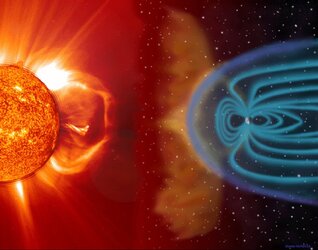
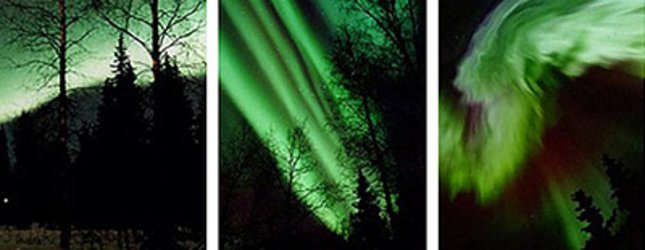
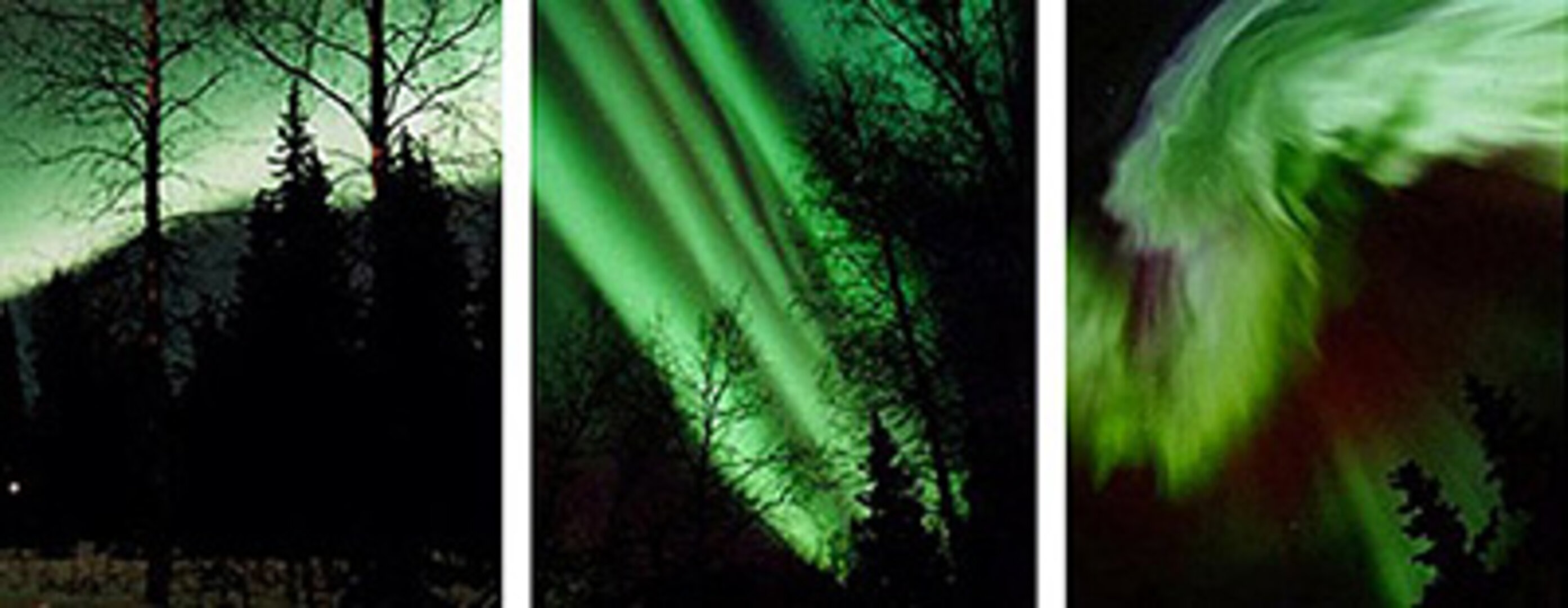
Generally seen in high-latitude regions such as Scandinavia or Canada, aurorae are colourful curtains of light that appear in the sky. Caused by the interaction of high-energy particles brought by the solar wind with Earth’s magnetic field, they appear in many different shapes.
Early in the evening, the aurora often forms a motionless green arc that stretches across the sky in the east-west direction. Colourful dancing auroral forms are the results of disturbances known as ‘substorms’ taking place in Earth’s magnetosphere. These perturbations can affect our daily lives, in particular by affecting the reception of GPS signals. Thus, understanding the physical processes involved is important to our routine life and security.
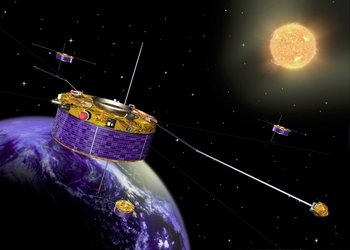
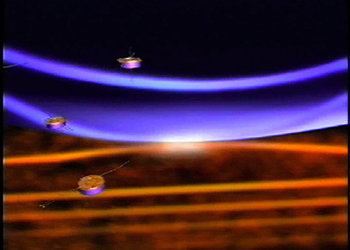
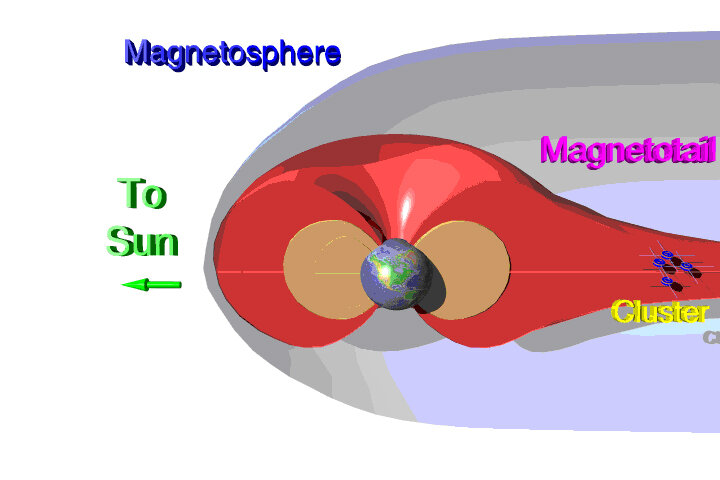
These substorms typically last one to two hours and are three-dimensional physical phenomena spread over altitudes from 100 to 150 000 kilometres. Trying to understand such complex physical processes with a single scientific spacecraft is like trying to predict the behaviour of a tsunami with a single buoy in an ocean. That is why the simultaneous use of several satellites, like the Cluster constellation, is necessary to understand these events.
Currently, there are two competing theoretical models to describe these substorms or space tsunamis. The first one is called the ‘Current-Disruption’ model, while the second one is the ‘Near Earth Neutral Line Model’. Using data from the four Cluster spacecraft, a group of scientists from both sides of the Atlantic were able to confirm that the behaviour of some substorms is consistent with the Current Disruption model.
A substorm develops and builds up in different stages, and it is the detailed study of one of these stages that helps us to understand which of the two models apply. For example, in the late stage of substorm development, auroral disturbances move towards the poles, suggesting that the energy source for auroras and substorms moves away from Earth.
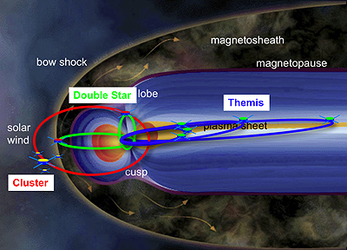
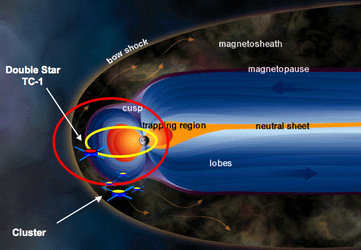
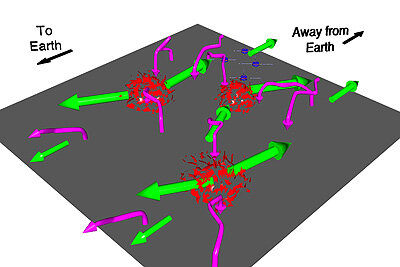
Previous satellite observations have found that, during this late stage, the flows of plasma (a gas of charged particles populating Earth’s magnetosphere) in the magnetotail exhibit a reversal in direction. In recent years it was generally thought that a flow reversal region is where magnetic reconnection takes place, that is where the energy of the magnetic field is converted into particle energy (dissipation effect), resulting in high-speed plasma flows that hurl towards Earth, like space tsunamis.
Detailed analysis of data obtained by the Cluster satellites while crossing such a region in the magnetotail, where flows of plasma exhibit a reversal in direction, has been reported by the team of Dr Tony Lui, a scientist of the Applied Physics Laboratory at the John Hopkins University, Maryland, USA, Co-Investigator of the Research with Adaptive Particle Imaging Detectors (RAPID) high-energy particles experiment on Cluster, and lead author of the study. Thanks to the unique capability of Cluster to perform simultaneous multipoint measurements, the scientists were able to derive several physical parameters never before estimated for such a flow reversal region.

By comparing the directions of the electric current and the electric field in the magnetosphere it is possible to understand whether the cause of the flow reversal is a dissipation effect (where magnetic field energy converted to particle energy) or a dynamo effect (where particle energy is converted to magnetic field energy). For this case study, the Cluster scientists observed that features associated with flow reversal are actually very complex, consisting of both dissipation and dynamo effects in localised sites.
This result shows that the plasma turbulence disrupts the local electric current. “The features we observed are consistent with the current disruption model. However, it is unclear how general these findings are. More events will be examined in the future," said Dr Lui.
"The magnetic substorm phenomenon is a hot topic of research,” added Philippe Escoubet, Cluster and Double Star project scientist for ESA. “This new Cluster result will certainly contribute to the on-going scientific debate and foster research cooperation with scientists involved in the newly launched NASA Time History of Events and Macroscale Interactions during Substorms (THEMIS), a mission specifically dedicated to studying substorms.”
Notes for Editors
The findings appear in the paper, “Cluster observation of plasma flow reversal in the magnetotail during a substorm”, published in Annales Geophysicae 9 August 2006.
Lui, A. T. Y., Y. Zheng, Y. Zhang, H. Rème, M. W. Dunlop, G. Gustafsson, S. B. Mende, C. Mouikis, and L. M. Kistler
For more information
Tony Lui, JHU/APL, USA
Email: tony.lui @ jhuapl.edu
Philippe Escoubet, ESA Cluster Project Scientist
Email: philippe.escoubet @ esa.int