Boost in funding expands Space Safety programme
The 2025 Ministerial Council (CM25) turned into an overwhelming success for ESA’s Space Safety programme. Member States committed to a budget of €955 million for the next three years – even more than requested – increasing the budget by an impressive 30 %. The allocated funds cover all plans outlined in the Space Safety programme proposal, including the exciting joint ESA-JAXA mission Ramses to asteroid Apophis during its flyby of Earth.
“The very strong funding for the years ahead is a powerful signal of Member States’ commitment to European autonomy in space safety as we face continuing geopolitical uncertainty,” says Holger Krag, Head of Space Safety at ESA.
“We can now look with confidence to the future and plan the next three years to give Europe a crucial push towards resilience, sustainability and self-reliance in space safety.”
How Europe will benefit

ESA’s Space Safety activities help ensure independent, continuous access to critical data and satellite services for Europe, imperative in this time of geopolitical instability. It is also time to clean up Earth’s orbits and show European leadership in making sure no more debris is generated if Europe wants to benefit from the exciting new technologies and markets in space.
The Space Safety programme also helps to secure Europe’s position at the forefront of new space technologies. As its projects work towards space sustainability, and important ambition is to stimulate a competitive European space industry.
An overview of some of the key Space Safety activities covered by the Member States’ generous funding at CM25:
Space Safety Cornerstones
The Programme’s highest priority is the continuation of its Cornerstone missions, grouped to address three main goals: Planetary Defence, Space Weather and Active Debris Removal & In-Orbit Servicing (ADRIOS). All three Cornerstones feature large-scale involvement from European industry and will demonstrate a range of innovative new technologies.

Planetary Defence Cornerstone (Ramses)
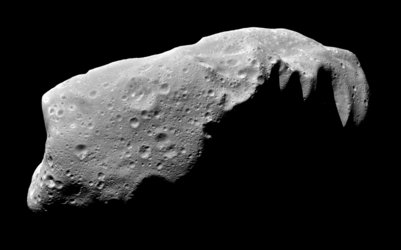
The entire world will be watching when the Apophis asteroid passes by very, very close to Earth in 2029. Observable with the naked eye in Europe, public interest in planetary defence capabilities will be immense.
The enthusiasm for the unique opportunity to send a spacecraft to Apophis had already shown itself in early proactive support from Member States. Now, the joint ESA-JAXA mission Ramses has received the required funding to meet Apophis in time and capitalise on the once-in-a-millenium event.
The Ramses mission will fly alongside during the asteroid’s close approach to Earth and will be the one delivering images from space as it happens. The fixed launch window in 2028 mimics the tight time pressure of real reconnaissance missions in the future, testing capabilities in a very realistic way.
Space Weather Cornerstone (Vigil)
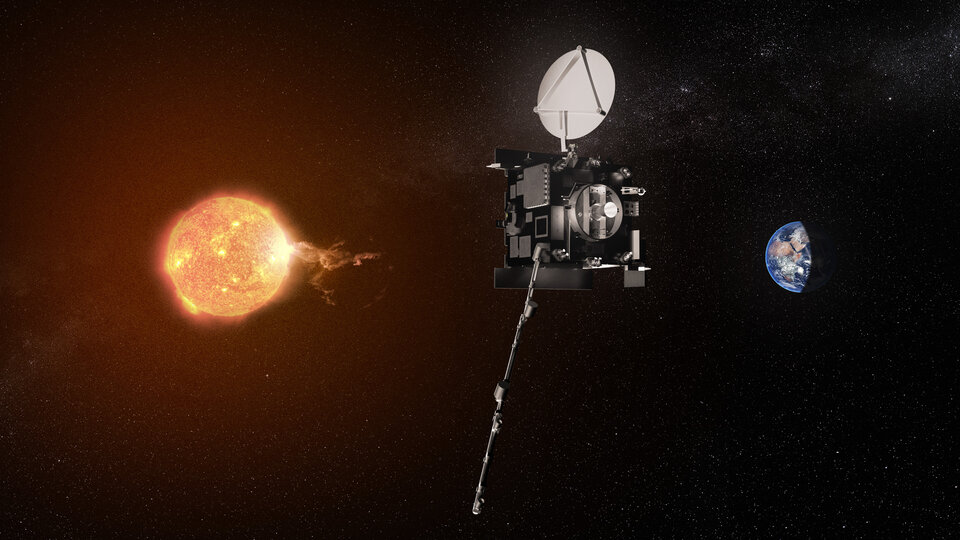
With Vigil, ESA is building a Space Weather Cornerstone mission that will support European resilience and autonomy in case of severe solar storms. It has now received the funding needed to continue work and make its launch timeline, scheduled for 2031.
Vigil will be the first to stream operational space weather data 24/7 from deep space, at the valuable Lagrange point 5. It will give us time: advance warnings of oncoming solar storms help protect spacecraft and astronauts in space and infrastructure on the ground.
The game-changing impact of the Space Weather Cornerstone mission is underlined by the contribution by NASA and NOAA of key instruments as well as strong interest in future collaboration from Korean, Japanese and Indian space agencies.
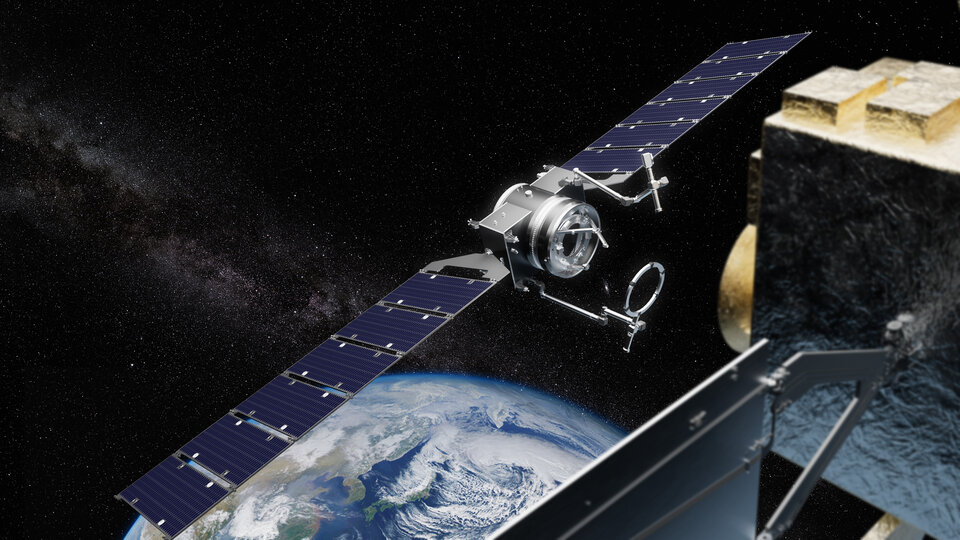
ADRIOS Cornerstone (RISE and CAT)
With the ADRIOS Cornerstone missions, the Space Safety programme is directly supporting the establishment of active debris removal as well as other in-orbit services like refuelling, refurbishment and assembly within Europe. Great support for the missions was reflected in subscriptions by Member States, ensuring that the European space industry will be at the forefront of this exciting new market.
The CApTure Payload Bay (CAT) in-orbit demonstration will now be initiated as a result of the financial support. CAT will test a standardised docking interface that will simplify satellite removal operations. The mission will help mature active debris removal technologies to clean up space debris and is part of the Agency's efforts to deliver on its Zero Debris Approach.
ESA’s RISE mission also received ample support and can now continue its implementation phase towards launching in 2029. The ‘mission extender’ is a commercial in-orbit servicing mission that will demonstrate that it can safely rendezvous with and dock to a geostationary client satellite, and take over its attitude and orbit control.
Highlights from Cosmic
All activities in the Space Safety programme aside from the Cornerstones (i.e. technology and service development, mission preparation and small missions) are grouped together under the Cosmic umbrella. This area received overwhelming support and received funding far beyond what was requested, opening the door to exciting new projects.
Plans covered by the subscriptions include:
Dealing with debris and traffic
Space debris is very hard to observe in the size range from sub-mm up to cm, yet these tiny objects can be lethal for missions. Aiming to fill the blind spot is Verification of In-Situ Debris Optical Monitoring from Space (VISDOMS-S), a small demonstration project focused on the optical detection of very small debris from space.
Once potential collisions are identified – whether with debris or with active satellites – spacecraft must be able to respond quickly and efficiently. At the heart of ESA’s effort to enhance collision avoidance capabilities is the Collision Risk Estimation and Automated Mitigation (CREAM) project centred around automation. A small demonstration mission is planned to test technologies in orbit.
Flyeye telescopes

To detect potential impacts in time, it is essential to establish a robust European Near-Earth Object survey system. ESA’s Flyeye asteroid survey telescopes are custom-designed to autonomously scan the night sky each night on the hunt for new asteroids, particularly those with a chance of impacting Earth within the next 100 years. The first Flyeye will soon be deployed on the island of Sicily, Italy, with the second Flyeye in South America now receiving enough funding to be completed.
Building a European space weather monitoring fleet
The Space Safety programme is developing a Distributed Space Weather Sensor System (D3S), a series of small missions and hosted payloads to monitor the near-Earth environment for space weather conditions that may impact vulnerable infrastructure. As the data will be used continuously in operational services, the systems have a critical need for high reliability, long lifetimes and low data latencies.
The D3S data from around Earth, combined with Vigil’s data from deep space, will deliver more than the sum of its parts. It will be an unmatched source of space weather data, ready to protect Europe’s citizens and critical infrastructure.

Sustainable satellites of the future
The future EcoStars mission embodies ESA’s approach towards ecodesigning its missions and advancing green technology within the European space sector. At the same time, circular economy in space missions will help us to move away from single-use satellites. Concepts that move us towards refurbishment, manufacturing and recycling in space will have the opportunity to shape a future where space systems and components are reused and repurposed right where they are: in Earth orbit.
Through an open call, the best and most practical ideas to make space systems more sustainable will be collected. The most promising concepts are to be guided through technology readiness levels, finally being tested in space.
Up next for Space Safety

The budgetary boost underlines the promising longer term future of the Space Safety programme. It comes on top of and a continuation of ongoing efforts within the programme. The various teams are continuously monitoring for space hazards like near-Earth objects, space debris and space weather. At the same time, preparations for upcoming Space Safety missions proceed at pace.
The very first Space Safety mission Hera is currently on its way to a slightly early arrival at the Didymos binary asteroid in November 2026. Two spacecraft are being built for the Draco reentry mission and Swing space weather mission, both expected to launch in the first half of 2027.
With the enthusiastic support from our Member States, the Space Safety programme is ready to get to work and deliver on its promise to keep us and our infrastructure safe from natural and humanmade hazards in space.