• → European Space Agency

      • Space for Europe
      • Space News
      • Space in Images
      • Space in Videos
    • About Us

      • Welcome to ESA
      • DG's News and Views
      • For Member State Delegations
      • Business with ESA
      • ESA Exhibitions
      • ESA Publications
      • Careers at ESA
    • Our Activities

      • Space News
      • Observing the Earth
      • Human Spaceflight
      • Launchers
      • Navigation
      • Space Science
      • Space Engineering
      • Operations
      • Technology
      • Telecommunications & Integrated Applications
    • For Public

    • For Media

    • For Educators

    • For Kids

    • ESA

    • Education

    • Teachers' Corner

    • ESA Kids

    • About ESA Education
    • Education programme
    • International collaboration
    • Projects for Teachers
    • European Space Education Resource Office
    • CanSats
    • Hands-on Projects
    • CubeSats
    • Drop Your Thesis!
    • European Student Earth Orbiter
    • European Student Moon Orbiter
    • Fly Your Thesis!
    • Global Educational Network for Satellite Operations
    • Spin Your Thesis!
    • Previous projects
    • Hands-on Collaboration
    • REXUS/BEXUS rocket & balloon experiments
    • GENSO Experimental Orbital Initial Demonstration
    • Previous projects
    • Opportunities
    • Conferences
    • Courses
    • Gaining experience
    • Affiliation programme
    • Subscribe for news

    ESA > Education

    The Vega maiden flight CubeSat workshop

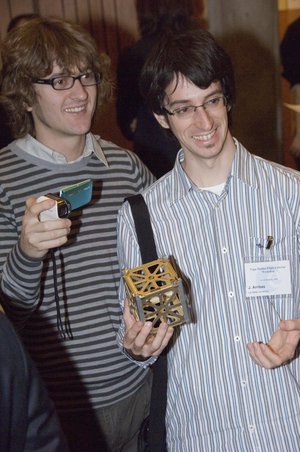
    Students with a model CubeSat
    Students with a model CubeSat
    24 January 2008

    This week, students and professors from 30 European universities converged on ESA’s Space Research and Technology Centre (ESTEC) in Noordwijk, the Netherlands, for the Vega maiden flight CubeSat workshop - the first dedicated CubeSat workshop to be held at European level.

    The workshop followed an initial announcement of opportunity in October 2007, for student teams from across Europe to prepare CubeSats that may be flown on the maiden flight of ESA’s Vega launcher

    During the workshop, 30-minute splinter sessions gave each of the invited teams the opportunity to describe their plans and the stage of development of their proposals. During these sessions, draft proposals were presented by 24 teams from almost all of the ESA Member States and Co-operating States. A panel of ESA experts and representatives from the Education Office was on hand to ask questions and provide feedback.
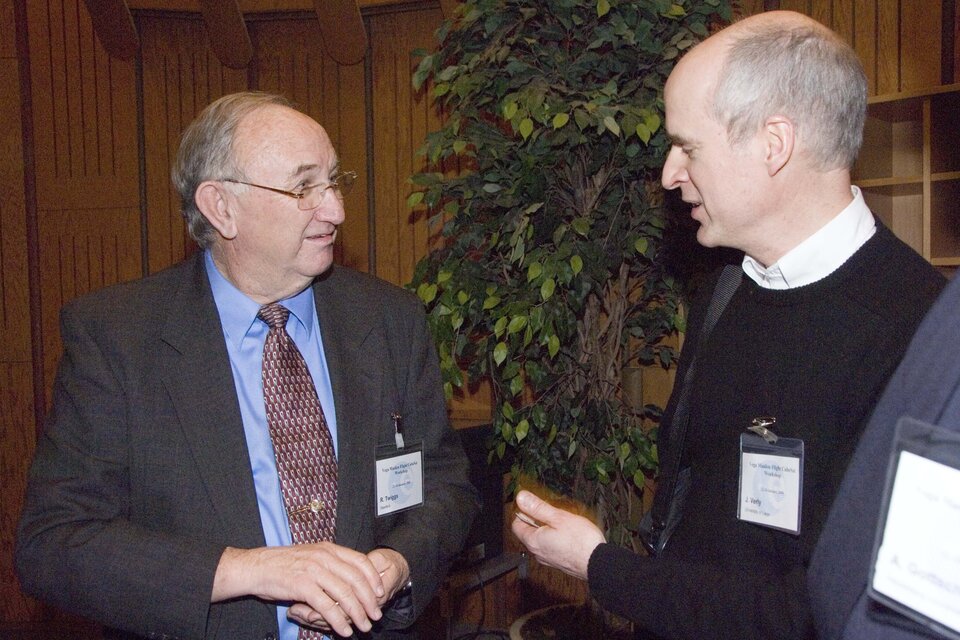
    Guest speaker Prof. Bob Twiggs
    Guest speaker Prof. Bob Twiggs

    The programme also included a series of talks during plenary morning sessions on ESA educational activities and various aspects of CubeSats. Among the guest speakers was Prof. Robert Twiggs from Stanford University, who developed the original concept of CubeSats - picosatellites measuring 10x10x10 cm.

    "The response from the European student community has been very encouraging and we are looking forward to a keen competition for places on the Vega flight," said Helen Page of ESA’s Education Office. "The Vega maiden flight is a great opportunity for students to gain experience of end-to-end development of a space project within a limited period of time."

    The official call for proposals for European CubeSats on the Vega maiden flight will be issued in the next few days on the ESA Education website. The deadline for the submission of proposals will be 29 February 2008. The selection of the six CubeSats (plus two backups) to fly on the Vega will be made shortly thereafter.


    Background

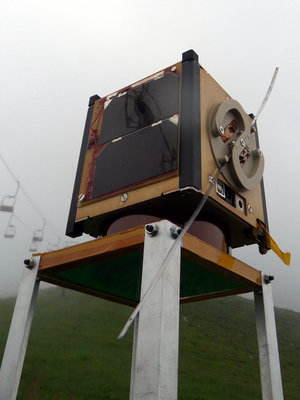
    Workshop participants inspect a CubeSat deployer
    Workshop participants inspect a CubeSat deployer

    On 28 May 2007, Antonio Fabrizi, ESA’s Director of Launchers, and René Oosterlinck, the Agency’s Director of Legal Affairs and External Relations, signed an agreement to include an educational payload on the maiden flight of the Vega launch vehicle from Kourou, French Guiana, currently planned for December 2008.

    The educational payload will include six CubeSats that will be released into orbit from the main Vega launch vehicle qualification payload. After release, each 1 kg CubeSat is expected to operate autonomously in orbit for up to one year.

    Rate this

    Views

    Share

    • Currently 0 out of 5 Stars.
    • 1
    • 2
    • 3
    • 4
    • 5
    Rating: 0/5 (0 votes cast)

    Thank you for rating!

    You have already rated this page, you can only rate it once!

    Your rating has been changed, thanks for rating!

    17
    facebook
    twitter
    reddit
    google plus
    digg
    tumbler
    digg
    blogger
    myspace
    • More information
      • CubeSats
        • CubeSat teams
        • CubeSat images
        • CubeSat videos
        • Related news
        • Towards a new initiative
        • Operations update
        • First radio signals
        • CubeSats into orbit
        • A five year journey
        • Ready for flight
        • ESA Cubs integrated
        • 2nd CubeSat workshop
        • 2nd CubeSat workshop, call for papers
          • Call for CubeSats on the Vega maiden flight
            • The Vega maiden flight CubeSat workshop
            • Educational payloads opportunity for Vega
            • Related links
            • Vega launcher
            • CubeSat community
            • Vega VV01 launch

    Connect with us

    • RSS
    • Youtube
    • Twitter
    • Flickr
    • Google Buzz
    • Subscribe
    • App Store
    • LATEST ARTICLES
    • · CryoSat hits land
    • · Ariane 5 completes seven launches …
    • · Measuring skull pressure without t…
    • · Malargüe station inauguration
    • · The solar wind is swirly
    • FAQ

    • Jobs at ESA

    • Site Map

    • Contacts

    • Terms and conditions