ESA’s CubeSats ready for flight
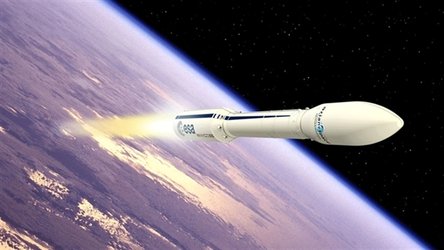
The first students' CubeSats to be sponsored by ESA's Education Office have passed their Final Acceptance Review and have been declared ready for launch on board the maiden flight of Vega, the new ESA launcher. The launch window for this historic lift-off opens on 26 January and ends in the first week of February 2012.
The seven university-built picosatellites, each weighing only 1 kilogram, were integrated with the devices that will carry them during launch – the P-PODs, or Poly-Picosatellite Orbital Deployers – between late October and mid November. Before they could be cleared for launch, they had to pass a detailed technical examination known as the Final Acceptance Review.
The review panel was composed of representatives of the ESA Education Office, the VEGA Project, and the Italian Space Agency (ASI), supported by ESA specialists of all relevant spacecraft disciplines.
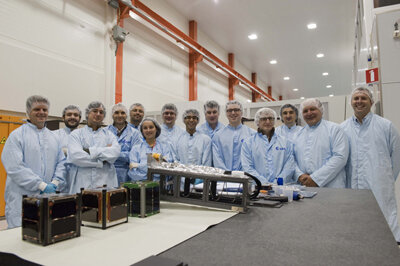
The formal review process began on 24 November at the agency’s Space Technology and Research Centre (ESTEC) in the Netherlands, and it was successfully concluded on 9 December. Meanwhile, the CubeSats, already installed inside their P-PODs, were delivered to Europe’s Spaceport in Kourou, French Guiana, at the end of November.
Between 12 and 14 December, the three P-PODs containing the CubeSats were integrated on-board the LARES System, the primary payload of the VEGA Maiden Flight Mission. Later on during the launch campaign, this will be attached to the launch vehicle’s upper stage.
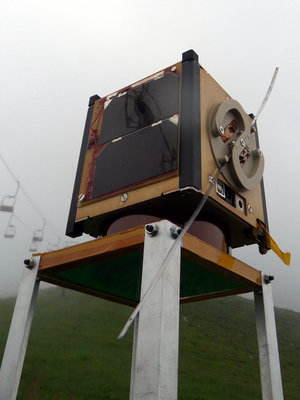
The single-unit CubeSats, whose development represented a highly valuable, if not unique hands-on learning experience for the university students that were involved - were developed by teams from 6 different European countries:
- Xatcobeo (a collaboration of the University of Vigo and INTA, Spain)
- Robusta (University of Montpellier 2, France)
- e-St@r (Politecnico di Torino, Italy)
- Goliat (University of Bucharest, Romania)
- PW-Sat (Warsaw University of Technology, Poland)
- MaSat-1 (Budapest University of Technology & Economics, Hungary)
- UniCubeSat GG (Universitá di Roma ‘La Sapienza’, Italy)
The CubeSats and the LARES payload structure will now be stored in a special clean room facility at CSG Kourou until their integration with the Vega launcher.
Background
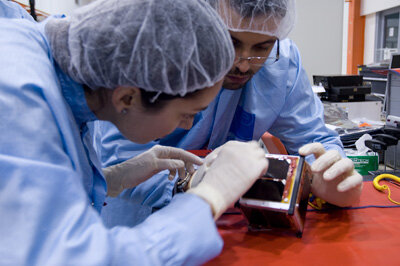
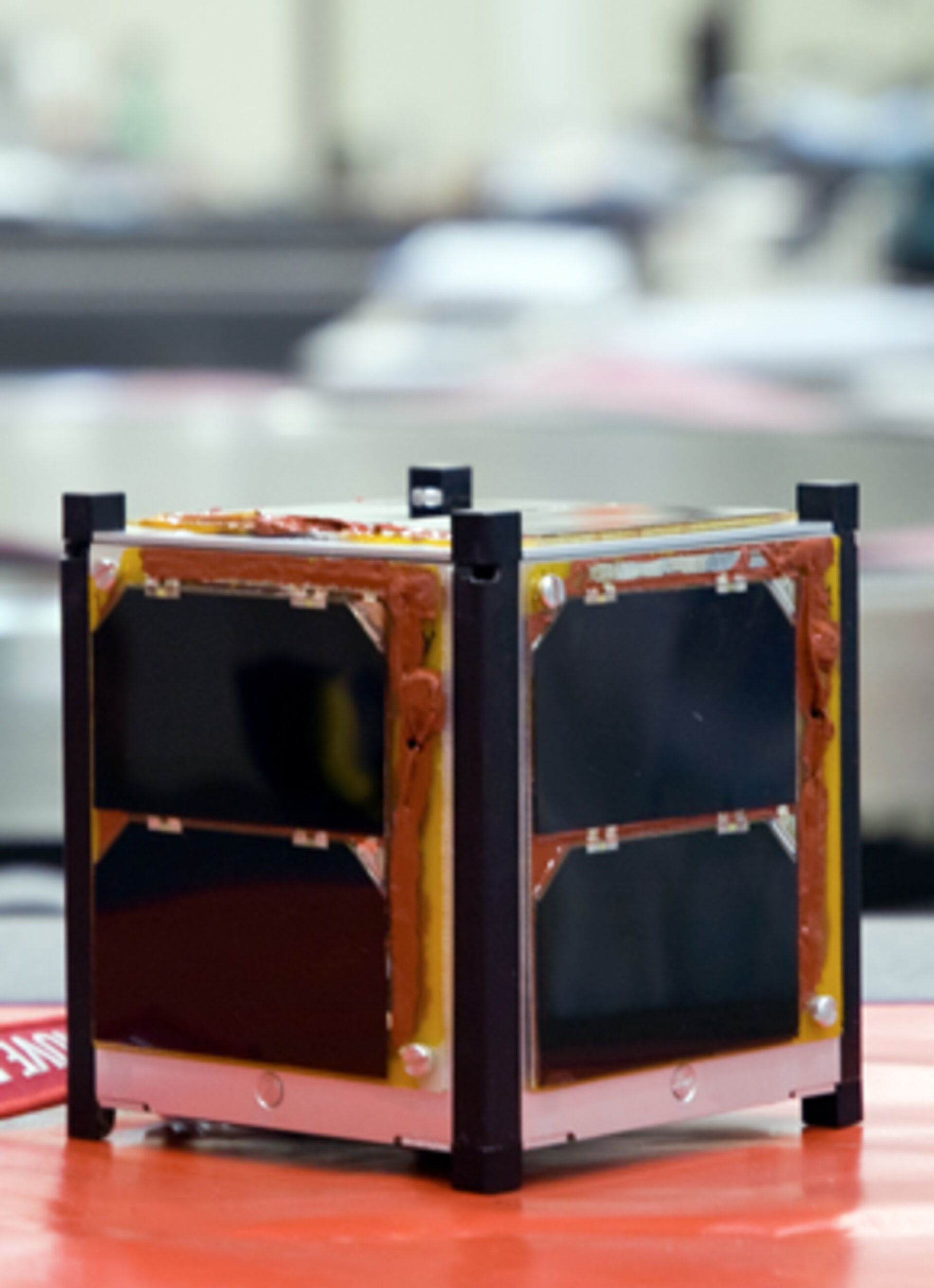
CubeSats are picosatellites of standardised dimensions (cubes of 10 cm per side, with a maximum mass of 1 kg) which can be operated from university or radio amateur ground stations. They are ejected into space by standardised deployment systems, which – for this launch - were P-PODs supplied to ESA by the California Polytechnic State University in the United States.
The primary payload on the Vega inaugural flight is the spherical Laser Relativity Satellite (LARES), which is installed on-board the LARES System along with AlmaSat-1 (an ASI Educational Satellite built by University of Bologna, Italy), and the P-PODs of the 7 ESA CubeSats. The accommodation of the CubeSats on-board the LARES System was made possible by an agreement between ESA and ASI.
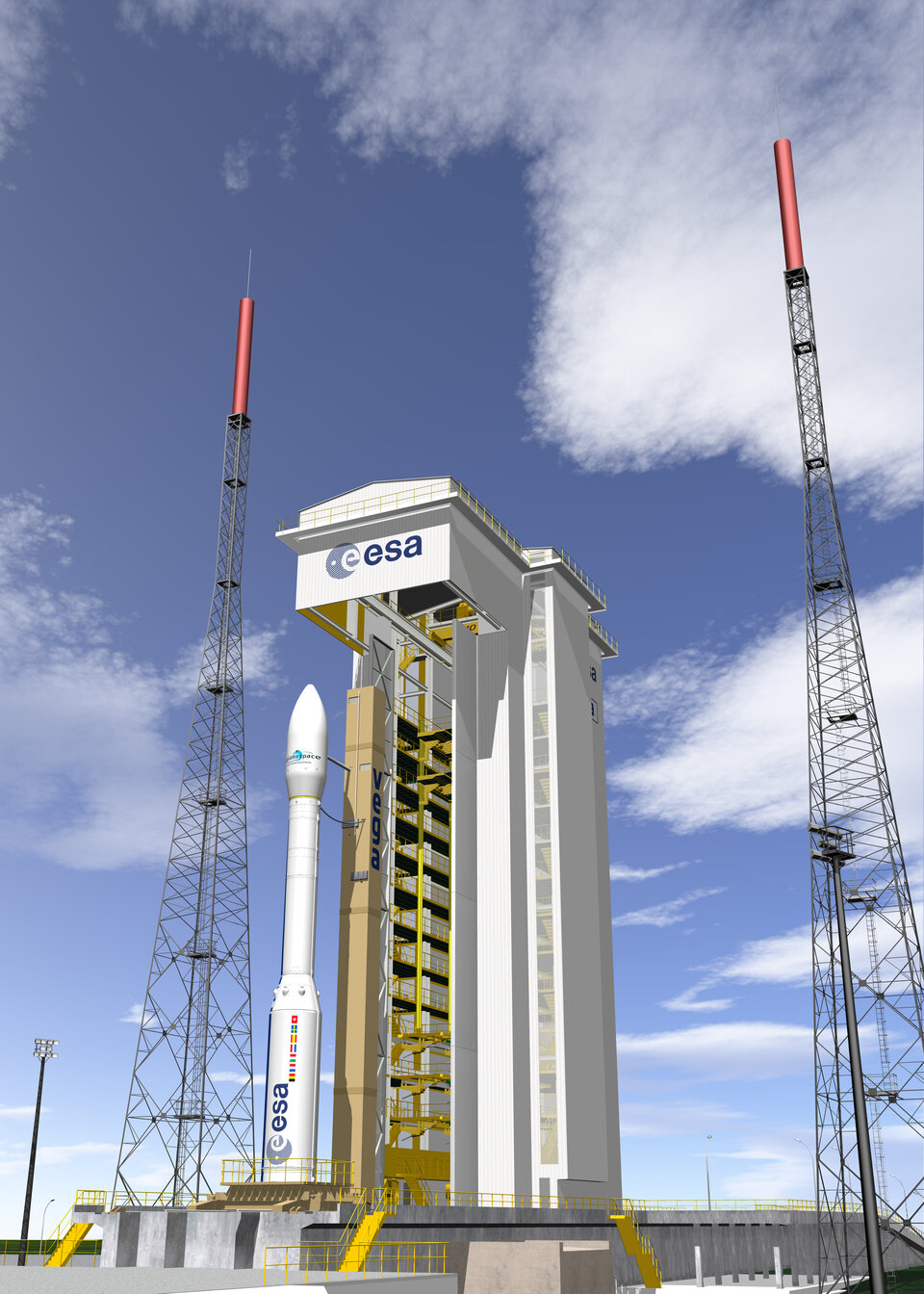
The ESA CubeSats and LARES will be flying on the maiden launch of Vega, VV01. This new European launch vehicle has been designed to deliver small satellites into low or sun-synchronous orbits.