Boosting the accuracy of Rosetta's Earth approach
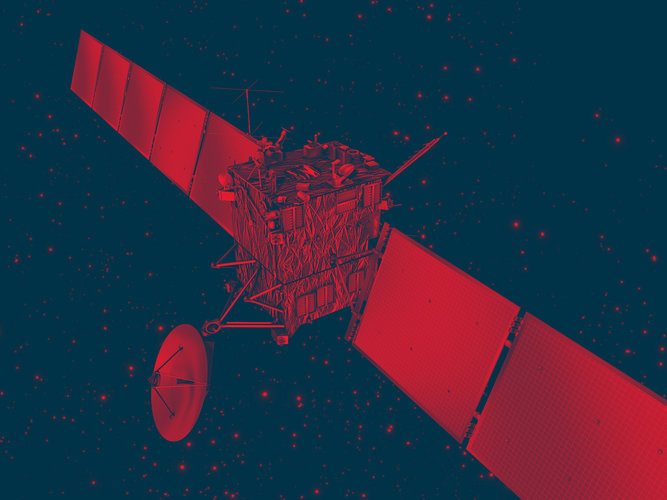
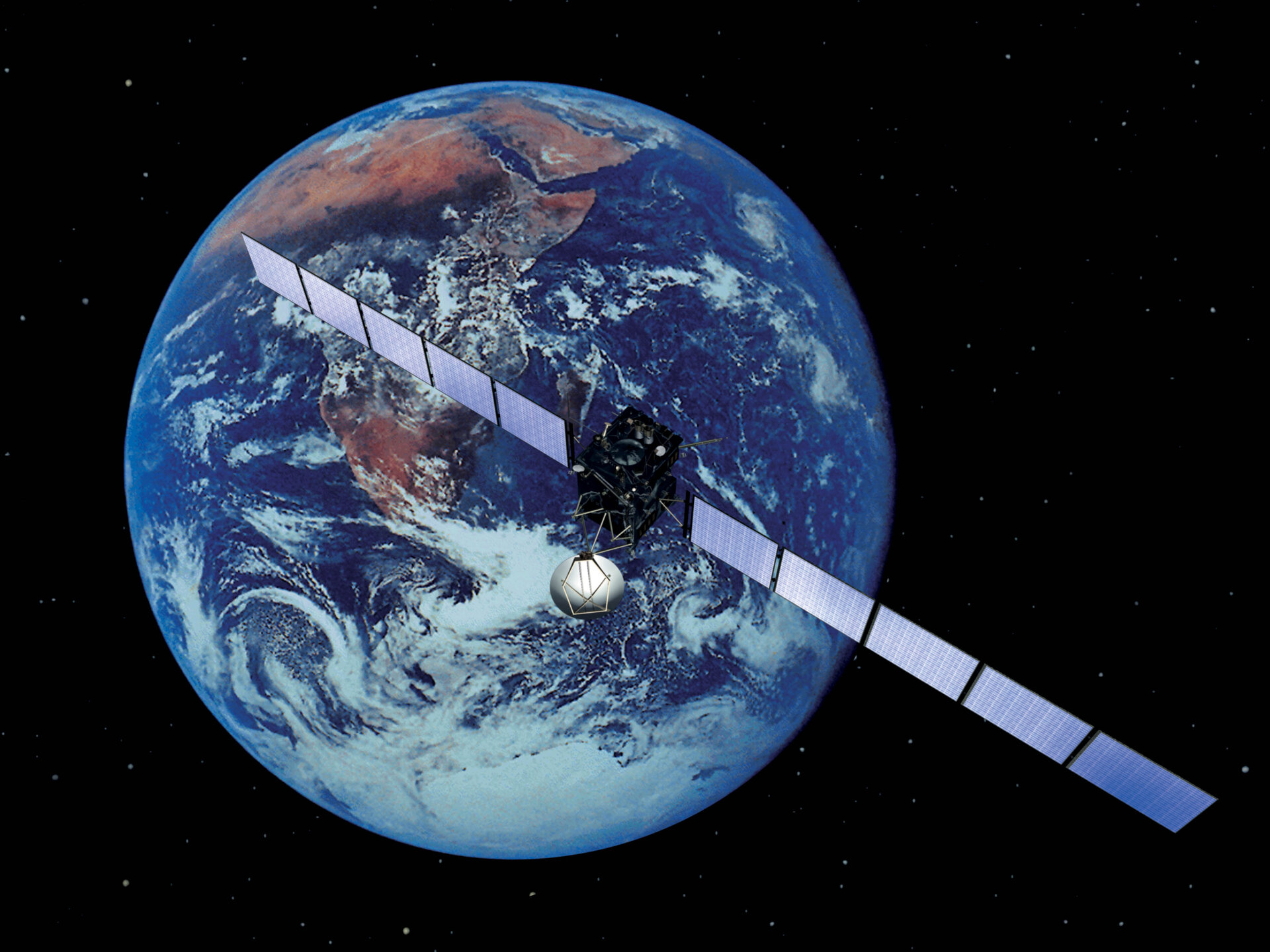
Yesterday, 18 October at 18:06 CEST, the thrusters of ESA’s comet chaser, Rosetta, were fired in a planned, 42-second trajectory correction manoeuvre designed to 'fine tune' the spacecraft's approach to Earth. Rosetta is now approaching Earth for its second planetary swing-by of 2007.
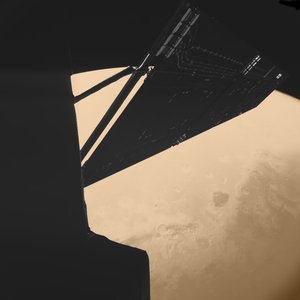
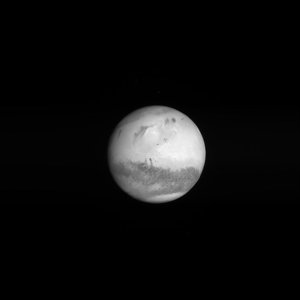
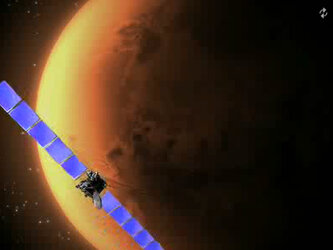
After passing Mars in April 2007, Rosetta is now approaching Earth for the second time - the third of four planetary swing-bys that provide fuel-saving gravitational assists enabling the spacecraft to ultimately reach and cross the orbit of comet 64P/Churyumov-Gerasimenko in 2014.
Rosetta's closest approach is predicted for 13 November 2007,
Rosetta lines up

"We have a target trajectory for Earth swing-by and regular orbit determinations allow us to decide when to do a correction manoeuvre. Brief burns now allow us to optimise the orbit and make the swing-by more accurate, saving us a lot of precious fuel later on," said Andrea Accommazzo, Rosetta Spacecraft Operations Manager at ESOC. He confirmed that yesterday's manoeuvre results were as expected.
A second trajectory correction slot, on 1 November, may also be used depending on results of an orbit determination scheduled for 30 October.
ESA’s comet chaser

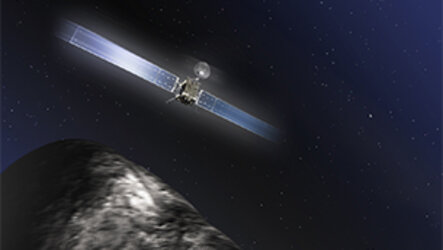
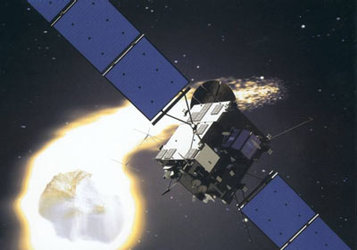
Rosetta will be ESA’s first spacecraft to undertake long-term exploration of a comet at close quarters. The mission consists of a large orbiter, designed to operate for a decade at large distances from the Sun, and a small lander, Philae. Each of these carries a large suite of scientific experiments designed to complete the most detailed study of a comet ever attempted.
After entering orbit around Comet 67P/Churyumov-Gerasimenko in 2014, the spacecraft will release the lander onto the icy nucleus. It will then spend the next two years orbiting the comet as it heads towards the Sun. On the way to Comet Churyumov-Gerasimenko, Rosetta has received gravity assists from Earth and Mars, and will fly past two main-belt asteroids – Steins (September 2008), and Lutetia (July 2010).
A more technical version of this article is available at the ESA Spacecraft Operations pages.
For more information:
Andrea Accomazzo, ESA Rosetta Spacecraft Operations Manager
Email: Andrea.Accomazzo @ esa.int
Gerhard Schwehm, ESA Rosetta Mission Manager
Email: Gerhard.Schwehm @ esa.int