Flying over the cloudy world – science updates from Venus Express
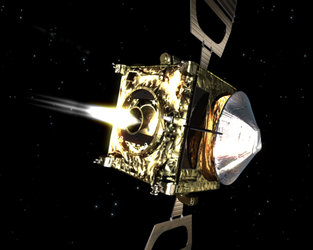
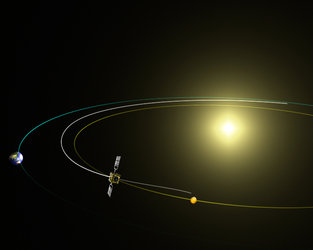
On 20 April 2006, after its first 9-day, elongated orbit around Venus, ESA’s Venus Express started to get closer to the planet, until it reached its final 24-hour long orbit on 7 May. During this time, and up to today, the spacecraft has been working relentlessly: the new data coming in are already providing first glimpses on planetary features never seen before.
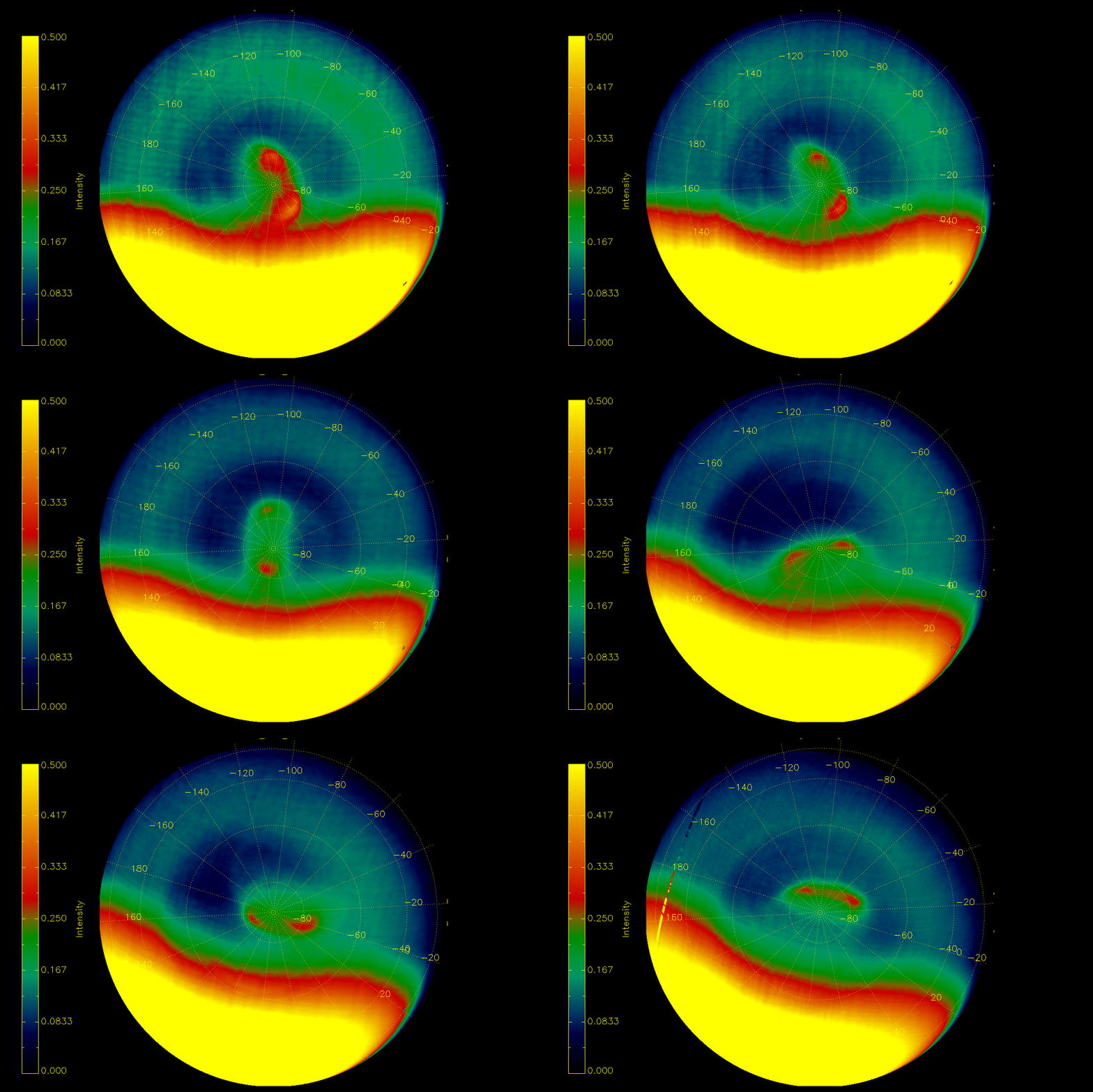
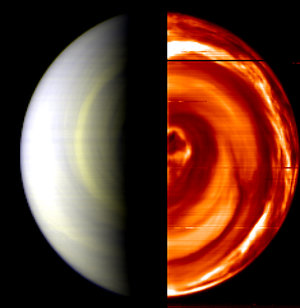
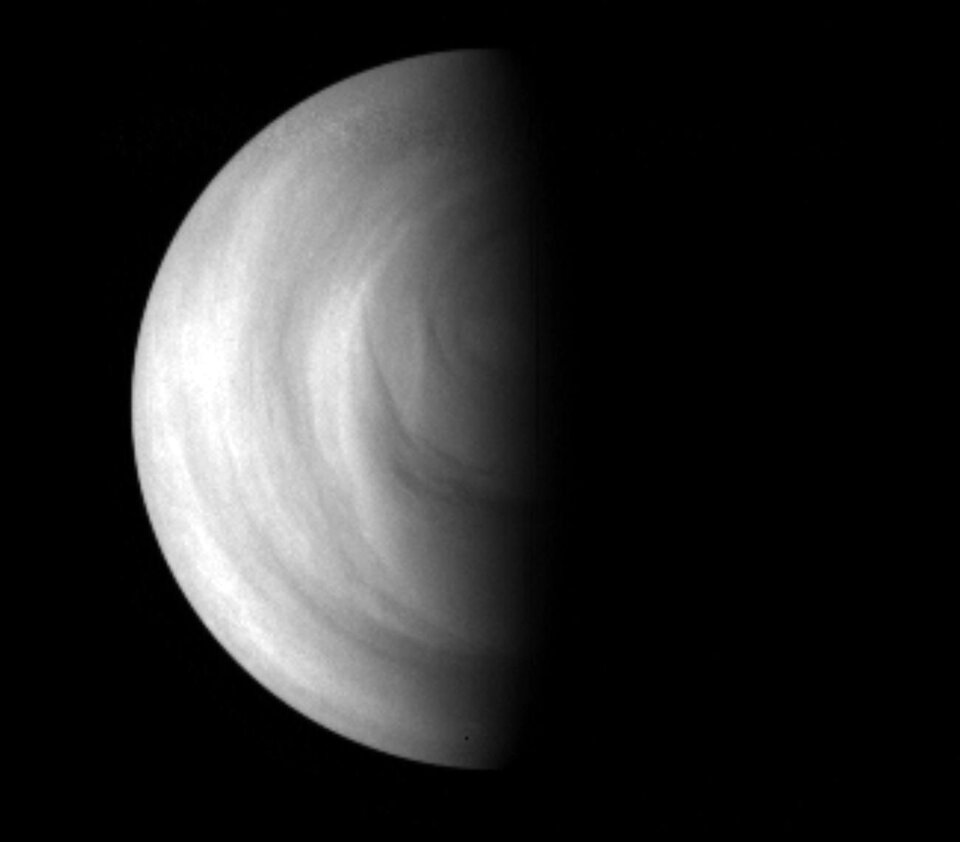
If taking the first ever clear images of the double-eye vortex at Venus’ south pole - imaged by Venus Express during its very first orbit - was already a first in the history of planetary exploration and a very pleasant surprise for the scientists, nobody could expect that the vortex had a structure even more complicated than possibly foreseen.
Infrared images taken by the Ultraviolet/Visible/Near-Infrared spectrometer (VIRTIS) on board the spacecraft not only provided the first clear view of the vortex, but also gave a much closer insight into it when Venus Express flew over the south pole at the end of May this year.
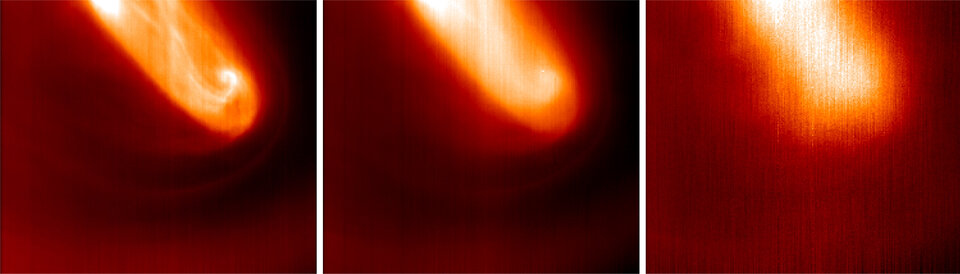
VIRTIS is an instrument that can operate at different wavelengths. Each infrared wavelength provides a view of the Venusian atmosphere at a different altitude, like a 'cross-section'. "When we looked at this gigantic vortex at different depths, we realised how much its shape is varying over altitude," said Pierre Drossart, VIRTIS co-Principal Investigator, from the Observatoire de Paris, France. "It is like if we were looking at different structures, rather than a single one. And the new data we have just started gathering and analysing reveal even stronger differences".
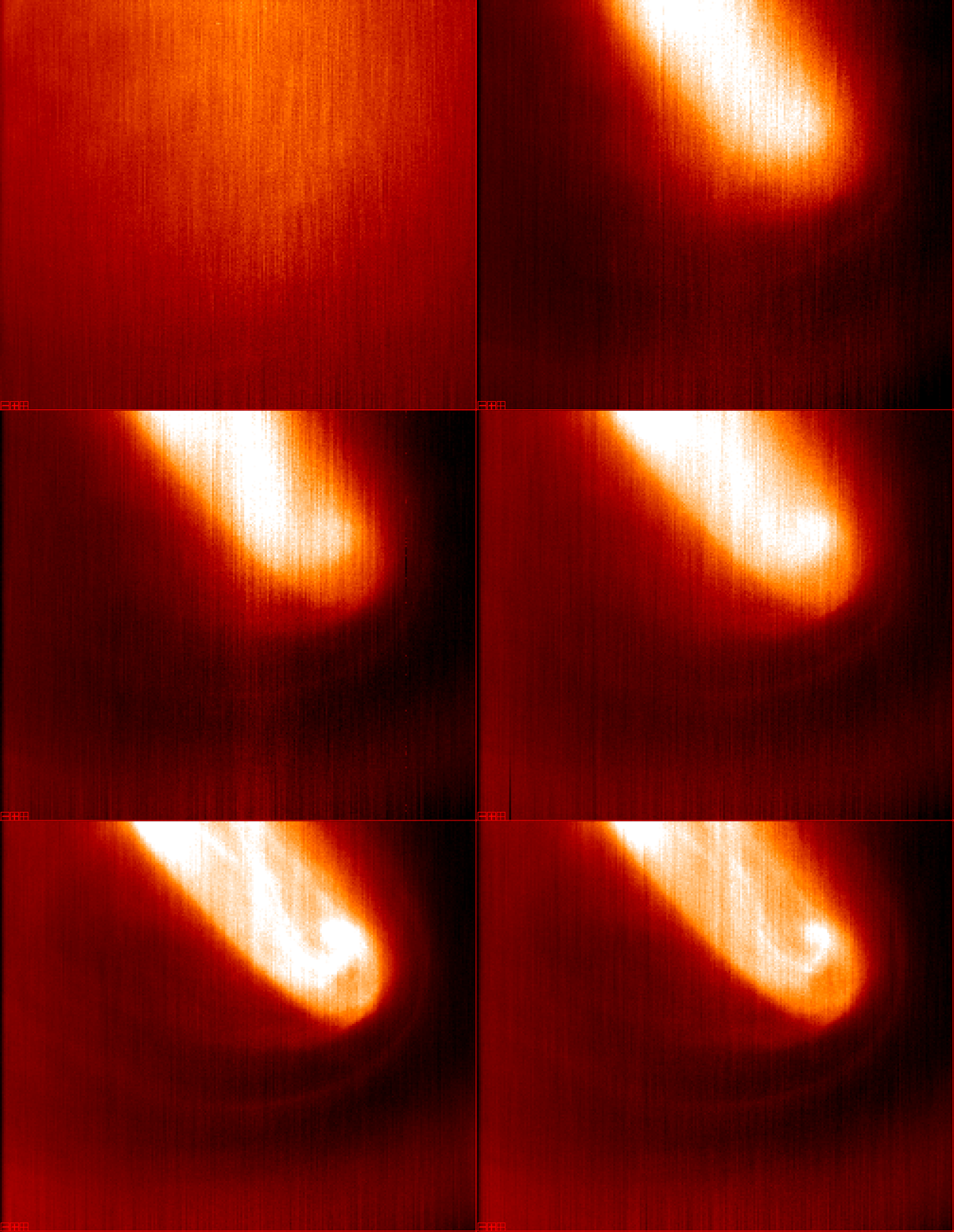
The reason why the morphology of the vortex varies so extensively along a 'vertical' line is still unexplained. "This is why we are organizing a campaign to observe the south polar vortex, fully dedicated to solve this unexpected puzzle," said Giuseppe Piccioni, VIRTIS co-Principal Investigator. "First we want to understand how the structure is organized - actually, with VIRTIS we are building a true 3D view of the vortex. Then we hope to be able to better understand what are the driving forces that shape it".
Tracking clouds and winds
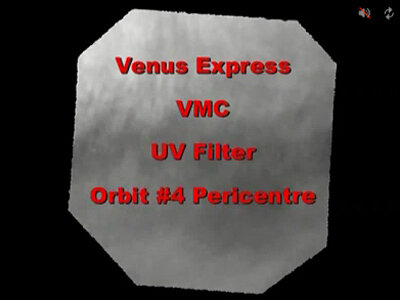
While Venus Express was flying over the planet, many other details from the thick atmosphere have also started to emerge. Both the Venus Monitoring Camera (VMC) and the VIRTIS instruments started to monitor the cloud system and to track its complex dynamics, while the SpicaV/SOIR spectrometers started retrieving information on the atmospheric chemistry and temperature.
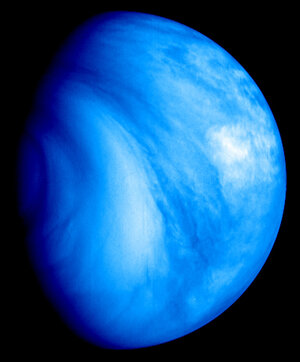
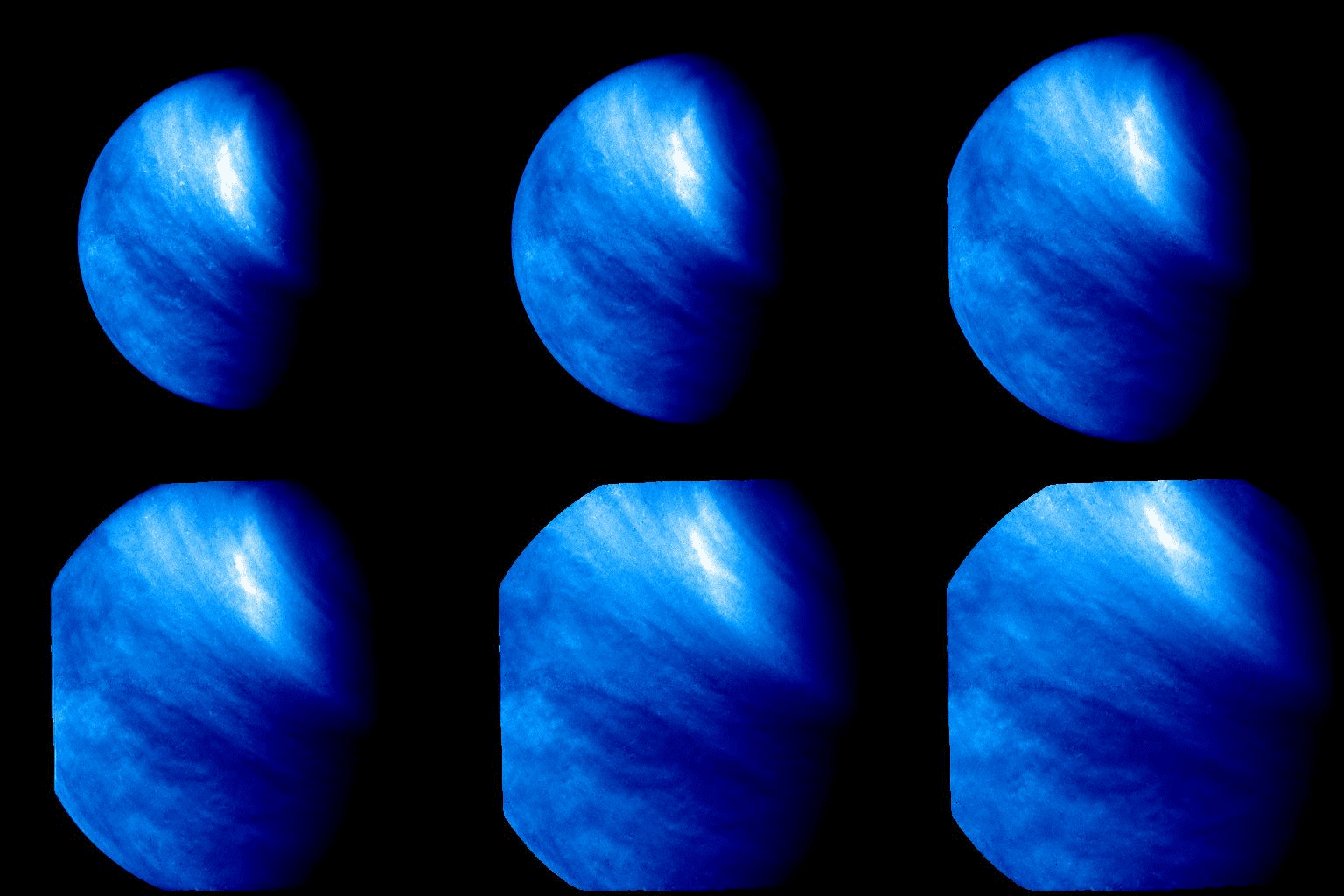
Ultraviolet images from the VMC camera show the complex morphology of the cloud deck, characterised by very thin, low-contrast stripe-features, possibly due to the presence of strong winds that produce elongated structures. Set of periodic 'wave' patterns in the clouds, possibly due to the local variation of temperature and pressure, or to a kind of tidal forces in action at Venus, can also be seen.

One of the most important confirmations from the first set of data being analysed by the scientists is the detection of the so called 'UV absorbers'- ultraviolet markings on the cloud top, also visible as darker features in the VMC mosaic image. They are so called because they absorb almost half of the solar energy received by the planet. The mysterious substance that causes this absorption still represents a true puzzle for the scientists.
"Understanding what is the origin of these ultraviolet markings and what makes their absorbing power so high is one of the major objectives of Venus Express," said Wojciech J. Markiewicz, VMC Principal Investigator, from the Max Planck Institute for Solar System Research in Lindau, Germany. "We now have confirmation that we can actually see them, so we can start working to understand what their source is. Because of their amazing absorbing power, they are very important to understand the overall radiative and thermal balance of the planet, and also the atmospheric dynamics".
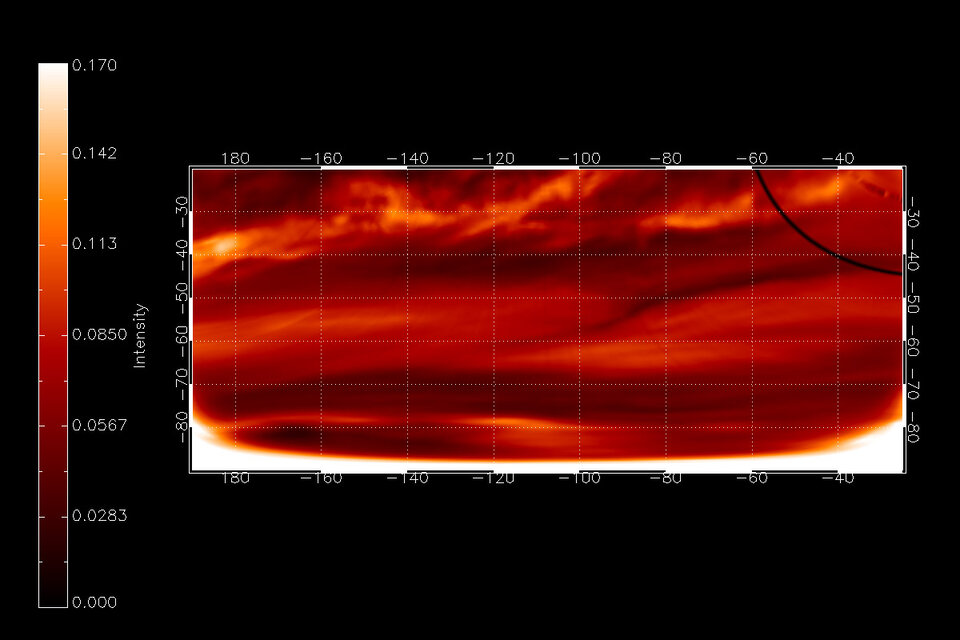
Tracking cloud motion and starting to characterise the wind speed is an exercise that the Venus Express scientists have already started. A spectacular night view of the mid to low atmospheric layers over low latitudes (between 20º and 90 º south) by VIRTIS, show clouds being clearly pushed by winds.
"We can now make a first qualitative assessment of the wind fields and circulation, which is comfortably matching with previous measurement from the Galileo mission over the north pole," continued Giuseppe Piccioni. "We are now collecting more data from different atmospheric depths, to be able to provide the first precise numbers, possibly in the near future".
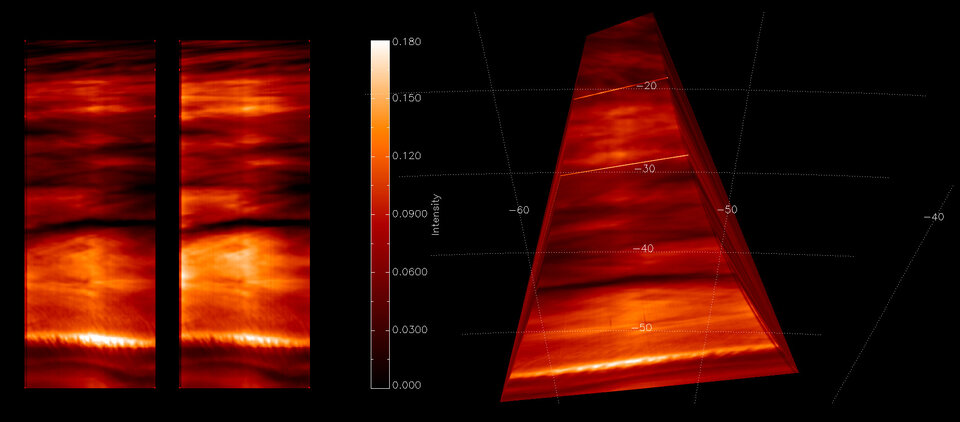
"We are also collecting the first information on the minor chemical components of the atmosphere, such as carbon monoxide," added Pierre Drossart. "With VIRTIS we can see in the atmosphere of the southern hemisphere deeper than any other previous mission, and we started gathering data on the yet unknown chemistry of the lower atmospheric layers, to build a global picture. Studying the variation of minor chemical compounds over different latitudes and depths is also a very useful tracer for the atmospheric global motion."
Surprise at the atmospheric 'top'
When looking at the higher atmospheric layers with Venus Express, the scientists were taken once more by surprise. It is known that the Venusian cloud deck is about 20 kilometres thick and it extends up to about 65 kilometres altitude over the planet. The first 'stellar occultation' measurements ever done at the Venus thanks to the SpicaV spectrometer, revealed that on the night side the cloud deck actually extends up to 90 kilometres altitude in the form of a fully opaque haze, and then continues as a more transparent haze up to 105 kilometres.
Stellar occultation is a technique that allows determining the composition of a planet's atmosphere by looking at the 'sunset' of a pointed star through the atmosphere itself. "On Earth the atmosphere becomes perfectly clear already above 20 kilometres altitude," said Jean-Loup Bertaux, SpicaV/SOIR Principal Investigator, from the Service d'Aéronomie of CNRS, France.
"We were truly amazed to see how unexpectedly higher the haze at Venus can get. Actually, on Earth as well as on Venus, at around 20 kilometres it is sometimes possible to see droplets of sulphuric acid. On Earth they come from volcanic eruptions. It makes us wonder if on Venus, where differently from Earth the droplets form very thick clouds, their origin is volcanic too."
The haze phenomenon may be due to water condensation in ice crystals on the night side, but it is too early to rule out other explanations. "Now we need to gather and study more data to understand this phenomenon in the high atmosphere - an area that, before SpicaV, was still virtually unexplored," he concluded.
Bertaux also expressed his satisfaction for the atmospheric detection of 'heavy water' - a molecule similar to water but with higher mass – thanks to the SOIR spectrometer. "The detection of heavy water in the atmosphere of a planet, and its percentage with respect to normal water, is very important to understand how much water was present on the planet in the past, and how much of it escaped," added Bertaux.
"The amount of water vapour present today in the atmosphere of Venus would be enough to cover the planet with a 3-centimetre deep liquid layer. If we find out that heavy water – a trace of the original water – is massively present in the top atmospheric layers where it can more easily escape, than the amount of water in the past may have well corresponded to a layer up to a few hundred metres deep," Bertaux concluded.
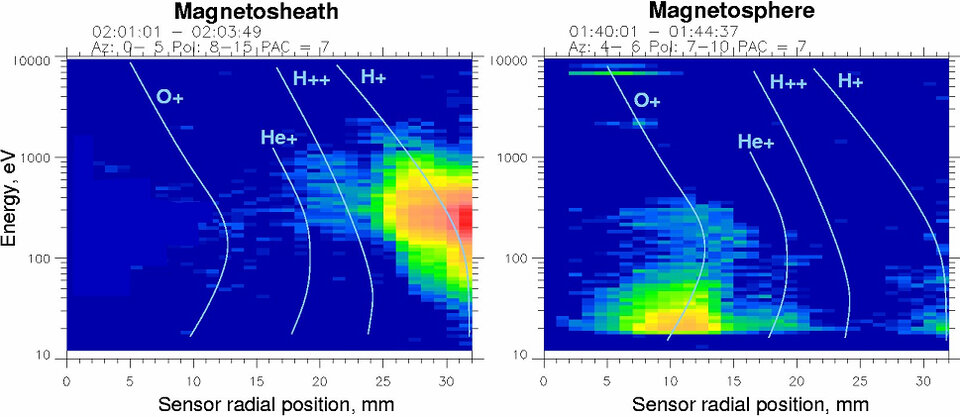
Studying the atmospheric escape process at Venus is actually one of the major objective of another Venus Express instrument – ASPERA (Analyzer of Space Plasma and Energetic Atoms). The instrument already detected the massive escape of oxygen and tracked trajectories of other planetary ions such as singly-charged helium.
"This early detection confirms the strong interaction between the solar environment and the atmosphere of Venus - a planet without a planetary magnetic field to protect it from the incoming solar wind," said Stanislav Barabash, ASPERA Principal Investigator, from the Swedish Institute of Space Physics in Kiruna, Sweden. "The study of this interaction will provide important clues on the complex set of mechanisms by which atmospheric gases get lost in space, and on the influence that this may have had on Venus’ climate over geological time scales", he concluded.
The status of the spacecraft
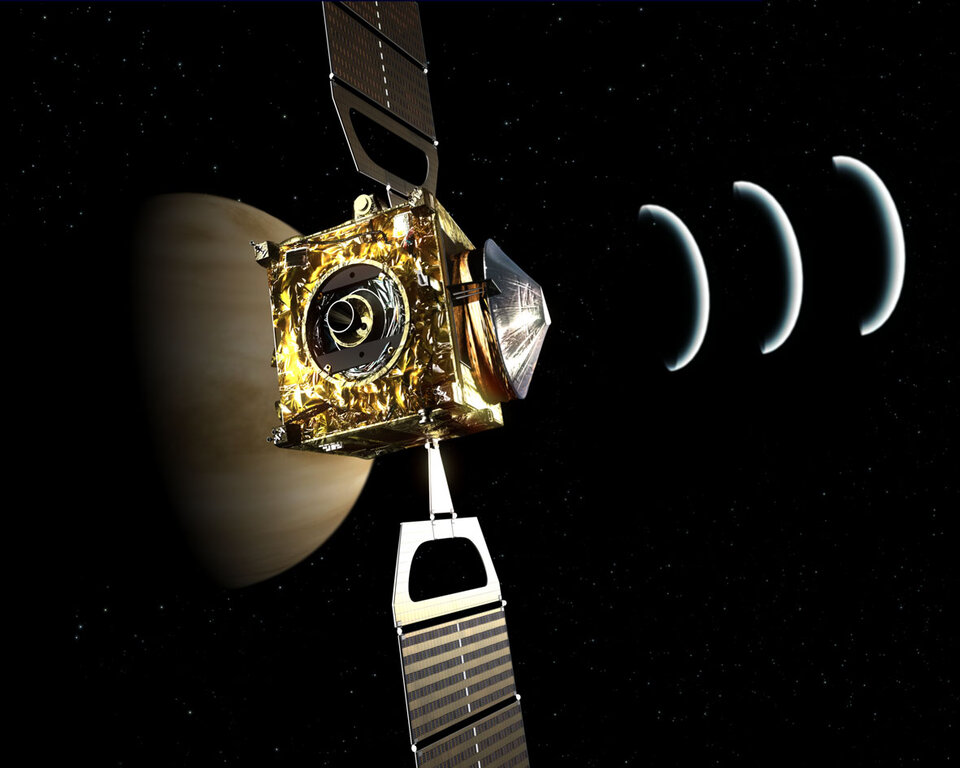
On 4 July 2006 Venus Express passed an important exam. An ESA board declared the conclusion of the spacecraft in-orbit commissioning phase and declared that the spacecraft has met the requisites to officially enter the operational phase of its scientific mission.
The Venus commissioning phase, started on 7 May when Venus Express reached its final 24-hour orbit around the planet, and concluded on 4 June this year, is a series of operations aimed at validating the performance of the spacecraft and its systems in the Venus environment, of the scientific instruments, and of all ground systems and operations.
The spacecraft and instruments are showing an overall good performance. However, one of the instruments on board - the Planetary Fourier Spectrometer (PFS) – showed a malfunction, that could not be fixed yet in the series of attempts performed so far in space. The PFS scanner - the mirror needed by the instrument for pointing - is currently blocked in a close position, preventing the instrument spectrometer from 'seeing' its targets.
The commissioning review board endorsed a series of activities and further in-orbit tests to be conducted in the next months, as well as a series of independent investigations to examine the origin of the problem. In the meantime, other instruments will cover some of the PFS objectives.
PFS is designed to measure the chemical composition and temperature of the atmosphere of Venus. It is also able to measure surface temperature, and so search for signs of volcanic activity.
For more information:
Hakan Svedhem, ESA Venus Express Project Scientist
Email: hakan.svedhem @ esa.int
Giuseppe Piccioni, VIRTIS co-Principal Investigator, IASF-CNR, Rome, Italy
Email: giuseppe.piccioni @ iasf-roma.inaf.it
Pierre Drossart, VIRTIS co-Principal Investigator, Observatoire de Paris, France
Email: pierre.drossart @ obspm.fr
Jean-Loup Bertaux, SpicaV Principal Investigator, Service d'Aéronomie du CNRS,Verrières-le-Buisson, France
Email: Jean-Loup.Bertaux @ aerov.jussieu.fr
Wojciech Markiewicz, VMC Principal Investigator, Max Planck Institute for Solar System Research, Lindau, Germany
Email: markiewicz @ linmpi.mpg.de
Stanislav Barabash, ASPERA Principal Investigator, Swedish Institute of Space Physics, Kiruna, Sweden
Email: stas @ irf.se
Vittorio Formisano, PFS Principal Investigator, IFSI-CNR, Rome, Italy
Email: formisan @ ifsi.rm.cnr.it