Sorvolando le nuvole di Venere – aggiornamento scientifico dalla Venus Express
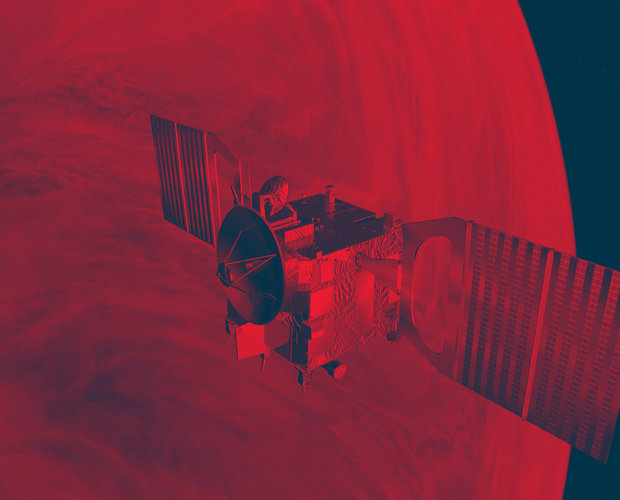
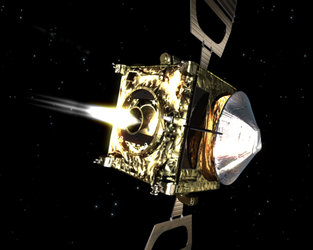
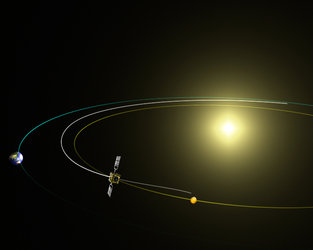
Dopo la sua prima orbita intorno a Venere, un’orbita molto ellittica percorsa in ben nove giorni, il 20 aprile Venus Express ha iniziato ad avvicinarsi al pianeta, fino a raggiungere, il 7 maggio, l’orbita finale, che percorre con un periodo di 24 ore. Per tutto il tempo di avvicinamento e da allora fino a oggi, la sonda ha lavorato senza un momento di sosta. E i dati in arrivo ci stanno già regalando i primi assaggi di un pianeta che presenta caratteristiche mai viste prima.
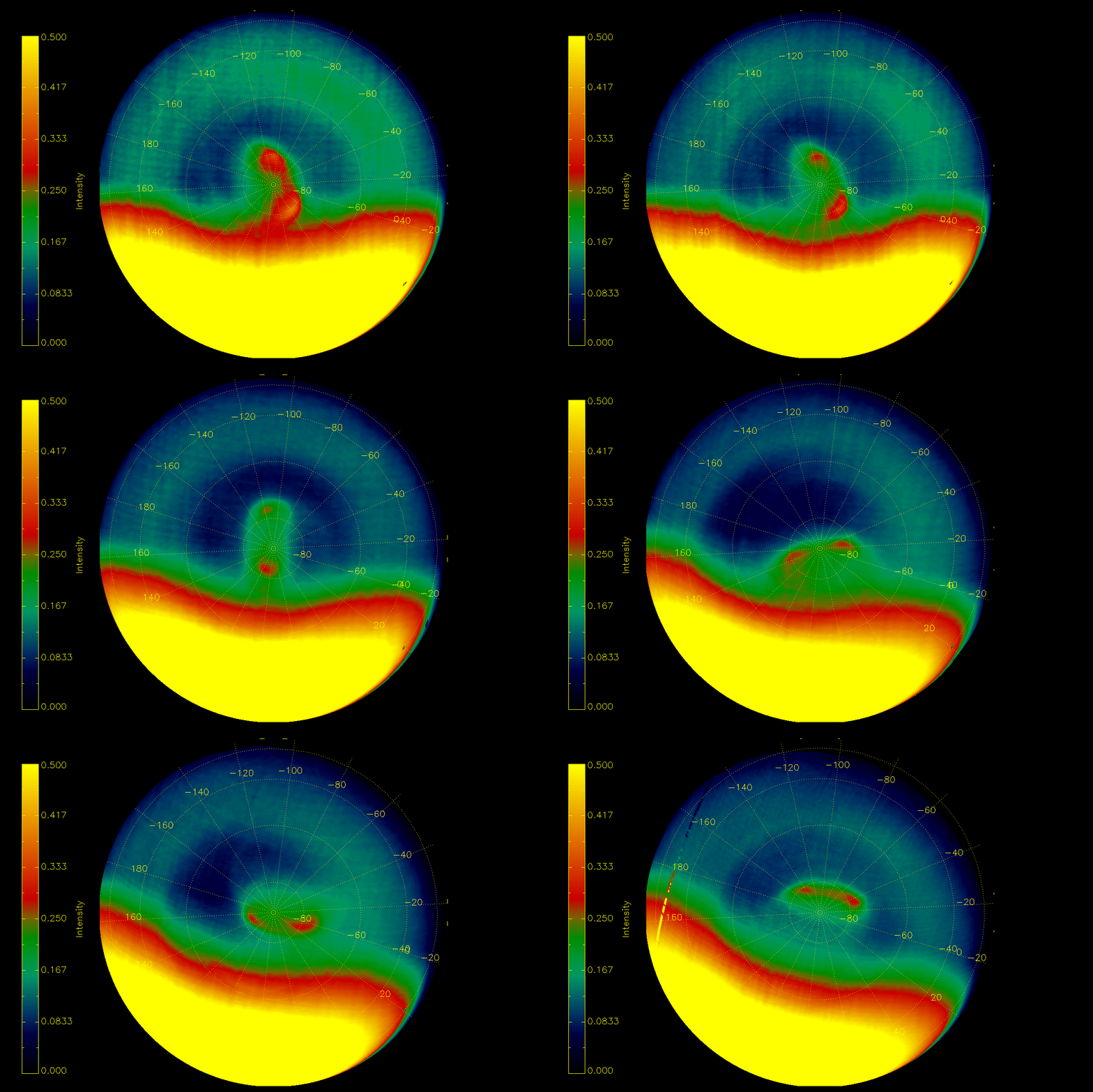
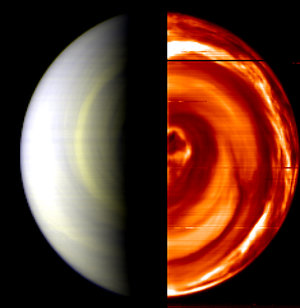
Se le immagini del vortice a doppio occhio nei pressi del polo sud venusiano, ottenute da Venus Express fin dalla sua prima orbita, erano già una prima volta nella storia dell’esplorazione planetaria – oltre che una piacevolissima sorpresa per gli scienziati - certo nessuno si aveva pensato che il vortice avrebbe rivelato una struttura più complicate di ogni possibile previsione.
Le immagini in infrarosso dello strumento VIRTIS, lo spettrometro sensibile all’ultravioletto, al visibile e al vicino infrarosso a bordo della sonda, non ci hanno regalato solo le prime immagini ben definite del vortice, ma - alla fine di maggio, quando Venus Express ha sorvolato il polo sud - hanno permesso agli scienziati di dare un’occhiata molto più da vicino a questo strano fenomeno.
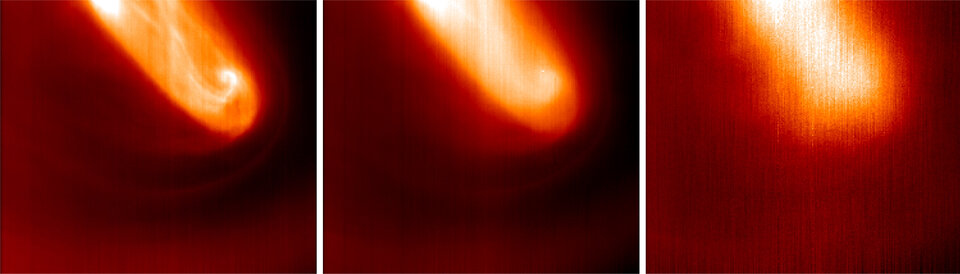
VIRTIS is an instrument that can operate at different wavelengths. Each infrared wavelength provides a view of the VIRTIS è uno strumento in grado di funzionare a diverse lunghezze d’onda. Ogni specifica lunghezza d’onda nell’infrarosso consente di vedere l’atmosfera venusiana a una quota diversa, fornendoci così una sezione verticale dell’atmosfera. "Quando abbiamo guardato questo gigantesco vortice a quote diverse ci siamo resi conto di quanto la sua forma variasse con l’altezza," afferma Pierre Drossart, dell’Osservatorio di Parigi e co-responsabile scientifico di VIRTIS. "È come se guardassimo strutture diverse invece di una sola. E i nuovi dati che abbiamo appena iniziato a raccogliere e analizzare rivelano differenze anche maggiori".
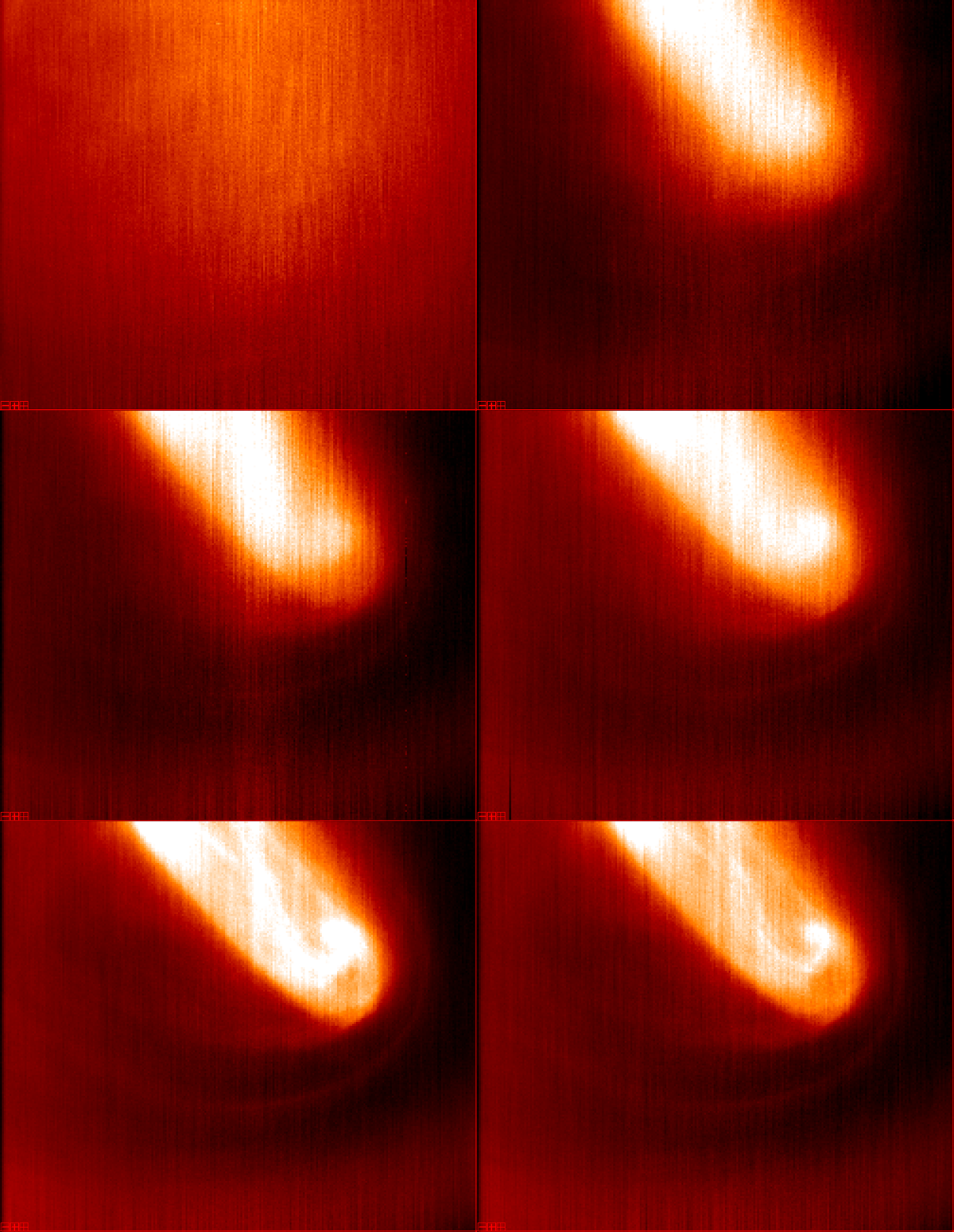
La ragione di una diversità morfologica così pronunciata lungo la verticale del vortice rimane per il momento senza spiegazioni. "È una delle ragioni per le quali stiamo organizzando una campagna per osservare il vortice antartico, dedicata completamente alla ricerca della soluzione di questo inatteso mistero," racconta Giuseppe Piccioni, co-responsabile scientifico di VIRTIS. "In primo luogo vogliamo capire come è organizzata la sua struttura. E in effetti grazie a VIRTIS stiamo costruendo un vero modello 3D del vortice. In secondo luogo speriamo di essere in grado di comprendere quali siano le forze che lo modellano".
Sulle orme di nuvole e vento
Mentre Venus Express sorvolava il pianeta, hanno iniziato a emergere molti altri dettagli della spessa atmosfera venusiana. Sia la Venus Monitoring Camera (VMC) che VIRTIS hanno iniziato a tenere d’occhio il sistema nuvoloso e a tracciarne la complessa dinamica, mentre gli spettrometri SpicaV/SOIR hanno iniziato a ottenere informazioni sulla chimica e sulla temperatura atmosferica.
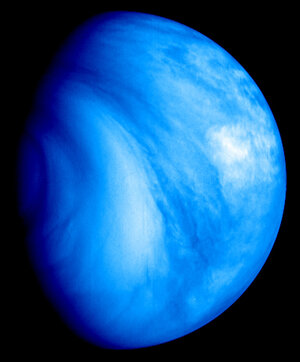
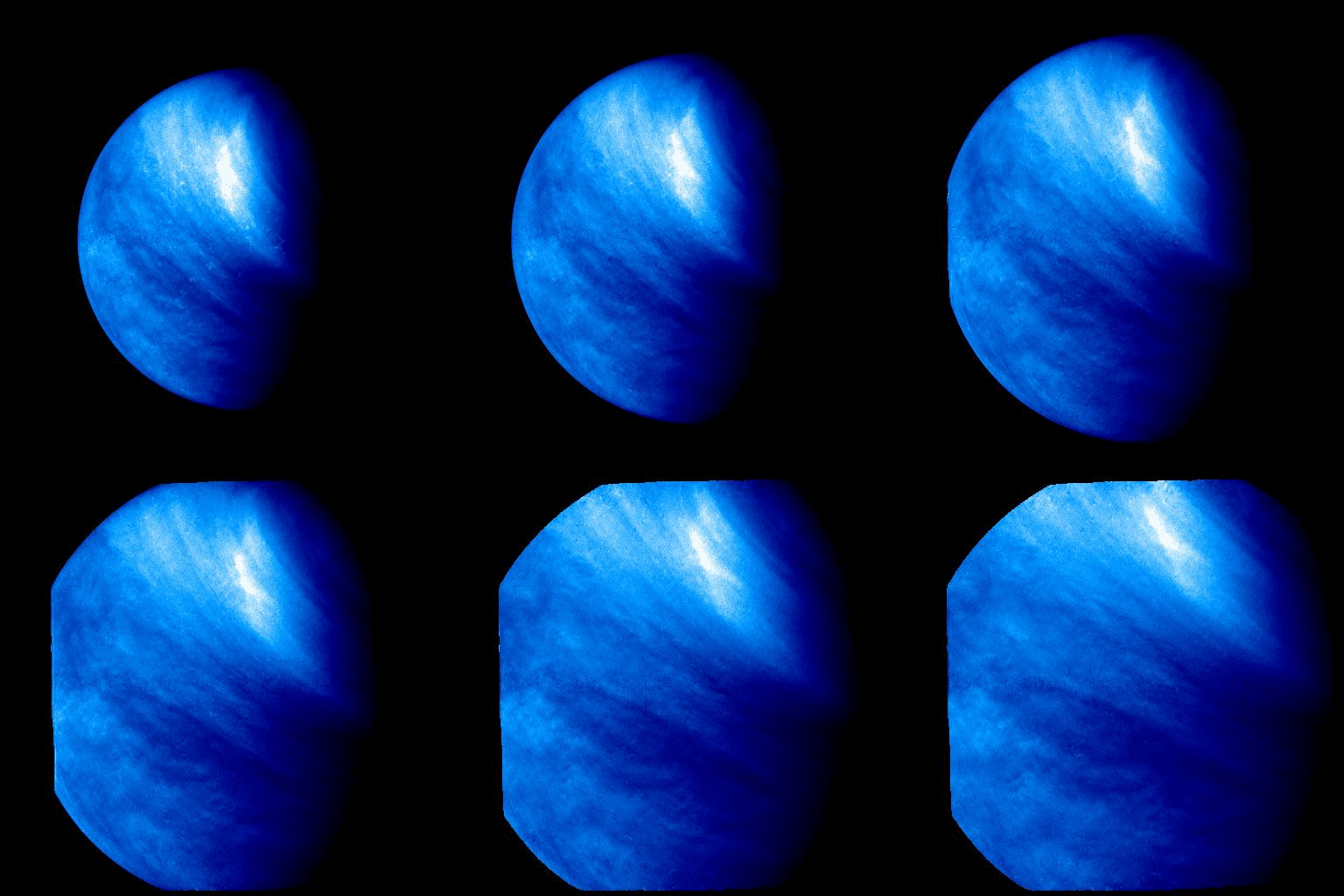
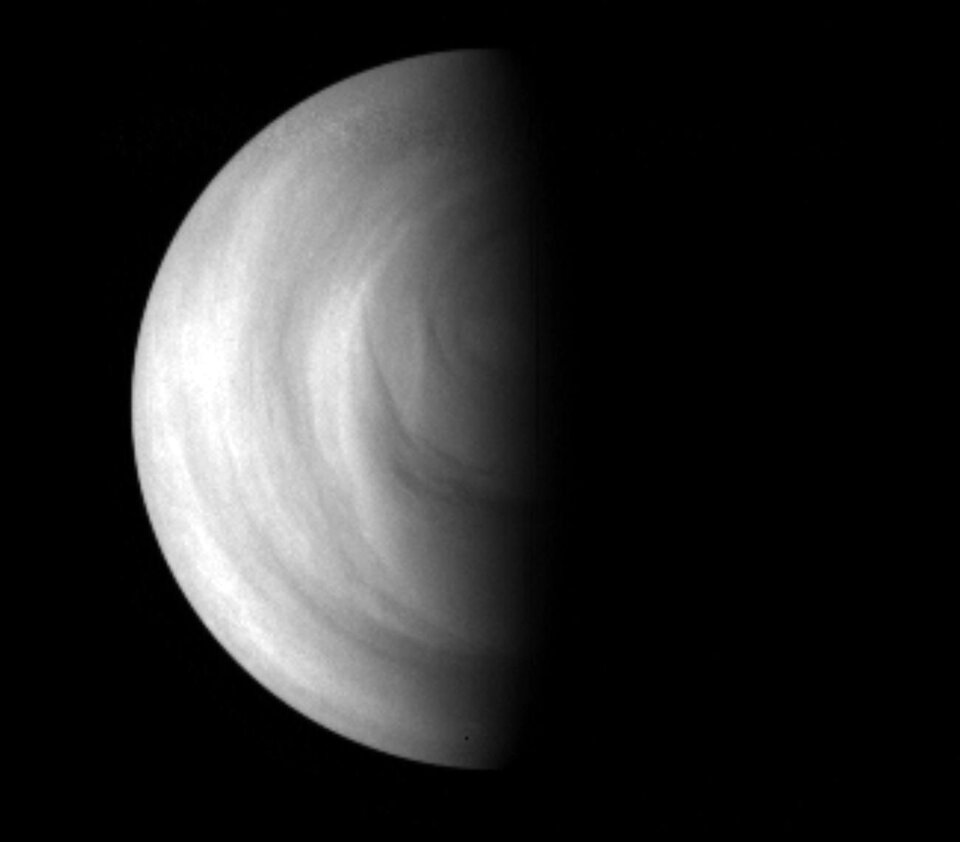
Le immagini nell’ultravioletto di VMC mostrano la complessa morfologia della copertura di nuvole, caratterizzata da strisce molto sottili a basso contrasto, probabilmente dovuti alla presenza di forti venti che producono strutture allungate. Le nuvole mostrano anche strutture periodiche “a onda”, probabilmente dovute a variazioni locali di pressione e temperature o all’azione di forze di tipo mareale.

Una delle conferme più importanti che arrivano dal primo set di dati analizzati dagli scienziati riguarda la rilevazione dei cosiddetti “assorbitori di UV”, ovvero di traccianti ultravioletti sulla sommità delle nubi, identificabili anche come strutture più scure nei mosaici di immagini ottenute da VMC. Vengono così definiti perché assorbono quasi metà dell’energia solare ricevuta dal pianeta. Per gli scienziati, la sostanza che causa questo assorbimento rimane ancora un vero e proprio mistero.
"Capire l’origine dei traccianti ultravioletti e che cosa determina un assorbimento così elevato è uno dei maggiori obiettivi scientifici di Venus Express," sostiene Wojciech J. Markiewicz, del Max Planck Institute per l’Esplorazione del Sistema Solare di Lindau, in Germania, e responsabile scientifico di VMC. "Ora che abbiamo la conferma che le possiamo davvero osservare, possiamo anche cercare di capire quale sia la loro sorgente. A causa del loro sorprendente assorbimento, sono molto importanti per comprendere la dinamica atmosferica, il bilancio radiativo e il bilancio termico globale del pianeta".
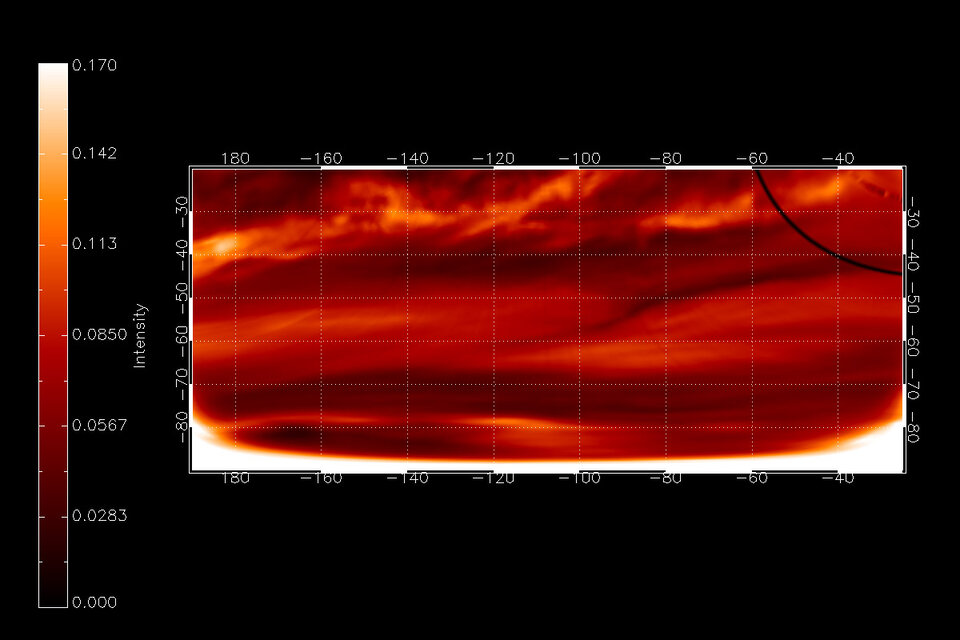
Tracciare il movimento delle nubi e iniziare a mappare la velocità dei venti è un esercizio con cui gli scienziati della Venus Express hanno già iniziato a divertirsi. Una spettacolare visione notturna degli strati atmosferici medio e bassi a latitudini comprese fra i 20º e i 90 º sud offerta da VIRTIS mostra chiaramente le nubi spinte dai venti.
"Possiamo già fare una prima valutazione qualitativa sul campo dei venti e sulla circolazione, che risultano coerente con misure precedenti sul polo nord ottenute dalla missione Galileo. Questo è confortante," continua Giuseppe Piccioni. "Stiamo collezionando u numero maggiore di dati che si riferiscono a varie quote atmosferiche diverse. In un futuro che speriamo molto prossimo speriamo di essere in grado di fornire i primi numeri precisi ".
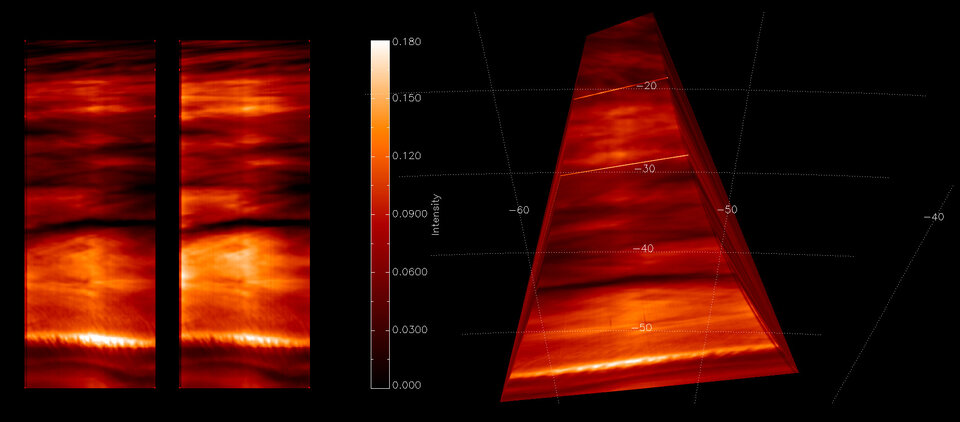
Stiamo raccogliendo anche le prime informazioni sui componenti chimici minori dell’atmosfera, come per esempio il monossido di carbonio," aggiunge Pierre Drossart. "Con VIRTIS possiamo penetrare nell’atmosfera dell’emisfero sud più in profondità di qualsiasi altra missione precedente e abbiamo iniziato a raccogliere dati sull’ancora sconosciuta chimica degli strati atmosferici più bassi, in modo da avere una visione globale dell’atmosfera. Studiare la variazione dei componenti chimici minori dell’atmosfera a diverse latitudini e quote è anche un modo molto utile per tracciare il movimento atmosferico su scala planetaria."
La sorpresa “in cima” all’atmosfera
Osservando l’alta atmosfera con Venus Express, gli scienziati hanno avuto più di una sorpresa. È noto infatti che la copertura nuvolosa del pianeta è spessa circa 20 km e si estende fino a una quota di 65 km. Le prime misure realizzate su Venere in occasione di un occultamento stellare sono dovute allo spettrometro SpicaV e rivelano che nell’emisfero notturno lo spessore della copertura nuvolosa si estende fino ai 90 km di quota, sotto forma di una nebbia completamente opaca, che poi prosegue fino ai 105 km di quota facendosi sempre più trasparente.
L’occultamento stellare è una tecnica che permette di determinare la composizione atmosferica di un pianeta traguardando, attraverso l’atmosfera del pianeta stesso, il tramonto di una ben determinata stella. "Sulla Terra, sopra i 20 km di quota l’atmosfera diviene perfettamente trasparente,” ricorda Jean-Loup Bertaux, del Service d'Aéronomie del CNRS e responsabile scientifico di SpicaV/SOIR.
"Siamo davvero stupefatti nel vedere quando in alto possa arrivare la nebbia di Venere. In effetti, sia sulla Terra che su Venere, a circa 20 km di altitudine a volte è possibile osservare goccioline di acido solforico. Sulla Terra provengono da eruzioni vulcaniche. Ma su Venere le goccioline formano nubi molto spesse e questo ci porta a chiederci se anche su quel pianeta abbiano origine vulcanica."
Il fenomeno della nebbia potrebbe essere dovuto alla condensazione dell’acqua in cristalli di ghiaccio nell’emisfero notturno di Venere, ma è troppo presto per escludere altre spiegazioni. "È necessario raccogliere e analizzare altri dati per comprendere questo fenomeno di alta atmosfera – una zona che prima di SpicaV era ancora praticamente inesplorata.”
Bertaux esprime soddisfazione anche per la rilevazione, grazie allo spettrometro SOIR, di “acqua pesante” in atmosfera, una molecola simile all’acqua ma di massa maggiore. "È molto importante rivelare acqua pesante nell’atmosfera di un pianeta e misurarne la percentuale rispetto all’acqua comune,” aggiunge. “Ci permette di capire quanta acqua era sul pianeta in passato e quanta è stata persa.
"La quantità di vapor d’acqua presente oggi nell’atmosfera venusiana sarebbe sufficiente a ricoprire il pianeta di uno strato di acqua liquida alto 3 centimetri. Se trovassimo che l’acqua pesante – una traccia dell’acqua iniziale – è presente in misura elevate negli strati dell’alta atmosfera, da dove sfugge più facilmente, allora la quantità di acqua presente sul pianeta in passato può benissimo essere stata tale da corrispondere a uno strato di qualche centinaio di metri,” conclude Bertaux.
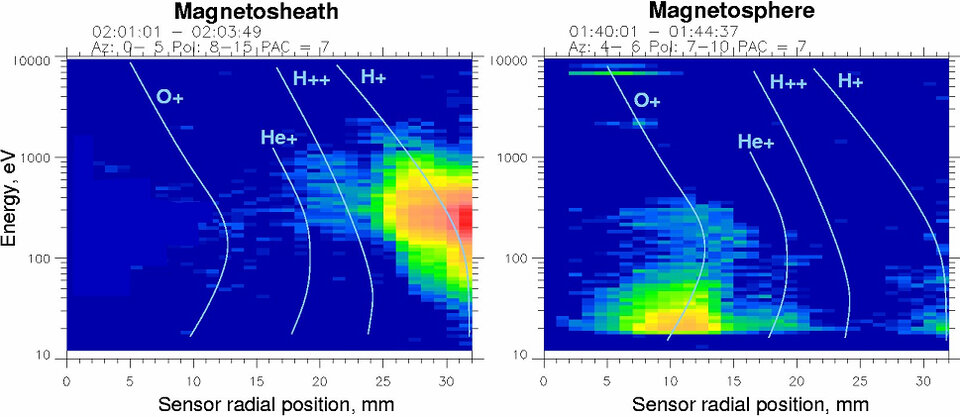
Lo studio dei processi di fuga su Venere è, in effetti, uno dei principali obiettivi di un altro strumento a bordo di Venus Express – ASPERA (Analyzer of Space Plasma and Energetic Atoms). Lo strumento ha già misurato la fuga di quantità rilevanti di ossigeno e tracciato le traiettorie di altri ioni del pianeta, come per esempio l’elio ionizzato.
"Questo rapido rilevamento conferma la forte interazione tra l’ambiente solare e l’atmosfera di Venere – un pianeta privo di un campo magnetico globale a proteggerlo dal vento solare incidente," sostiene Stanislav Barabash dell’Istituto Svedese di Fisica dello Spazio di Kiruna (Svezia), responsabile scientifico di ASPERA. "Lo studio dell’interazione ci darà informazioni importanti sul complesso meccanismo attraverso il quale i gas atmosferici si perdono nello spazio e sull’influenza che questo può determinare sul clima venusiano su tempi scala geologici", conclude.
Stato della sonda
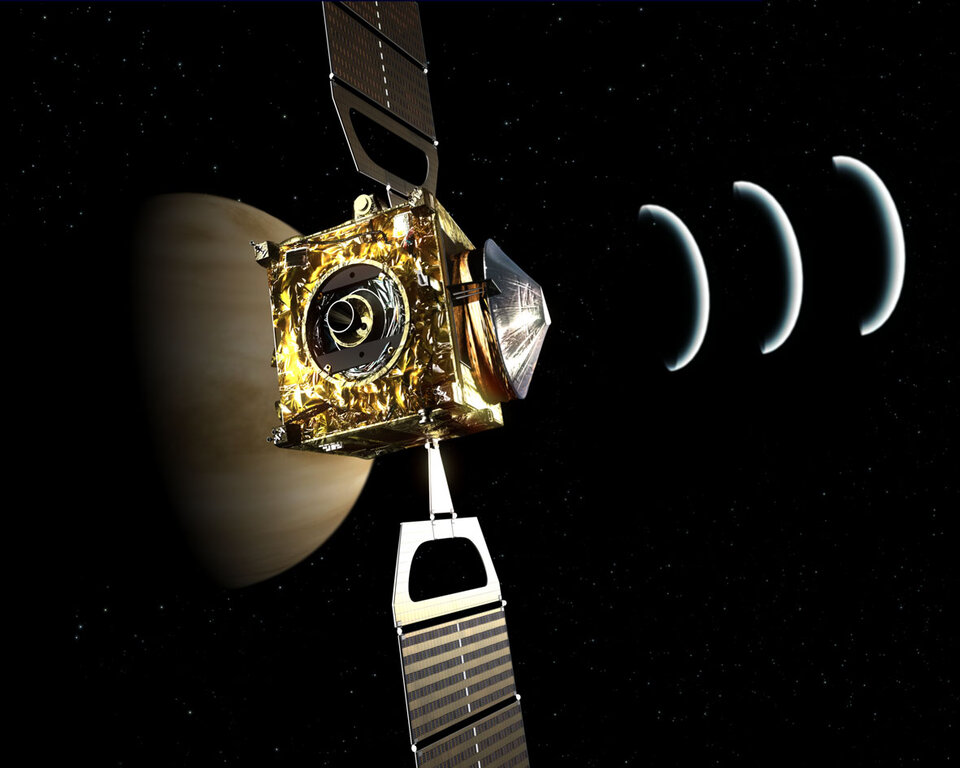
Il 4 luglio 2006 Venus Express ha passato un esame “di maturità”: un board ESA ha dichiarato conclusa la fase di test in orbita (in-orbit commissionino) della sonda e ha dichiarato che la navicella ha tutti i requisiti per entrare nella fase operativa della sua missione scientifica.
La fase di test orbitali, iniziata il 7 maggio quando Venus Express ha raggiunto la sua orbita finale di 24 ore intorno al pianeta e conclusa il 4 giugno dell’anno in corso, consiste in una serie di operazioni che hanno lo scopo di verificare le performance della navicella e di tutti i suoi sistemi nell’ambiente venusiano, del funzionamento della strumentazione scientifica e dei sistemi di terra.
La sonda e gli strumenti hanno complessivamente buone performance, sebbene uno degli strumenti a bordo, il PFS (Planetary Fourier Spectrometer) abbia mostrato un malfunzionamento che non è ancora stato possibile riparare attraverso i tentativi fin qui effettuati. Lo scanner del PFS – lo specchio cioè di cui lo strumento ha bisogno per il puntamento – è attualmente bloccato nella sua posizione di chiusura, impedendo allo spettrometro di “vedere” gli obiettivi.
La relazione del gruppo di analisi della fase di commissioning ha suggerito una serie di attività da eseguire e ulteriori test per i prossimi mesi, oltre a una serie di indagini indipendenti per comprendere l’origine del problema. Nel frattempo, altri strumenti “copriranno” alcuni degli oggetti che il PFS avrebbe dovuto seguire.
Il PFS è concepito per misurare la composizione chimica e la temperatura dell’atmosfera venusiana. È in grado, in aggiunta, di misurare la temperatura superficiale del pianeta, cercando così segni di attività vulcanica.
Ulteriori informazioni:
Hakan Svedhem, ESA Venus Express Project Scientist
Email: hakan.svedhem @ esa.int
Giuseppe Piccioni, VIRTIS co-Principal Investigator, IASF-CNR, Rome, Italy
Email: giuseppe.piccioni @ iasf-roma.inaf.it
Pierre Drossart, VIRTIS co-Principal Investigator, Observatoire de Paris, France
Email: pierre.drossart @ obspm.fr
Jean-Loup Bertaux, SpicaV Principal Investigator, Service d'Aéronomie du CNRS,Verrières-le-Buisson, France
Email: Jean-Loup.Bertaux @ aerov.jussieu.fr
Wojciech Markiewicz, VMC Principal Investigator, Max Planck Institute for Solar System Research, Lindau, Germany
Email: markiewicz @ linmpi.mpg.de
Stanislav Barabash, ASPERA Principal Investigator, Swedish Institute of Space Physics, Kiruna, Sweden
Email: stas @ irf.se
Vittorio Formisano, PFS Principal Investigator, IFSI-CNR, Rome, Italy
Email: formisan @ ifsi.rm.cnr.it