SMART-1 manoeuvres bring Moon impact to nearside
On 2 July 2006, mission controllers successfully completed a two-week manoeuvre campaign designed to adjust the orbit for a nearside impact, to maximise science returns at mission end.
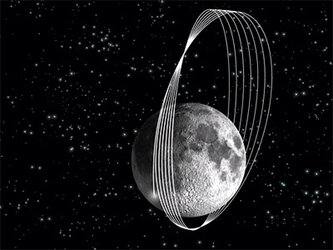
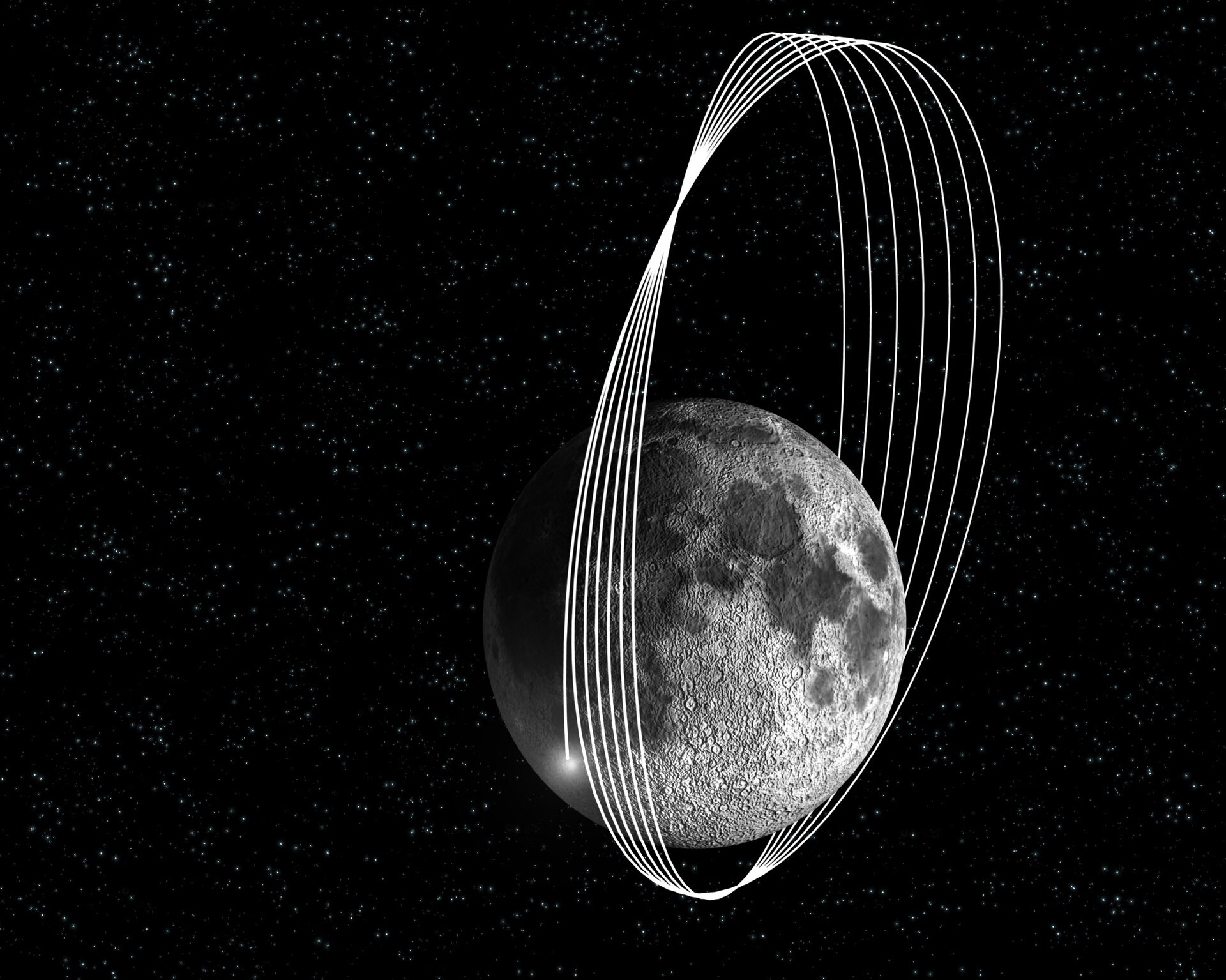
On 19 June, SMART-1 mission controllers at ESOC, ESA's Spacecraft Operations Centre in Darmstadt, Germany, initiated a two-week series of thruster firings aimed at optimising the time and location of impact on the Moon's surface. Disposal via impact is a method adopted by many previous missions and will provide an opportunity to gather science results related to impact effects.
The recently completed manoeuvres comprised 520 reaction-wheel off-loadings using the attitude thruster during 66 orbits, fewer than the 74 orbits initially planned. 'Off loading the reaction wheels' involves using a set of wheels spinning inside the spacecraft together with thruster firings to effect a change in momentum, and hence the velocity, of the spacecraft.
The resulting accumulative change in velocity has shifted the time and location of impact, which, before the manoeuvres, was due to occur in mid-August on the lunar farside; impact is now set to occur on the near side and most probably at 05:41 UT (07:41 CEST) on 3 September 2006.
"Mission controllers and flight dynamics engineers are analysing the results of the manoeuvre campaign to confirm and refine this estimate," says Octavio Camino-Ramos, SMART-1 spacecraft operations manager (SOM) at ESOC, adding, "adjustment manoeuvres are planned on 27 and 28 July, 25 August and on 1 and 2 September."
The manoeuvre just concluded, and the definition of the SMART-1 trajectory, also provide an important piece information for the professional and amateur observers worldwide willing to perform coordinated lunar observations with SMART-1 and to participate in observing the spacecraft's impact.
"We are calling upon astronomical observatories and amateurs worldwide to participate in a coordinated observation effort with SMART-1, including the final orbits until impact," says Bernard Foing, SMART-1 Project Scientist. He adds that, "In the orbits prior to the expected impact, between 19:40 UT (21:40 CEST) on 2 September and 00:40 UT (02:40 CEST) on 3 September, the spacecraft will pass less than 2 kilometres above the lunar surface - based on the known lunar topography - and there is still a possibility of premature impact if some unknown peaks are in the way."
Note to editors
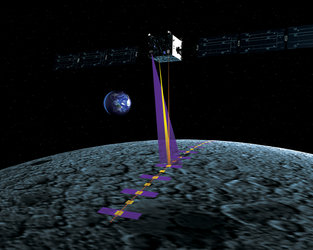
SMART-1 is the first in a series of 'Small Missions for Advance Research and Technology' in which elements of the platform and payload technology have been conceived as a demonstration for future cornerstone missions and an early opportunity for science. SMART-1 uses an innovative ion propulsion system powered by a small quantity of onboard fuel and solar energy, which is used to generate electricity to ionise the fuel.
After its 27 September 2003 launch, SMART-1 spiralled out over a 14-month period until being captured by the Moon on 15 November 2004, thus successfully achieving the primary objective of demonstrating solar electric propulsion. In addition to helping prove new technology from the perspective of the satellite design, the mission has also provided an opportunity to develop new ways of conducting ground control operations based on both increased satellite autonomy and improved ground tools for automation.
For more information
Bernard Foing, ESA SMART-1 Project Scientist
Email: bernard.foing @ esa.int
Octavio Camino-Ramos, ESA SMART-1 Spacecraft Operations Manager
Email: octavio.camino @ esa.int