Chandrayaan-1 now in lunar orbit
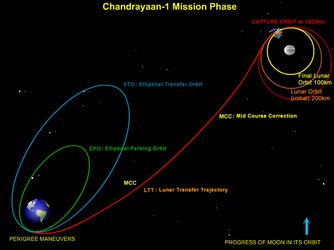
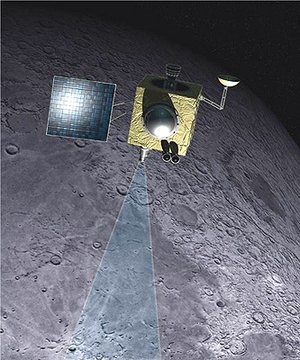
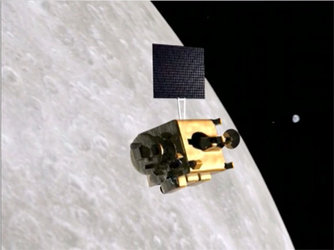
Chandrayaan-1, the Indian Space Research Organisation’s (ISRO) lunar orbiter, was captured into orbit around the Moon on 8 November. One day later, the spacecraft performed a manoeuvre that lowered the closest point of its orbit down to 200 km from the Moon.
The spacecraft’s liquid-fuel propelled engine was fired at 12:21 CET (16:51 Indian Standard Time) when it was at a distance of about 500 km from the Moon. This reduced the spacecraft’s velocity, enabling the Moon’s gravitational field to capture Chandrayaan-1 into lunar orbit. In this configuration, the orbit’s point closest to the lunar surface was at 504 km and the spacecraft circled the Moon in 11 hours.
This lunar orbit insertion manoeuvre was executed from the Chandrayaan-1 Spacecraft Control Centre at ISRO’s Telemetry, Tracking and Command Network at Bangalore. The performance of all the systems on board Chandrayaan-1 was registered as normal.
Yesterday, at 15:33 CET (20:03 Indian Standard Time), the spacecraft’s engine was fired for about 57 seconds, reducing the orbit’s point closest to the lunar surface to 200 km while the farthest point remained unchanged at 7502 km. In this elliptical orbit, Chandrayaan-1 takes about ten and a half hours to circle the Moon once.
Over the next few days, the height of the spacecraft’s orbit around the Moon will be carefully reduced in steps to achieve a final 100-km polar lunar orbit. The Moon Impact Probe (MIP) will then be released to hit the lunar surface, after which the other instruments on board will be turned on.

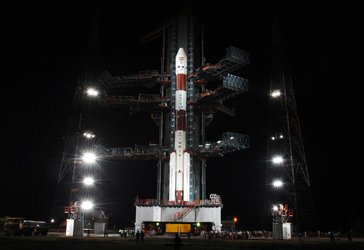
Chandrayaan-1 was launched on 22 October by from India’s spaceport at Satish Dhawan Space Centre SHAR, Sriharikota. The launcher placed the spacecraft in an elliptical orbit around Earth.
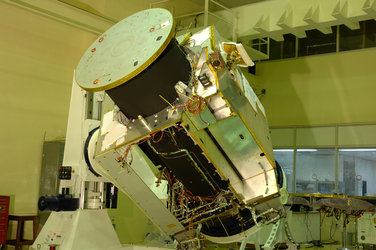
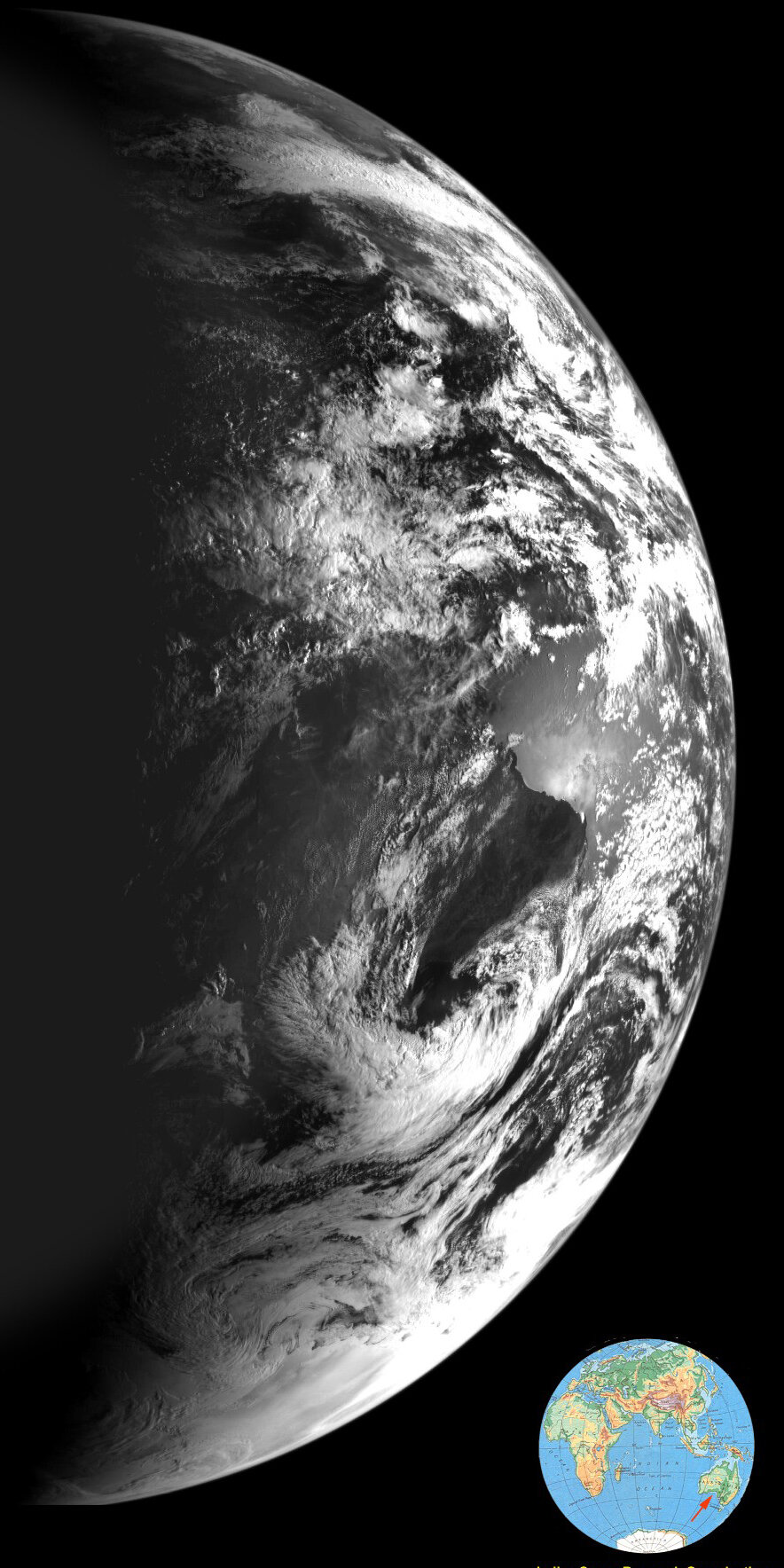
In the past two weeks, the Terrain Mapping Camera (TMC), one of the eleven scientific instruments of the spacecraft, was successfully operated twice to take pictures.
Notes for editors:
Chandrayaan-1, India’s first mission to venture beyond Earth’s orbit, is led by ISRO. ESA has coordinated and supported the provision of the three European instruments on board (C1XS, SARA, SIR-2), and assisted ISRO in areas such as flight dynamics and is supporting data archiving and processing. As a result of the collaboration, ESA and ISRO will share the data from their respective instruments. Other international partners in the mission include Bulgaria and the USA.
For more information:
Christian Erd, ESA Chandrayaan-1 Project Manager
Email: Christian.Erd @ esa.int
Detlef Koschny, ESA Chandrayaan-1 Project Scientist
Email: Detlef.Koschny @ esa.int