

Space naming odyssey: why is ESA’s asteroid mission called Hera?
Christopher Nolan’s new film The Odyssey is set to bring one of the greatest stories of ancient Greece to a new generation. It is a world of gods and heroes, long voyages and impossible returns – themes that have always resonated far beyond literature.

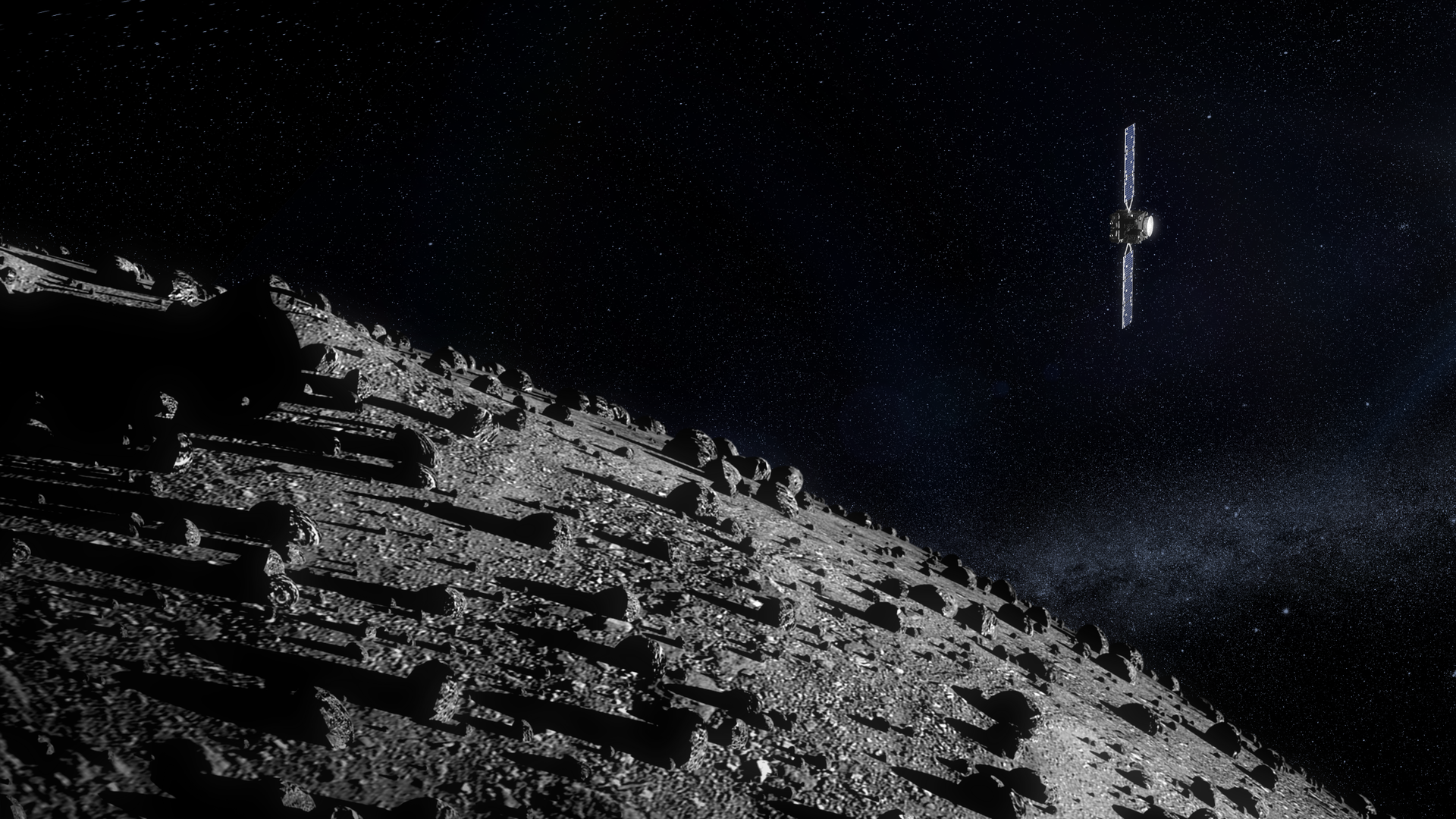
Space engineers, meanwhile, have long drawn inspiration from mythology. The European Space Agency’s first planetary defence mission – currently enroute to its target asteroid – is named Hera, after the wife of Zeus and queen of the Greek gods. But why?
The Hera mission team was disappointed to find out that the goddess Hera is apparently not depicted in Nolan’s The Odyssey – although she does play a pivotal role in the Trojan war that sets the scene for the story, serving as a ferocious champion of the Greek cause.
The mythological Hera is one of the 12 Olympian gods, the fiercely loyal but often jealous goddess of marriage and married women. It was this latter characteristic that saw her name borrowed by ESA’s inaugural mission for planetary defence.

The story dates back to the end of 2016, when ESA’s proposed predecessor spacecraft, the Asteroid Impact Mission, AIM, failed to win sufficient support among European space ministers at the three-yearly ESA Council at Ministerial level.
Hera mission manager Ian Carnelli recalls: “The picture was not so bleak as it first seemed, because multiple Member States encouraged us to develop a follow-on mission to AIM to be presented at the next Ministerial. So we needed to refine our mission concept, and the very first step in that process was to select a new name!”

Hera Principal Investigator Patrick Michel, Director of Research at CNRS / Observatoire de la Côte d'Azur, adds: “This was long before 22 September 2022, when NASA’s DART spacecraft impacted the Dimorphos asteroid, changing its orbit around the larger Didymos body. Back in 2016 there was still a debate going on between some scientists about whether the binary link between the Didymos and Dimorphos asteroids would survive the impact – that possibly Dimorphos might be blown apart.
“But we had confidence Dimorphos would endure, and considering the double asteroids making up this binary asteroid system led naturally to the idea of using the name of the goddess of marriage for our mission – and I think history bore out that it brought us good luck!”

By extension, one of Hera’s onboard CubeSats was named Juventas, after the daughter of Hera, the goddess of youth and young men (the other, Milani, was named for an Italian pioneer of planetary defence, the late Prof. Andrea Milani).
Myths into orbit
Earlier in the space age, missions were named in various ways: ‘Sputnik’ simply translates as ‘fellow traveller’, while other early satellites had names taken from acronyms.
The first name taken from mythology was the initial US crewed spaceflight programme, known as ‘Project Mercury’, named by NASA’s Abe Silverstein after the fast-flying Roman messenger god, followed in turn by Projects Gemini and Apollo – and now the Greek goddess Artemis, sister of Apollo.
And why Roman (then later Greek) myths in particular as naming sources? Perhaps because of their central place in western culture, and also the fact that the planets of our Solar System were already named after Roman gods.

Early days
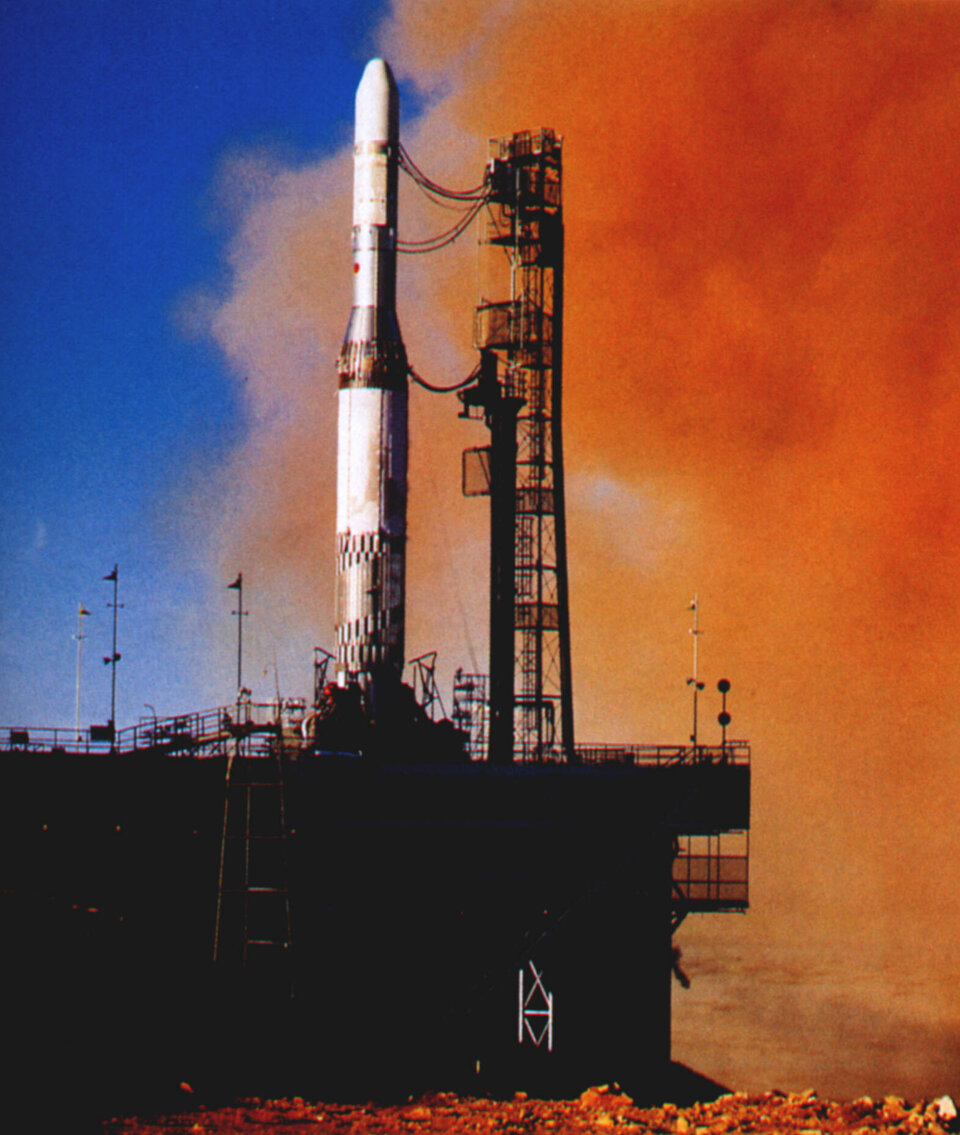
In Europe our first mythological title was for the Europa rocket of the European Launcher Development Organisation, ELDO in the 1960s, named for the mother of King Minos of Crete in Greek legend. Our follow-on rocket programme Ariane is a variant of Ariadne, King Minos’s daughter and Europa’s granddaughter.
In terms of European space missions, the first to bear classical names belonged to ESA’s predecessor, the European Space Research Organisation, ESRO. Space and cosmic radiation satellites ESRO-1A and 1B bore the alternative names Aurora and Boreas respectively when they launched in 1969 – named for the Roman goddess of dawn and the Greek god of the north wind. Confusingly however, the very first mission to launch was ESRO-2B the previous year, which received no mythological alias.
1980s and beyond
It was not until the 1980s and ESA’s early heyday that mythological naming resumed, in the shape of the pioneering Olympus telecommunications satellite, titled for the mountain home of the Greek gods (star-mapping spacecraft Hipparcos also received a Greek name, but from a real ancient Greek scholar, a second century BC astronomer, mathematician and geographer).
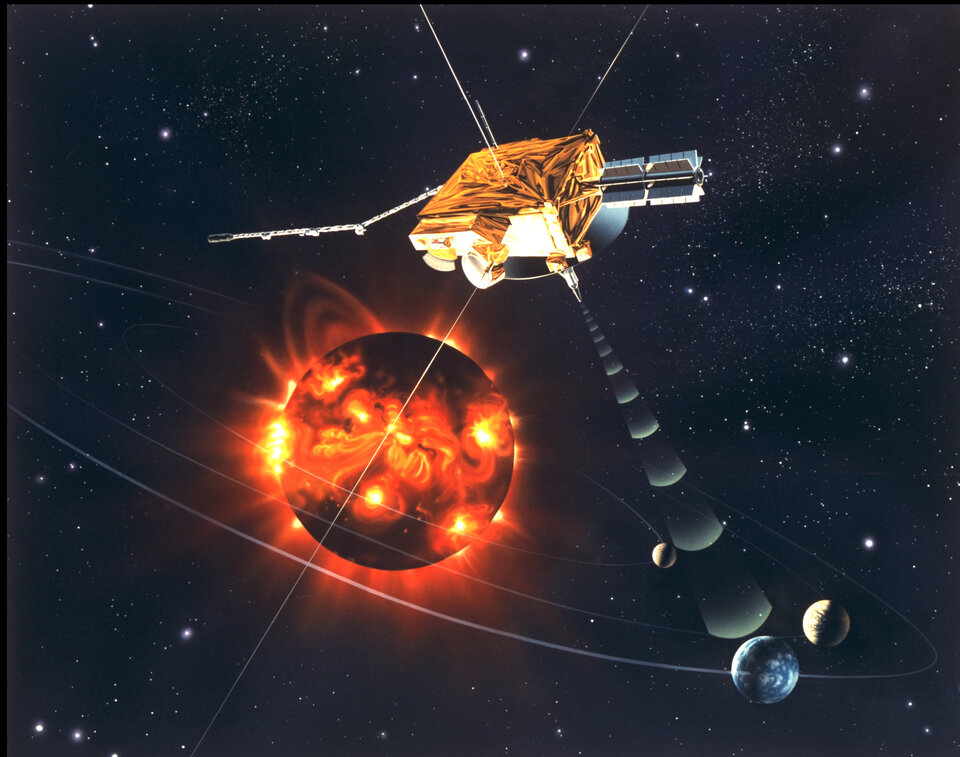
ESA’s next mythological title helped cement the tradition of mythological names for monumental missions. Ulysses, a joint ESA/NASA mission, used a gravity assist from Jupiter to pass above the poles of the Sun. Its name comes from the Roman version of Odysseus, Greek warrior in the Trojan war, inventor of the Trojan horse and legendary traveller, who is of course the lead character in… The Odyssey!

Current ESA mission names are determined in various ways. Some simply spell out functionality, such as Solar Orbiter, Space Rider or the ExoMars Trace Gas Orbiter.
A few come from direct acronyms, such as the gravitational-wave detecting LISA for Laser Interferometer Space Antenna, or else from ‘backronyms’ where where meanings are retrofitted to already selected names. Plato, for instance, stands for PLAnetary Transits and Oscillations of stars, while the forthcoming Arrakihs galaxy-surveyor mission stands for ‘Analysis of Resolved Remnants of Accreted galaxies as a Key Instrument for Halo Surveys’.
These are not to be confused with portmanteaus, where words are run together, like CyroSat, simply combining ‘Cryosphere’ and ‘Satellite’!
Famous astronomers and scientists remain perennial sources of inspiration, with notable examples including the Euclid galaxy mapper named for the ancient Greek ‘father of geometry’; the BepiColombo Mercury probe called after the renowned Italian university professor who helped devise gravity assists and the Rosalind Franklin Mars rover honouring the co-discoverer of DNA.


Access the video
And names from Greek and Roman mythology remain in the mix: from Gaia, mapping more than a billion stars, to Aeolus, which monitored Earth’s winds, to the forthcoming Ariel, which will study the atmospheres of distant exoplanets, and NewAthena for X-ray astronomy.
Hera belongs to this long tradition – but also gives it new meaning. A name drawn from ancient myth is now carried by a European spacecraft on a very modern quest: to understand how humankind might one day protect its home planet.