• → European Space Agency

      • Space for Europe
      • Space News
      • Space in Images
      • Space in Videos
    • About Us

      • Welcome to ESA
      • DG's News and Views
      • For Member State Delegations
      • Business with ESA
      • ESA Exhibitions
      • ESA Publications
      • Careers at ESA
    • Our Activities

      • Space News
      • Observing the Earth
      • Human Spaceflight
      • Launchers
      • Navigation
      • Space Science
      • Space Engineering
      • Operations
      • Technology
      • Telecommunications & Integrated Applications
    • For Public

    • For Media

    • For Educators

    • For Kids

    • ESA

    • Space Science

    • Our Universe
    • About Space Science
    • ESA's 'Cosmic Vision'
    • Science missions
    • Mission navigator
    • Target groups
    • For Media
    • For Scientists
    • For Kids
    • Multimedia
    • Science images
    • Science videos
    • Animations
    • Downloads
    • Sounds from space
    • Resources
    • Reference section
    • Services
    • FAQs
    • Glossary
    • Help
    • Portal terms of use
    • Comments
    • Follow us
    • RSS feeds
    • ESA Sci on Twitter
    • ESA Space Science Images on Flickr
    • ESA 3D on Flickr

    ESA > Our Activities > Space Science

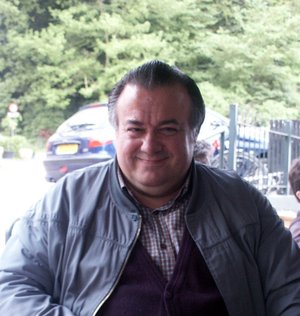
    Agustin Chicarro

    Mars Express Project Scientist, ESA-ESTEC, Netherlands

    Subjects: Mars Express mission and science overview, Mars geology and planetary evolution

    As a geologist and an expert in rocky planets, what in your opinion makes Mars so interesting?

    When it comes to landscape, geology, climate and the possibility of life having appeared and evolved, Mars is the planet most similar to Earth.

    It is also the only planet that humans can even dream of exploring on foot. The profound knowledge on Mars, Venus and Earth is essential to determine the planetary evolution and habitability of terrestrial planets; also the origin of life.

    What do we know today about Mars that we did not know before Mars Express was launched? What do you consider as the most unexpected and exciting results so far?

    Mars Express has shown that volcanic and glacial activity on Mars has probably continued until the present.

    It has helped establish a sequence of events with respect to the amount of liquid water on the surface, which was abundant in the early times of martian history and became more scarce as the planet turned colder.

    Mars Express has discovered mid-latitude aurorae on Mars and has also confirmed the presence of methane. It has shown the existence of the solar wind scavenging mechanism, which penetrates its atmosphere and contributes to atmospheric escape.


    What are the outstanding questions you would like to see addressed by future missions to the Red Planet?

    Even after so many years of exploring Mars, key scientific questions remain unsolved, in particular the determination of the deep internal structure of Mars, the precise rotational parameters of the planet, the detailed meteorology, the absolute ages of rocks and soils on the surface, the link between atmospheric escape and paleomagnetic anomalies in martian crust.

    To this end, ESA has started studying the Mars-NEXT mission under the Aurora Programme, which includes an orbiter and at least three landers on the surface that will constitute a network allowing a variety of simultaneous measurements.
    Last update: 16 November 2007

    Rate this

    Views

    Share

    • Currently 0 out of 5 Stars.
    • 1
    • 2
    • 3
    • 4
    • 5
    Rating: 0/5 (0 votes cast)

    Thank you for rating!

    You have already rated this page, you can only rate it once!

    Your rating has been changed, thanks for rating!

    46
    Tweet
    • Looking at Mars
    • Mars Express highlights
    • Water on Mars
    • Interviews
    • Mars and the search for traces of life
      • Jean-Pierre Bibring
        • Agustin Chicarro
          • François Forget
            • Roberto Orosei
              • John Parnell
                • Jeffrey Plaut
                  • Jorge Vago
                    • Frances Westall
                    • Related articles
                      • Mars Express: First global map of martian ionosphere
                        • Setting stars reveal planetary secrets
                          • Interplanetary networking: ESA’s Mars Express will keep an eye on NASA’s Phoenix
                            • Relays from Mars demonstrate international interplanetary networking
                              • The origin of perennial water-ice at the South Pole of Mars

    Connect with us

    • RSS
    • Youtube
    • Twitter
    • Flickr
    • G+
    • Facebook
    • Livestream
    • Subscribe
    • App Store
    • ESA Science Twitter

    Follow ESA science

    • LATEST ARTICLES
    • · ESA astronaut Timothy Peake set fo…
    • · Space drives e-mobility
    • · Proba-V opens its eyes
    • · First new Galileo satellite arrive…
    • · Next destination: space
    • FAQ

    • Jobs at ESA

    • Site Map

    • Contacts

    • Terms and conditions