• → European Space Agency

      • Space for Europe
      • Space News
      • Space in Images
      • Space in Videos
    • About Us

      • Welcome to ESA
      • DG's News and Views
      • For Member State Delegations
      • Business with ESA
      • ESA Exhibitions
      • ESA Publications
      • Careers at ESA
    • Our Activities

      • Space News
      • Observing the Earth
      • Human Spaceflight
      • Launchers
      • Navigation
      • Space Science
      • Space Engineering
      • Operations
      • Technology
      • Telecommunications & Integrated Applications
    • For Public

    • For Media

    • For Educators

    • For Kids

    • ESA

    • Space Science

    • Our Universe
    • About Space Science
    • ESA's 'Cosmic Vision'
    • Science missions
    • Mission navigator
    • Target groups
    • For Media
    • For Scientists
    • For Kids
    • Multimedia
    • Science images
    • Science videos
    • Animations
    • Downloads
    • Sounds from space
    • Resources
    • Reference section
    • Services
    • FAQs
    • Glossary
    • Help
    • Portal terms of use
    • Comments
    • Follow us
    • RSS feeds
    • ESA Sci on Twitter
    • ESA Space Science Images on Flickr
    • ESA 3D on Flickr

    ESA > Our Activities > Space Science

    Contact for further information

    Markus Bauer
    ESA Science and Robotic Exploration Communication Officer
    Email: markus.bauer@esa.int
    Tel: +31 71 565 6799
    Mob: +31 61 594 3 954

    Paul Hartogh
    Max-Planck-Institut für Sonnensystemforschung
    Tel: +49 5556 979 342
    Email: hartogh@mps.mpg.de

    Göran Pilbratt
    ESA Herschel Project Scientist
    Tel: +31 71 565 3621
    Email: gpilbratt@rssd.esa.int

    Notes to editors
    Ocean-like water in the Jupiter-family comet 103P/Hartley 2 by Paul Hartogh et al. is published online today DOI: 10.1038/nature10519
    http://dx.doi.org/10.1038/nature10519.

    Herschel studied comet Hartley on 17 November 2010 using the Heterodyne Instrument for the Far Infrared (HIFI).

    Rate this

    Views

    Share

    • Currently 0 out of 5 Stars.
    • 1
    • 2
    • 3
    • 4
    • 5
    Rating: 0/5 (0 votes cast)

    Thank you for rating!

    You have already rated this page, you can only rate it once!

    Your rating has been changed, thanks for rating!

    14
    Tweet
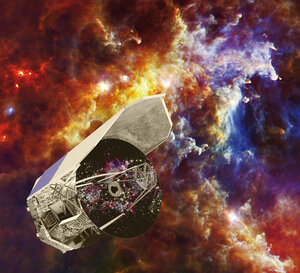
    • Herschel: ESA's giant infrared observatory
    • More about
    • Herschel overview
      • Other Herschel First Science Stories
      • Online Showcase of Herschel Images OSHI
      • Herschel on YouTube
      • Inside Herschel
      • Herschel mission objectives
      • Related articles
        • Did Earth's oceans come from comets?
          • Herschel paints new story of galaxy evolution
            • Astronomers searching for oxygen can breathe more easily
              • Enceladus rains water onto Saturn
                • Raging storms sweep away galactic gas
                  • Herschel links star formation to sonic booms
                    • Herschel finds less dark matter but more stars
                      • Andromeda’s once and future stars
                        • Recipe for water: just add starlight
                          • Herschel and Planck win the French Grand Prix
                            • Herschel finds a hole in space
                              • Herschel reveals the hidden side of star birth
                                • Herschel takes the temperature of an interstellar cloud
                                  • Tracing the Milky Way’s hidden reservoirs of gas
                                    • Herschel resolves the cosmic infrared fog
                                      • Baby stars in the Rosette cloud
                                        • Inside the dark heart of the Eagle
                                          • Herschel views deep-space pearls on a cosmic string
                                          • Read more
                                            • Observations: Seeing in infrared wavelengths
                                              • Why infrared astronomy is a hot topic
                                                • L2, the second Lagrangian Point
                                                • In depth
                                                • This story in depth
                                                • Herschel in depth

    Connect with us

    • RSS
    • Youtube
    • Twitter
    • Flickr
    • G+
    • Facebook
    • Livestream
    • Subscribe
    • App Store
    • ESA Science Twitter

    Follow ESA science

    • LATEST ARTICLES
    • · ESA astronaut Timothy Peake set fo…
    • · Space drives e-mobility
    • · Proba-V opens its eyes
    • · First new Galileo satellite arrive…
    • · Next destination: space
    • FAQ

    • Jobs at ESA

    • Site Map

    • Contacts

    • Terms and conditions