• → European Space Agency

      • Space for Europe
      • Space News
      • Space in Images
      • Space in Videos
    • About Us

      • Welcome to ESA
      • DG's News and Views
      • For Member State Delegations
      • Business with ESA
      • ESA Exhibitions
      • ESA Publications
      • Careers at ESA
    • Our Activities

      • Space News
      • Observing the Earth
      • Human Spaceflight
      • Launchers
      • Navigation
      • Space Science
      • Space Engineering
      • Operations
      • Technology
      • Telecommunications & Integrated Applications
    • For Public

    • For Media

      • Media
      • ESA TV
      • Videos for professionals
      • Photos
    • For Educators

    • For Kids

    • ESA

    • ESA Science

    • Mars Express

    • Europe goes to Mars

      • Europe reclaims a stake in Mars exploration
      • Space age transforms our knowledge about Mars
    • About Mars Express

      • Mars Express mission facts
      • Mars Express instruments
      • The mission
      • The spacecraft
      • The launcher
    • About Mars

      • Geography of Mars
      • Water on early Mars?
      • Signatures of life
      • Facts about Mars
    • Meet the team

      • International collaboration
      • Project Manager
      • Project Scientist
      • Mars Lead Scientist
      • Principal Investigators
      • Operations
      • Industry
    • Multimedia
    • VideoTalk
    • Mars Express images
    • Mars Express videos
    • HRSC videos
    • Animation in 11 languages
    • Download wallpapers
    • Download screensavers
    • 3D Flash 'model'
    • Make a model
    • Services
    • Comments

    ESA > Our Activities > Space Science > Mars Express

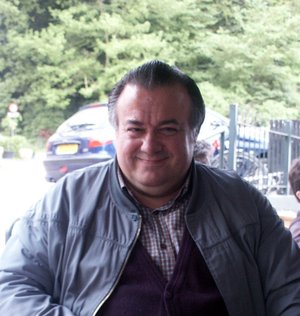
    Roberto Orosei

    Roberto OROSEI, Ma_Miss infra-red spectrometer (ExoMars drill) Team, Istituto di Astrofisica Spaziale e Fisica Cosmica (IASF), Italy

    Subjects: Exomars drill operations & subsurface mineralogy

    As an expert in planetary mineralogy, why is it important to drill the surface of Mars and look underneath?

    Drilling into the Mars’ subsurface means both, accessing a different environment with respect to the surface physical, chemical and thermal conditions, and going back in time to the age when water may have flown on the Martian surface. That’s because many geological processes result in the deposition of more recently modified or new material (such as wind-blown dust, lava flows or impact debris) getting heaper on top of older material that had formed through different physical processes, under different climatic conditions.

    Is it also important in search for traces of life?

    Many organic molecules are unstable because of the weathering conditions on Mars - the intense UV radiation, together with large temperature swings and arid conditions. Because of this, the Martian surface is a very unfavourable place for current biological activity, and is also too harsh to have preserved traces of past life.

    That’s why, in my opinion, the question whether or not life ever arose on Mars cannot be answered without access to the subsurface.


    What are your expectations from the ExoMars mission?

    As subsurface sounding radars such as MARSIS and SHARAD added a new dimension to the study of martian geology, so I believe that drilling will open a new world to the study of the biological environment on Mars in-situ.

    As an example, let’s take the most important question of the origin of gases such as methane and formaldehyde, potentially produced by organic activity. These gases have been detected in the Martian atmosphere and they require some unseen source to compensate for destruction by UV radiation. For the answer, we must look into the subsurface.
    Last update: 16 November 2007

    Rate this

    Views

    Share

    • Currently 0 out of 5 Stars.
    • 1
    • 2
    • 3
    • 4
    • 5
    Rating: 0/5 (0 votes cast)

    Thank you for rating!

    You have already rated this page, you can only rate it once!

    Your rating has been changed, thanks for rating!

    55
    Tweet
    • Looking at Mars
    • Mars Express highlights
    • Water on Mars
    • Interviews
    • Mars and the search for traces of life
      • Jean-Pierre Bibring
        • Agustin Chicarro
          • François Forget
            • Roberto Orosei
              • John Parnell
                • Jeffrey Plaut
                  • Jorge Vago
                    • Frances Westall
                    • Related articles
                      • Mars Express: First global map of martian ionosphere
                        • Setting stars reveal planetary secrets
                          • Interplanetary networking: ESA’s Mars Express will keep an eye on NASA’s Phoenix
                            • Relays from Mars demonstrate international interplanetary networking
                              • The origin of perennial water-ice at the South Pole of Mars

    Connect with us

    • RSS
    • Youtube
    • Twitter
    • Flickr
    • G+
    • Facebook
    • Livestream
    • Subscribe
    • App Store
    • LATEST ARTICLES
    • · Earth Explorers take centre stage …
    • · The fast winds of Venus are gettin…
    • · ExoMars 2016 set to complete const…
    • · Herschel ends operations as orbiti…
    • · Europe’s largest spaceship reache…
    • FAQ

    • Jobs at ESA

    • Site Map

    • Contacts

    • Terms and conditions