• → European Space Agency

      • Space for Europe
      • Space News
      • Space in Images
      • Space in Videos
    • About Us

      • Welcome to ESA
      • DG's News and Views
      • For Member State Delegations
      • Business with ESA
      • ESA Exhibitions
      • ESA Publications
      • Careers at ESA
    • Our Activities

      • Space News
      • Observing the Earth
      • Human Spaceflight
      • Launchers
      • Navigation
      • Space Science
      • Space Engineering
      • Operations
      • Technology
      • Telecommunications & Integrated Applications
    • For Public

    • For Media

      • Media
      • ESA TV
      • Videos for professionals
      • Photos
    • For Educators

    • For Kids

    • ESA

    • Space Science

    • Our Universe
    • About Space Science
    • ESA's 'Cosmic Vision'
    • Science missions
    • Mission navigator
    • Target groups
    • For Media
    • For Scientists
    • For Kids
    • Multimedia
    • Science images
    • Science videos
    • Animations
    • Downloads
    • Sounds from space
    • Resources
    • Reference section
    • Services
    • FAQs
    • Glossary
    • Help
    • Portal terms of use
    • Comments
    • Follow us
    • RSS feeds
    • ESA Sci on Twitter
    • ESA Space Science Images on Flickr
    • ESA 3D on Flickr

    ESA > Our Activities > Space Science

    SOHO: the new solar cycle starts with a ‘bang’

    SOHO spotwave 512
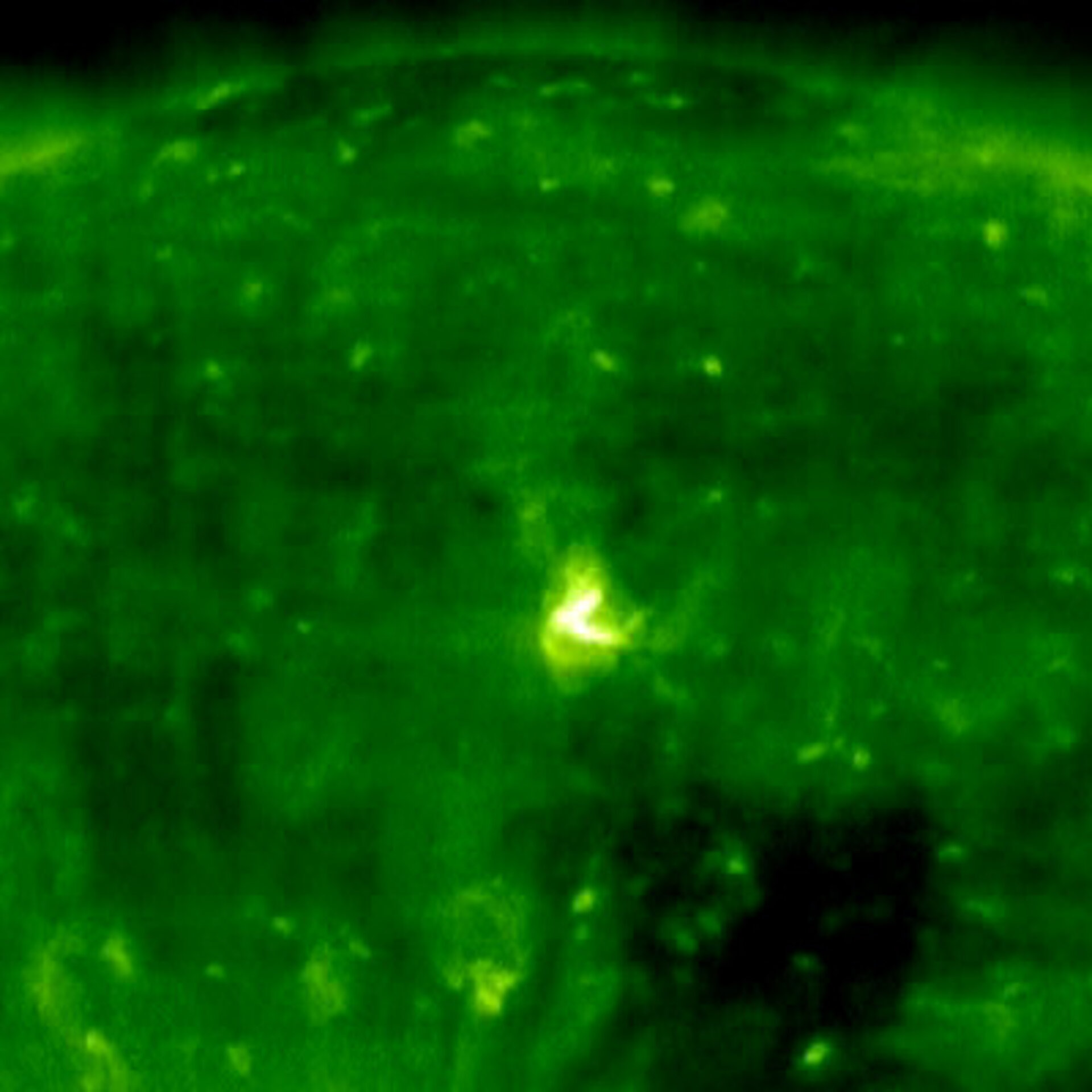
    Two solar blasts mark the start of new solar cycle
    14 January 2008

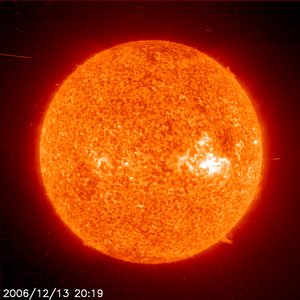
    The appearance of a very special solar spot on the sun surface a few days ago, signalled to scientists around the world that a new solar cycle had begun. This solar spot also produced two solar blasts.

    Each solar cycle lasts an average of 11.1 years. The new solar cycle, called ‘Cycle 24’, started on 4 January this year, when SOHO observed an event scientists have been anticipating for about a year.

    First sunspot of new solar cycle

    A fairly small and, at first sight, inconspicuous sunspot on the Sun’s northern hemisphere showed a reversed magnetic polarity compared to sunspots of previous years. A sunspot is an area of highly organised magnetic activity on the surface of the Sun. This sunspot convinced scientists that a new solar cycle had begun. Later that day, this finding was made official when the sunspot was catalogued by the US National Oceanic and Atmospheric Administration (NOAA).


    SOHO spotwave 512 rundiff
    ‘Running difference’ visualisation of ‘EIT waves’ on the Sun - video

    SOHO was not only first in spotting this harbinger of the new solar cycle, it also observed two associated ‘EIT waves’, blast waves that spread out from active regions on the Sun like ripples from a pebble dropped into water. The new cycle started with a ‘bang’!

    This is just the beginning, and scientists are now eagerly awaiting the activity to follow. Solar Cycle 24 is expected to build gradually, with the number of sunspots and solar storms reaching a maximum by 2011 or 2012, although intense solar activity can occur at any time.

    Note for editors

    Two solar blasts mark the start of new solar cycle

    The Solar and Heliospheric Observatory (SOHO) celebrated the twelfth anniversary of its launch on 2 December 2007. The satellite has witnessed the Sun change through almost a complete solar cycle, from quiet to stormy, and back.

    SOHO is a project of international collaboration between ESA and NASA.

    For more information:

    Bernhard Fleck, ESA SOHO Project Scientist
    Email: bfleck @ esa.nascom.nasa.gov

    Rate this

    Views

    Share

    • Currently 0 out of 5 Stars.
    • 1
    • 2
    • 3
    • 4
    • 5
    Rating: 0/5 (0 votes cast)

    Thank you for rating!

    You have already rated this page, you can only rate it once!

    Your rating has been changed, thanks for rating!

    185
    Tweet
    • More about...
      • SOHO overview
      • Polar plumes as seen by SOHO
        Polar plumes as seen by SOHO
        SOHO 10-year special
      • Related articles
        • SOHO - keeping an eye on the Sun for 12 years
          • SOHO's new catch: its first officially periodic comet
            • Has SOHO ended a 30-year quest for solar ripples?
              • SOHO prepares for comet McNaught
                • ESA’s SOHO will lead a fleet of solar observatories
                  • Nowhere to hide from SOHO
                    • Scientists weather a space storm to find its origin
                      • History’s greatest comet hunter approaches major milestone
                        • How we see the far side of the Sun
                          • How the Sun affects us on Earth
                            • What are solar flares?
                              • Sophisticated ESA space weather tool under development
                                • ESA mission controllers react to solar flare
                                • Related links
                                • NOAA: Sunspot is Harbinger of New Solar Cycle
                                • SOHO hotshots

    Connect with us

    • RSS
    • Youtube
    • Twitter
    • Flickr
    • G+
    • Facebook
    • Livestream
    • Subscribe
    • App Store
    • ESA Science Twitter

    Follow ESA science

    • LATEST ARTICLES
    • · Rare merger reveals secrets of gal…
    • · Watching for hazards: ESA opens as…
    • · ESA astronaut Timothy Peake set fo…
    • · Space drives e-mobility
    • · Proba-V opens its eyes
    • FAQ

    • Jobs at ESA

    • Site Map

    • Contacts

    • Terms and conditions