Skywatchers see Mars bright this weekend
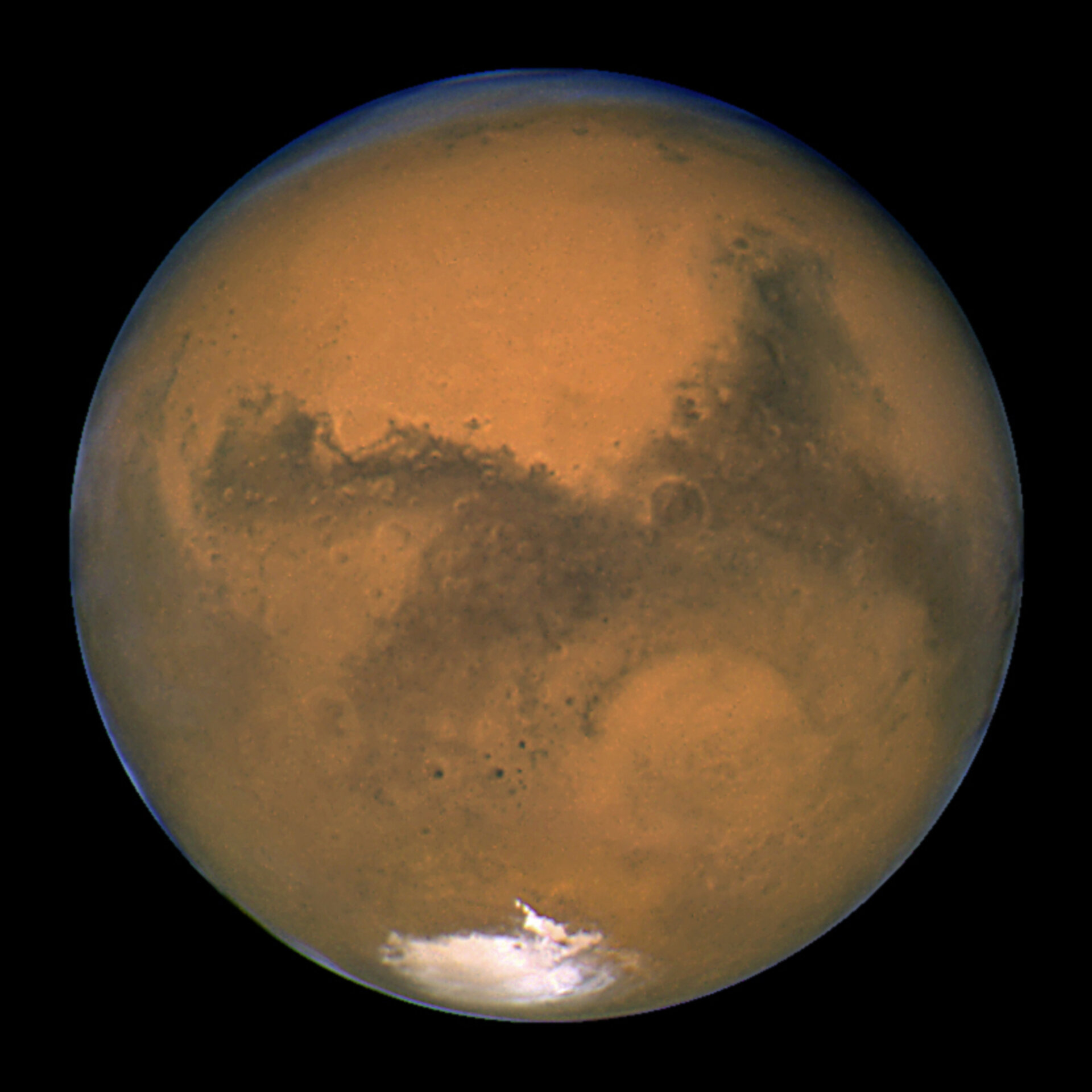
Look east in the next few evenings and you may see a big, reddish-yellow ‘star’, shining much brighter than any other. This is the planet Mars, and it is passing unusually close to Earth during late October and early November 2005.
Anyone should be able to see it, no matter how little you know about the stars or how badly light-polluted your sky may be.
During mid- to late October, Mars will be low in the east after sunset. Later in November evenings, Mars climbs higher into better view and shifts over to the south-east. Mars is at opposition (opposite the Sun in our sky) on 7 November. This means it rises at sunset, is up all night, and sets at sunrise.
Mars will be closest to Earth on the night of 29 October, passing by our planet at 69.4 million kilometres distance. However, Mars will look just about as big and brilliant for a couple of weeks before and after this date.
This is the nearest that Mars has come since its record-breaking close approach in August 2003 just after ESA’s Mars Express spacecraft was launched and sent to the Red Planet. At that time it passed by at a distance of only 55.8 million kilometres, the closest it had come in nearly 60 000 years.
In fact, not until summer 2018 will Mars again come as close to Earth as it is now. But this year, skywatchers at North American and European latitudes have a big advantage they did not have in 2003.
That year Mars was far south in the sky and never rose high enough for telescope users at mid-northern latitudes. But this time Mars is farther north and rises higher during the night, giving a sharper, cleaner view with a telescope through Earth's blurring atmosphere.
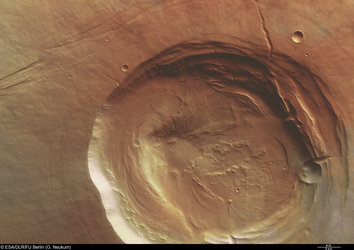
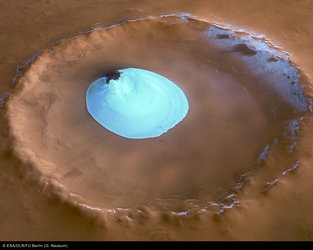
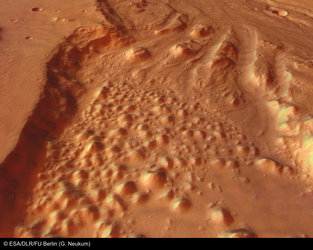
For more information on Mars Express HRSC images, you might like to read our updated 'Frequently Asked Questions'.