Understanding our neighbourhood in the universe
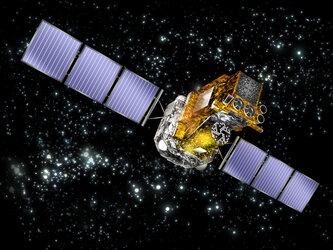
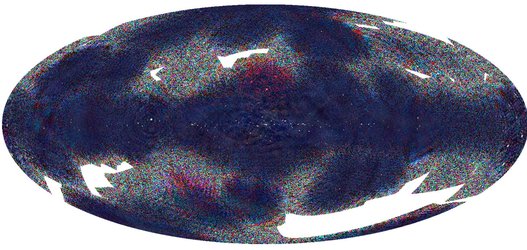
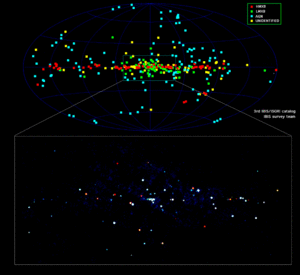
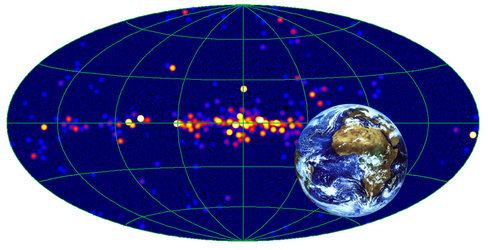
With its powerful detectors, Integral has performed the most-sensitive all-sky survey ever, finding expected clumpy areas at large scales in our local universe. Scientists working with ground-based telescopes have found the same local clumps, while looking for sources of cosmic showers.
Integral performed the survey in the hard X-ray band of the electromagnetic spectrum. Although it wasn't the first such survey, Integral's strength lies in the fact that it is unbiased towards sources that are shrouded by dust or gas, invisible at optical and soft X-ray wavelengths.
An interesting correlation has been found in data collected with the Auger telescopes in Argentina. Such a correlation with optical data is opening a new door in the exploration of the local universe.
Looking around, our neighbouring local universe is fairly homogeneous. However, a lot of 'clumps' or structures are found at smaller scales, less than 100 megaparsecs or about 326 million light-years.
Scientists believe that as the early universe expanded and grew, small perturbations introduced later formed structures confined to smaller spatial scales, leaving the universe homogeneous on scales larger than 100-200 megaparsecs (about 326 million to 652 million light-years). Integral has confirmed just this.
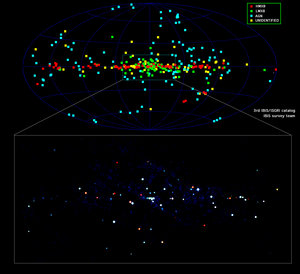
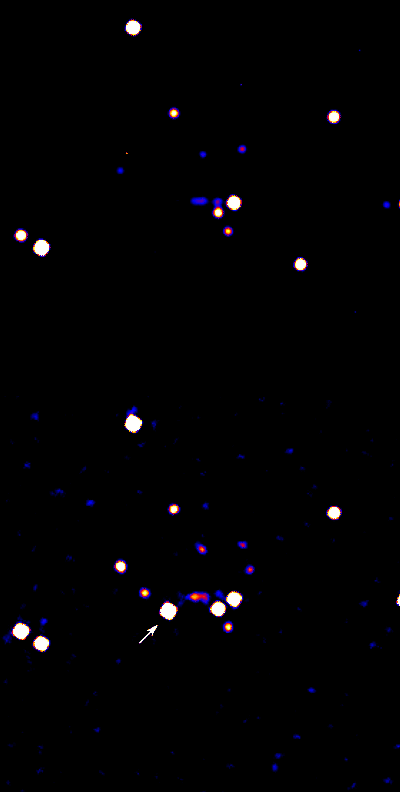
The catalogue produced with the survey includes more than a hundred extragalactic objects, mainly Active Galactic Nuclei (AGNs), located at distances up to 200-300 megaparsecs (about 652 to 980 million light-years). Thanks to the hard X-ray selection, among these sources, the survey has included many dust-enshrouded AGNs.
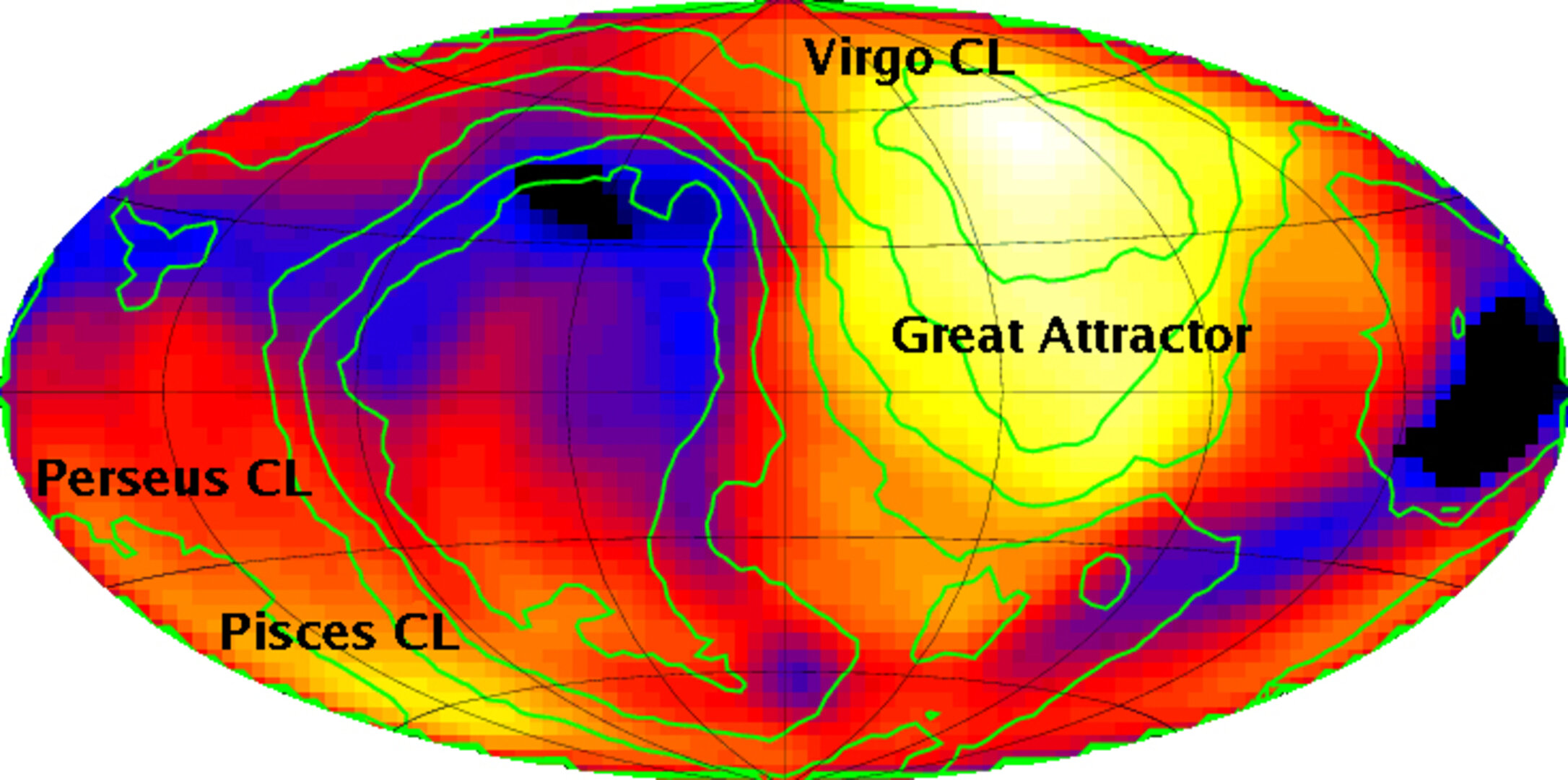
The survey found galaxies, clusters, superclusters, voids and even the highest known mass clumps (of mass greater than that of million of billions Suns put together) ever-observed: including the nearby Virgo cluster and the more distant Great Attractor and Perseus-Pisces supercluster.
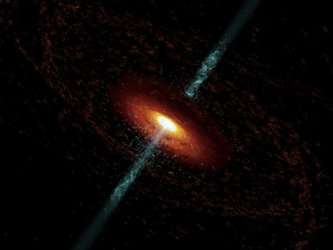
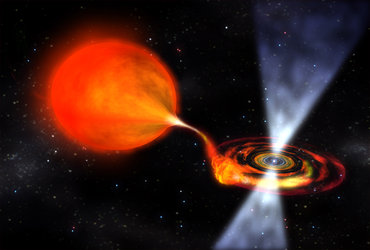
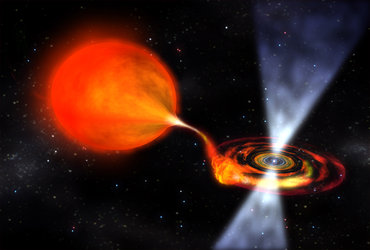
Nearly every galaxy in the local Universe is believed to have a central, supermassive black hole and some of these black holes are observed to be AGNs. AGNs are supermassive black holes that are devouring large amounts of matter – excellent candidates for the production of extremely energetic particles.
There is evidence that AGN activity is strongly related to the evolution of galaxies. This is why it is believed that the density of AGNs in a given region should be proportional to that of ordinary galaxies. This would make it possible to use AGNs as standard references to reveal clumps of matter in the local universe.
A group of astronomers at the Space Research Institute (IKI, Moscow, Russia) and Max-Planck Institute for Astrophysics (Garching, Germany) led by Prof. Rashid Sunyaev used the Integral hard X-ray all-sky survey to find out what the distribution of nearby AGNs is like. The map they obtained clearly showed the known, nearby clumps of matter.

Using a completely different method of observation, scientists using the Auger shower telescopes in Argentina were observing Ultra-High Energy Cosmic Rays (UHECRs). These particles are striking the Earth atmosphere and create secondary particles which are detected at the Earth surface.
This was found by correlating the directions of a few UHECRs with a catalogue of AGNs based on optical measurements. Such catalogues are biased against dust-enshrouded AGNs in contrast with the catalogue of AGNs detected by Integral in the hard X-ray band. Combining Integral data with that from ground-based observations could open a new door to explore the local Universe with instruments not previously available to astronomers.
Notes for editors:
The results presented in this article make reference to the paper published in the Astronomy & Astrophysics journal: 'INTEGRAL/IBIS all-sky survey in hard X-rays', by R. Krivonos, M. Revnivtsev, A. Lutovinov, S. Sazonov, E. Churazov, and R. Sunyaev (2007, A&A 475, 775).
For more information :
Christoph Winkler, ESA Integral Project Scientist
Email: Christoph.Winkler @ esa.int