Radioactive iron, a window to the stars
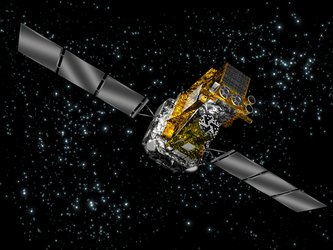
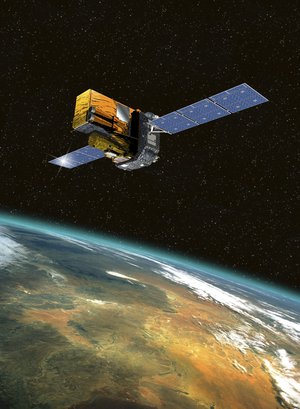
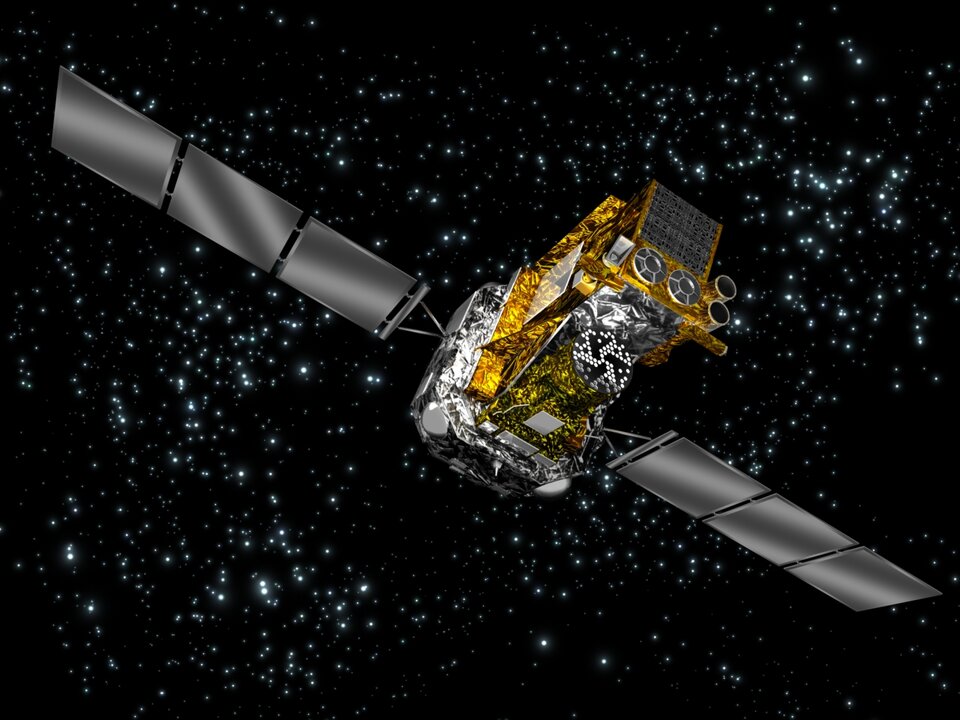
ESA’s orbiting gamma-ray observatory, Integral, has made a pioneering unequivocal discovery of radioactive iron-60 in our galaxy that provides powerful insight into the workings of massive stars that pervade and shape it.
Found drifting in space, the radioactive isotope has been sought for long. All past reported sightings of iron-60 have been subject to controversy. Now Integral has provided unequivocal evidence.
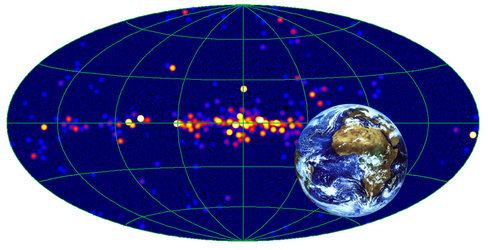
Since late 2002, Integral has been collecting data from across the galaxy. It shows an enhancement in gamma rays at two characteristic energies, 1173 and 1333 kilo electron Volts. These are produced by radioactive decay of iron-60 into cobalt-60.
Roland Diehl of the Max-Planck-Institut für extraterrestrische Physik, headed the work and believes it is a major step forward. “These gamma-ray lines have been detected before with some dispute. Integral, the only instrument capable of doing this, shows that iron-60 does exist in interstellar space in our Galaxy,” he says.
More than a curiosity, its presence opens a door into the very heart of the most massive stars in the cosmos. The majority of chemical elements are built inside stars from raw ingredients present during star formation from an interstellar gas cloud. In addition to hydrogen and helium produced during the Big Bang, the gas contained enrichments, known to astronomers as ‘metals’, from previous generations of stars and their nuclear reactions.
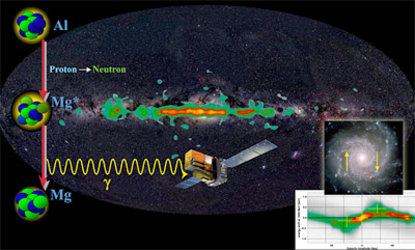
Until this detection, astronomers had only one radioactive isotope to probe into the current build-up of chemical elements in stars and their distribution with respect to future star formation. That was the radioactive isotope aluminium-26, first discovered in 1978. “The study of aluminium-26 has developed into its own branch of astronomy,” says Diehl.
Iron-60 gives astronomers valuable new insight - although produced in the same stars as aluminium-26, its production differs markedly. Iron-60 is synthesised both later in a star’s life and deeper inside.
As massive stars age, they develop a layered structure in which different chemical elements are fused together. While aluminium-26 is one rung on the ladder of nuclear reactions, iron-60 is produced from pre-existing stable iron isotopes by a process called ‘neutron capture’ in the respective layers where helium and carbon atoms are undergoing fusion.
“Iron-60 provides the entry into studying neutron capture in stars through contemporaneous radioactivity,” says Diehl. It has also prompted a number of particle accelerators to begin more detailed studies of how easily iron captures neutrons.
Unlike aluminium-26, iron-60 is only expelled into space when the star explodes at the end of its life. It then decays with a half-life of 1.5 million years, producing the gamma rays that Integral detected.
The new data pins down the ratio of iron-60 to aluminium-26, which has a half-life of
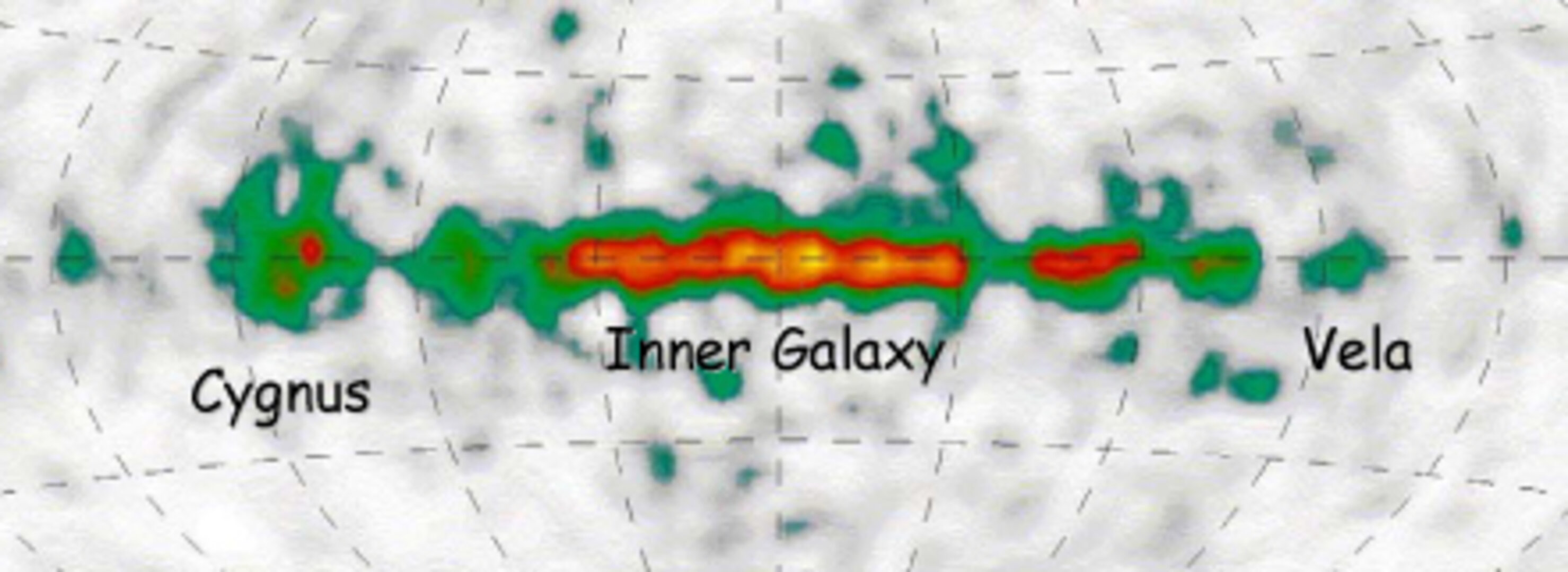
Although Integral clearly sees the telltale gamma rays, they are too faint for it to map out enhancements and paucities across the Galaxy. “Mapping the distribution of iron-60 is a job for the next generation of gamma-ray instruments,” says Diehl.
Nevertheless, the team will continue observing with Integral for as long as they can, in the hope of gaining some coarse ideas about the isotope’s spread across the Galaxy.
Notes for editors:
The findings will appear in the article titled, “SPI observations of the diffuse 60Fe emission in the Galaxy”, by W. Wang , M. Harris, R. Diehl, H. Halloin, B. Cordier, A.W. Strong, K. Kretschmer, J. Knödlseder, P. Jean, G.G. Lichti, J.P. Roques, S. Schanne, A. von Kienlin, G. Weidenspointner, C. Wunderer, accepted for publication on 26 April 2007 in the Astronomy and Astrophysics journal.
For more information:
Roland Diehl, Max-Planck-Institut für extraterrestrische Physik, Garching, Germany
Email: Rod @ mpe.mpg.de
Christoph Winkler, ESA Integral Project Scientist
Email: Christoph.Winkler @ esa.int