Ariane 6 – made in France

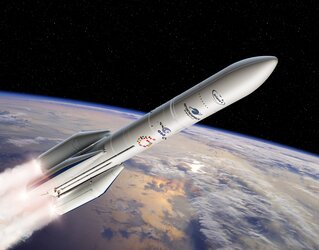
When we gaze at the night sky, dreaming of exploring the stars, it is easy to marvel at the rockets that make space travel possible. Behind these incredible machines lies the dedication, creativity, and hard work of countless people. Ariane 6, Europe’s newest heavy-lift rocket, is no exception. This rocket is designed to carry satellites and spacecraft into space, and France has played a vital role in making it a reality contributing 55.6% to the Ariane 6 development programme up to the inaugural flight of Ariane 6 from French Guiana.
French industries have contributed their expertise to nearly every part of Ariane 6, from the main contractor ArianeGroup that also supplies the powerful engines to Air Liquide supplying the rocket’s fuel pipes, Safran that supply the guidance and control mechanisms and Airbus supplying the batteries.
This series of articles is looking at the parts and components needed to assemble the Ariane 6 rocket – supplied by companies from the 13 ESA Member States participating to the Ariane 6 programme. Together they contribute the best of their know-how to build Europe's heavy-lift launcher under the guidance of main contractor ArianeGroup who also designed the Ariane 6 rocket.
ArianeGroup – leading the orchestra

Imagine an orchestra where every instrument must play perfectly in harmony. ArianeGroup, headquartered in France, acts as the conductor for Ariane 6, ensuring every piece of the rocket works together smoothly, often referred to as the Ariane 6 ‘prime contractor’.
In addition to being the overall design authority, meaning ArianeGroup led and decided the rocket’s design, their major contribution is the rocket’s engines, which are like its heartbeat. ArianeGroup created the hydrogen turbopumps that feed fuel to the engines, and gas generators, which help power the system. The main engine, Vulcain 2.1, is the muscle of the rocket. Built in Les Mureaux, France, and positioned at the bottom of the core body, it provides power for eight minutes from liftoff to orbit. The Vinci upper stage engine was originally built and tested in Vernon, France, but integration and testing will move to ArianeGroup’s site in Lampholdshausen, Germany, in an agreement signed in October 2025. The liquid oxygen turbopumps will be made in France by ArianeGroup in the future, instead of Italy.

ArianeGroup also developed the nozzles and parts of the rocket’s solid boosters, which give it the push required for liftoff. Think of these boosters as giant fireworks strapped to the sides of the rocket, burning intensely to rise through the sky. The booster nozzles are produced at an ArianeGroup site in Le Haillan, near Bordeaux. The nozzles have to withstand heat of up to 3000°C.
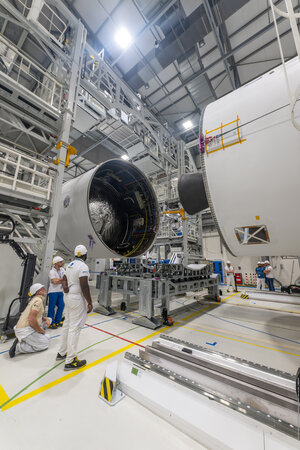
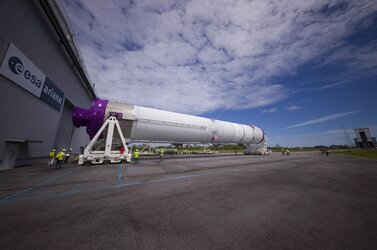
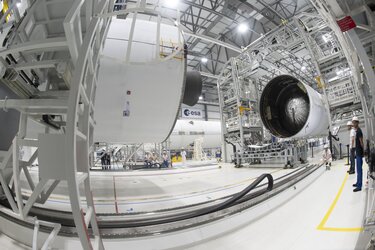
Finally ArianeGroup in France assembles the complete core stage including the propellant tanks before shipment to Europe’s Spaceport in French Guiana on the hybrid-sailing vessel Canopée.
Air Liquide - the rocket’s veins

Rockets like Ariane 6 need extremely cold fuel to function. This fuel, pure liquid hydrogen and oxygen, must be kept at temperatures so low that it is twice as cold as the coldest winter day ever recorded on Earth (−89°C), liquid oxygen must be kept below −182°C and the hydrogen even colder. Teams specialised in cryogenics (the science of working with super-cold substances) from Air Liquide, a world leader in gases, technologies and services for industry and healthcare, built the pipes that carry this super cold fuel to the engines. You can think of these pipes as the rocket’s veins, ensuring the fuel flows smoothly and safely to keep it alive and moving. Keeping hydrogen, the second smallest molecule in the Universe at temperatures just 20 degrees from the coldest temperature in the Universe is an art as much as it is engineering, and Air Liquide balances the line of precision engineering and operational adaptations on every launch. The company is also part of the team that calculates the fuel needed for the upper stage, following launches in real time to ensure that enough fuel is available in the upper stage so that Ariane 6 can deliver all its satellites to all its orbits.
Safran – the rocket’s brain, and safety

Every rocket needs to know where it is, how to stay on course, and how to communicate with mission control. Safran, a key player in aerospace, provides Ariane 6 with critical systems to ensure a safe and precise journey.
Like a rocket’s brain, Safran’s inertial guidance unit keeps Ariane 6 on track throughout its mission. Just as a pilot relies on instruments, Safran’s telemetry equipment and radar transponders continuously send vital flight data to ground control.
From ignition to orbit, Safran’s technology is at the heart of Ariane 6’s success.
Airbus – powering the journey

Airbus in France contributed the rocket’s batteries, which provide electricity to its systems during flight. These batteries are built to withstand extreme conditions, from the intense vibrations of launch to the freezing vacuum of space. They were built using commercial, off the shelf technology especially qualified for space by Airbus, bringing reliability while being mindful of cost. They are the rocket’s power source, keeping it running every second of its journey.
Europropulsion – providing the boost

Europropulsion developed the P120C solid rocket motor, as well as its successor, P160C that serve as the booster for Ariane 6. The company is a joint venture from Italian company Avio and France’s ArianeGroup.
Regulus – mixing the solid propulsion
The explosive powder for the boosters is mixed by Regulus, another Italian-French company. At a highly-controlled site at Europe’s Spaceport in French Guiana Regulus mixes the rocket powder components into the specific quantities and shape for the boosters.
The silent heroes

Beyond the big names, many smaller French companies also played roles in building Ariane 6. Eaton, formerly Souriau, for example, created the connectors that link the rocket to the ground systems during fuelling and preparation. These parts are designed to disconnect safely at the exact moment of liftoff, making sure everything goes off without interruptions.
Amphenol has factories in France that make lightweight brackets and pipe clamps to secure the rocket’s wiring. These are treated to not release harmful gases in the vacuum of space, a small but essential detail for a successful mission. Amphenol also supplies connectors for Ariane 6 and their backshell protections.
A large contribution

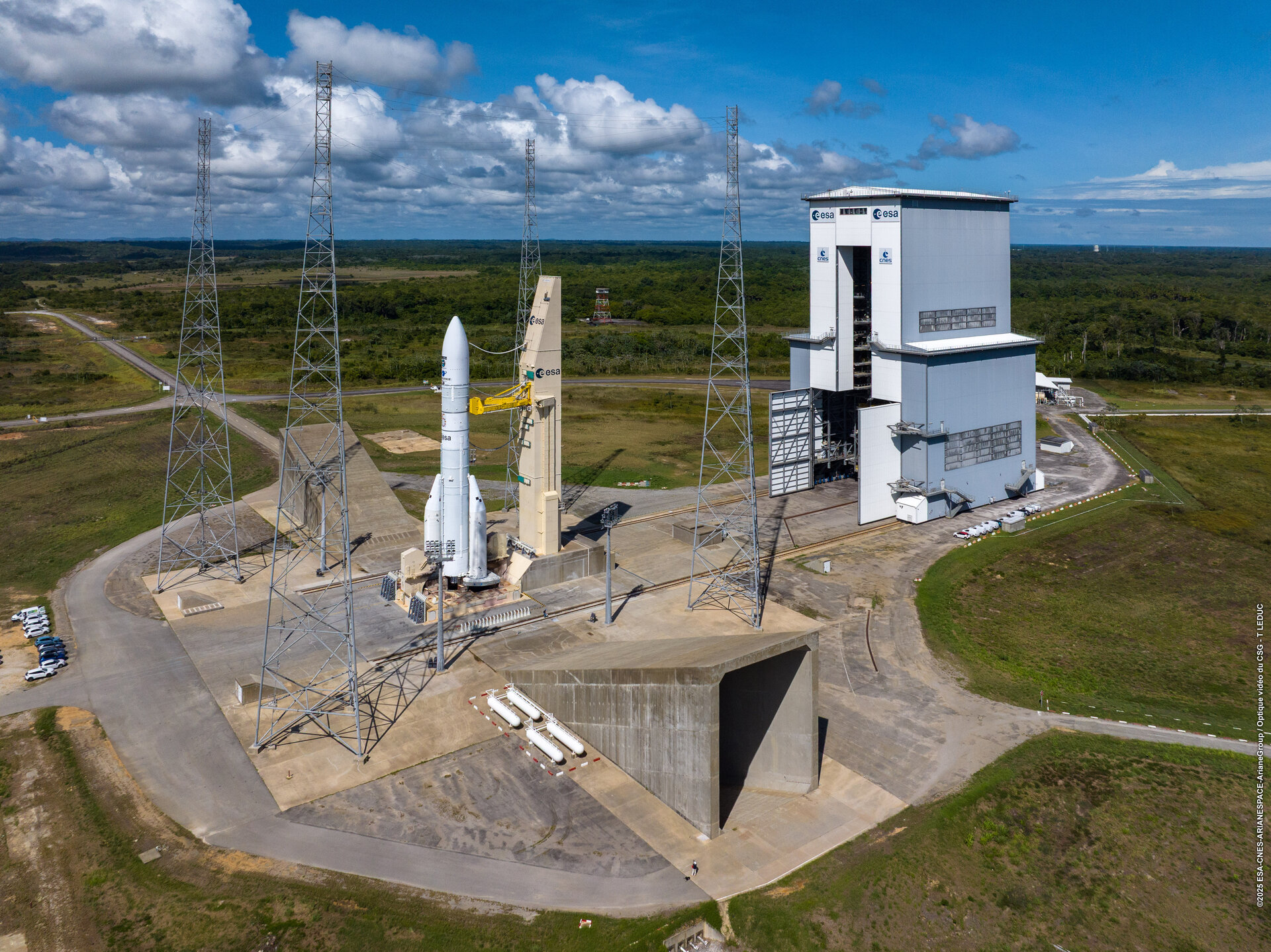
France’s contributions to Ariane 6 represent the country’s commitment to pushing the boundaries of space exploration and its leadership in Europe’s aerospace industry. It is outside the scope of this series of articles, but it would be amiss to neglect the mentioning the launch zone. Built by France’s space agency CNES, the launch complex at the Ariane 6 launch zone is called ELA4. The main contractor for the immense engineering and development for the launch pad and infrastructure is French company Group Eiffage, that has its roots in building the famous Eiffel tower in Paris.
Also, of course, Arianespace, launch service operator is a French company that identifies commercial markets for launches and are responsibility for the commercial use of Ariane 6. As commercial launch service provider, companies negotiate and get help from Arianespace on their road to space.
Every pipe, engine, and system tells a story of collaboration, precision, and innovation. Their work reminds us that every rocket’s journey begins long before it leaves the ground. It starts with the imagination and skills of people here on Earth, who make reaching for the stars a reality.