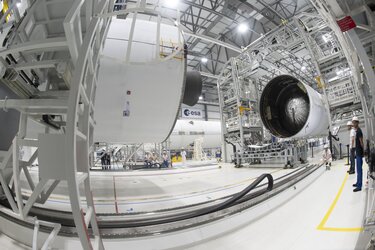
Ariane 6 – made in Spain

Spain has a long history with space and was one of the European Space Agency’s founding states. With our space science centre, ESAC, and the Cebreros deep space science tracking station located close to Spain’s capital, Madrid, many of our science missions launched by Ariane 6 are conceived and developed in Spain and use Cebreros to communicate with Earth.
As participating state in the Ariane 6 programme, Spain contributed 4.7% to its development up to the inaugural flight. Spanish companies provide structural components through Airbus, communication systems with Thales Alenia Space, control infrastructure with Sener and GTD as well as tool suppliers Inventia Kinetics and ground support suppliers HV Sistemas all contributing to Europe’s heavy-lift launcher.
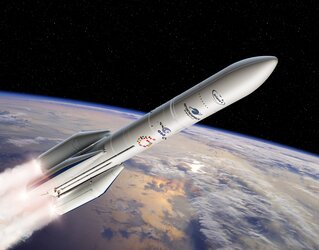
Over 600 suppliers provide the parts to build Europe’s largest rocket Ariane 6. Representing the best of European industry in terms of innovation and quality control this series of articles will be looking at the components of Ariane 6 supplied by the 13 participating states to the programme.
Airbus in Spain – Ariane 6 skeleton and nerves

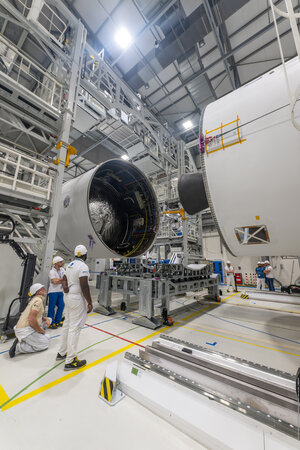
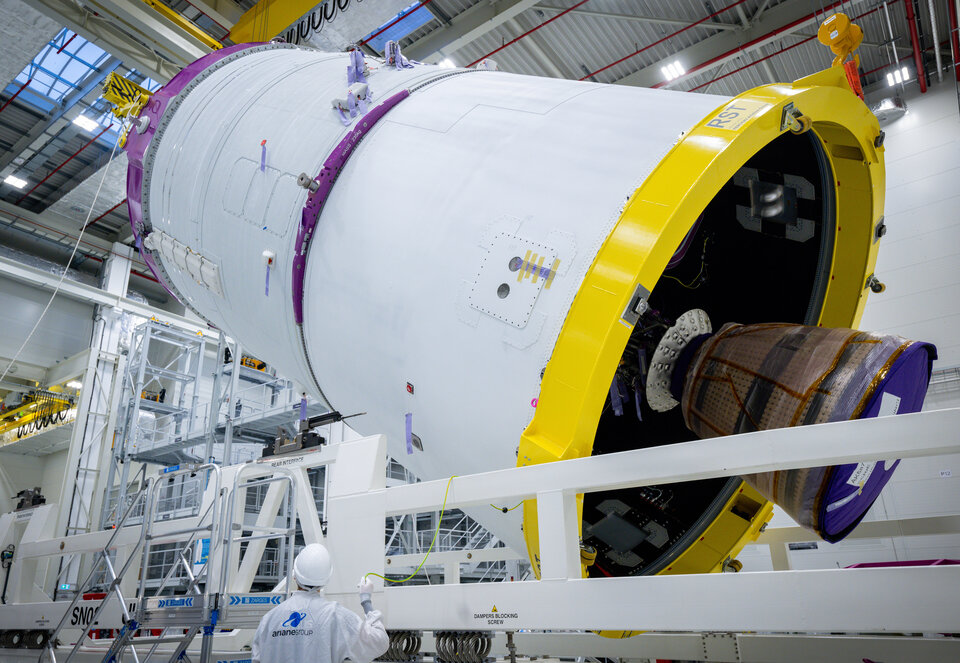
At the core of Ariane 6's physical integrity and reliability is the work of Airbus in Spain, contributing key structural elements and critical electronics to the launcher. As a leading contributor to the rocket's structural framework, Airbus in Spain developed the upper – conical part, of the boosters, the interface structure that connects the main stage and upper stage, and the Launch Vehicle Adapter. These structures are known as "skeletal bridges" connecting stages of the rocket, like bones connect body parts, ensuring stability and form.
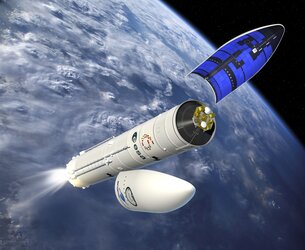
Furthermore, the company integrates all the electronic equipment that control booster operations. Stemming from their history with Ariane 4 and 5, Airbus in Spain also supplies the payload adapters and separation systems that provide the interface connection to the satellites that the rocket can transport on their journey from Earth to space. As Ariane 6 can launch two or more larger satellites on each flight, Airbus can supply multiple payload adapters to suit each flights needs.

Around the skeleton, Airbus in Spain’s contribution extends into the rocket’s nervous system, supplying 90% of Ariane 6's electrical wiring. This intricate network of wires allows seamless communication between various systems, much like the synapses of a human brain transmitting signals across the body.
Airbus in Spain controls the rocket's functions through the Centralised Multi-Functional Unit (CMFU) and the Pyrotechnical Firing Units (PFU). The CMFU serves as the core of the launcher’s electrical system, housing key functions such as power distribution, internal communications network management, on-board computing, and controlling engine actuators. The Pyrotechnical Firing Units coordinate the precise timing of pyrotechnic events during launch, when the stages separate and are literally blown away by controlled, small explosions. Four CMFUs and four PFUs are supplied for every Ariane 6, a total of about 100 kg of electronics per launcher.
Thales Alenia Space - extending the reach of communication

Thales Alenia Space in Spain ensures that Ariane 6 stays connected with Earth throughout its mission. With their expertise in communication systems, Thales Alenia Space developed the transmitters that send data back to Earth. These transmitters serve as the rocket's "voice," enabling mission controllers to monitor its status from a distance. Additionally, Thales Alenia Space, in partnership with Telespazio France, extended the fibre-optic network at Europe’s Spaceport in French Guiana, enhancing data transmission capabilities for smooth coordination during launch operations. This advancement ensures that information flows faster and more securely.
Sener - precision in data transmission

Sener's contribution to Ariane 6 lies in the development of its telemetry antenna that transmits data during the rocket's ascent. The antenna serves as the "eyes and ears" of the rocket monitoring and transmitting data from Ariane 6 to ground stations during its flight. This includes critical information on the status of the launcher’s systems, sensors and subsystems.
Thanks to the Sener antenna the rocket and the ground teams can communicate and track and locate Ariane 6 during its flight phases, as well as, if needed, resolve problems, helping to guarantee the success of the space mission.
GTD - guardians of operational control and flight safety

Barcelona-based GTD developed systems that secure both operational control and safety. Their work spans several areas, including the creation of the operational control banks, that handle the configuration and validation of the rocket from its assembly to launch. In essence, GTD acts as a "command centre" of Ariane 6, overseeing the complex operations that take place both before and during the mission.
One of GTD's standout contributions is the development of the Jupiter 2 main control system, the "beating heart" of Ariane 6 operations. This system governs launch activities, ensuring everything runs like clockwork. GTD also played a key role in managing safety infrastructure and fluid systems at the launch pad, as well as building radar systems that allow precise tracking of the rocket's flight path. GTD also coordinated the launch timeline for the first Ariane 6 countdown – this team is responsible for timing and synchronizing of every stage of the mission.
Their work ensures not only the success of the launch but also the safety of every mission, from the ground up.
Inventia Kinetics – mechanical ground support equipment specialists

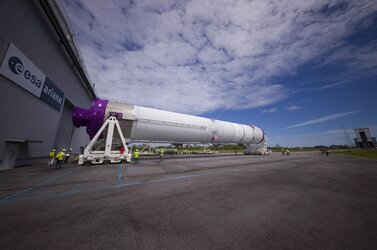
Inventia Kinetics contributes to the Ariane 6 project by supplying Mechanical Ground Support Equipment (MGSE) and special machines for Airbus’s pulse line manufacturing and assembly facility in Getafe, Spain. These include handling and lifting tools, automated systems, and transport containers for the Ariane 6 boosters, interface rings, interstage structures, and dual launch systems — acting as the hands that handle and build Ariane 6 components.
By ensuring the precise manipulation and integration of these parts, Inventia Kinetics maintains the integrity and readiness of the rocket for launch.
HV Sistemas: Electrical ground support systems for seamless operations
HV Sistemas, another critical player in the Spanish aerospace industry, provides Electrical Ground Support Equipment (EGSE) for several Ariane 6 facilities, including those in Les Mureaux, France, Bremen, Germany, and Kourou in French Guiana. These systems simulate rocket subsystems during integration and production, making sure that the rocket is ready for launch. In a sense, HV Sistemas affirms the rocket’s "dress rehearsals" are flawless, validating the rocket is ready for the real thing: liftoff!