Ariane 6 – made in Ireland

As a founding member of the European Space Agency, Ireland is part of our 50-year history of elevating space in Europe. The country also contributes to the Ariane 6 programme, providing 0.1% of the funding to the development programme. As such two Irish companies – Nammo Ireland and Réaltra are supplying parts for Europe’s new heavy-lift rocket.
This series of articles is looking at the parts and components needed to assemble the Ariane 6 rocket – supplied by companies from the 13 ESA Member States participating to the Ariane 6 programme. Together they contribute the best of their know-how to build Europe's heavy-lift launcher under the guidance of main contractor ArianeGroup who also designed the Ariane 6 rocket.
Ariane 6 isn’t the first rocket Nammo Ireland and Réaltra have worked on. Nammo has been working on components of the Vulcain and Vinci engines used in Ariane 6 since 1987. Réaltra designed and manufactured the video system used on Ariane 5 for the launch of the Webb space telescope in 2021. Now, both companies are contributing their expertise to Ariane 6.
Supporting liftoff
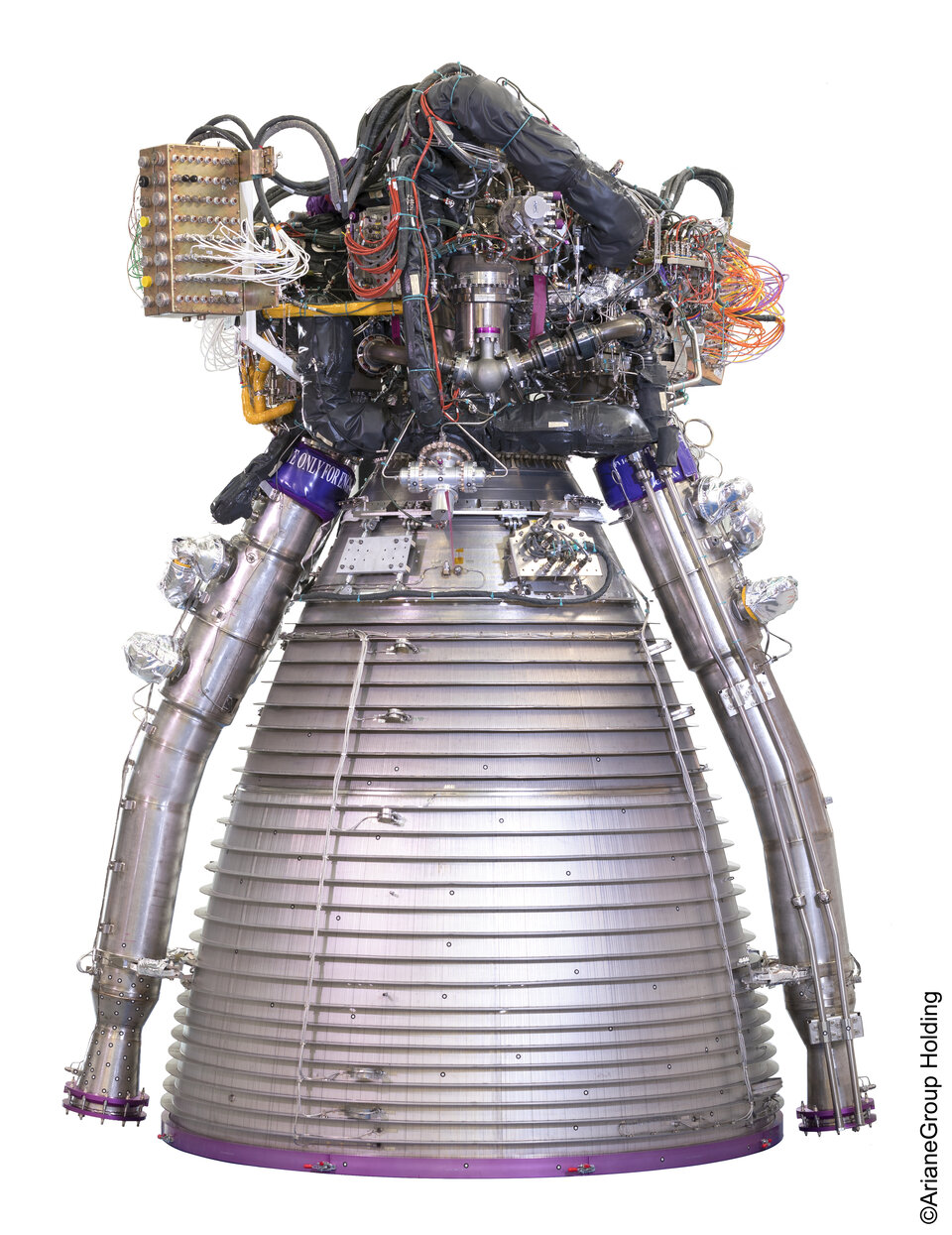
To launch the rocket and navigate payloads to the correct orbit, Ariane 6 uses three engines. Along with its boosters, the Vulcain 2.1 engine on the main stage fires during liftoff to take the rocket into space. After this, the Vinci engine, located on the upper stage, takes over and steers its payloads to the correct orbit.
Nammo Ireland supplies components for both Vulcain 2.1 and Vinci. The 11 structural assemblies they contribute provide support and connect the main operating components to the engine core. The company also manufactures dry-film lubricated spherical bearings that are used in the supports.
Located near the Dublin airport, Nammo has a cleanroom that allows assembly, integration and testing of the components. This testing ensures the components can withstand the high stress and thermal shock of ignition and flight, allowing Vulcain 2.1 and Vinci to operate from liftoff through to delivery of the last payload. The company is working on its own space thruster for satellites that recently passed its first hot-fire test.
Eyes in the sky
Réaltra provides ‘eyes in the sky’ for Ariane 6. specialising in space electronics, Réaltra builds the Video Telemetry Kit known as VIKI, that delivers the live video feed throughout the launcher mission via six cameras located on-board Ariane 6. The system is independent from Ariane 6’s systems so it doesn’t take processing power or data transmission overhead from the rocket, providing the full high-definition video here:


Access the video

In addition to VIKI, Réaltra also built a Global Navigation Satellite System receiver known as GEKI that flew as an autonomous experimental system on the inaugural launch of the Ariane 6 on 9 July 2024. This flight validated GEKI’s ability to provide precise positioning and timing measurements from space.
Instead of developing its systems from scratch, Réaltra modifies commercial off-the-shelf electronics for space applications. This makes the process faster and cost effective. The systems are extensively tested to ensure they can withstand the stress of liftoff and function in space.
Réaltra’s work with ESA doesn’t end with Ariane 6. The company is contributing components to the PLATO mission that will keep the telescopes at a stable temperature to within a few mK, as they search the skies for terrestrial exoplanets. Closer to home, Réaltra will be providing their video kit and networking devices for the first demonstration of reusable rocket stage Themis, through the SALTO consortium under the EC Horizon programme.