The spacecraft
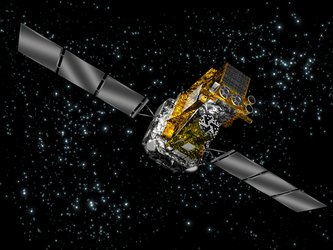
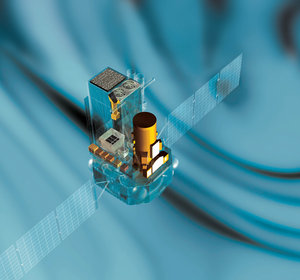
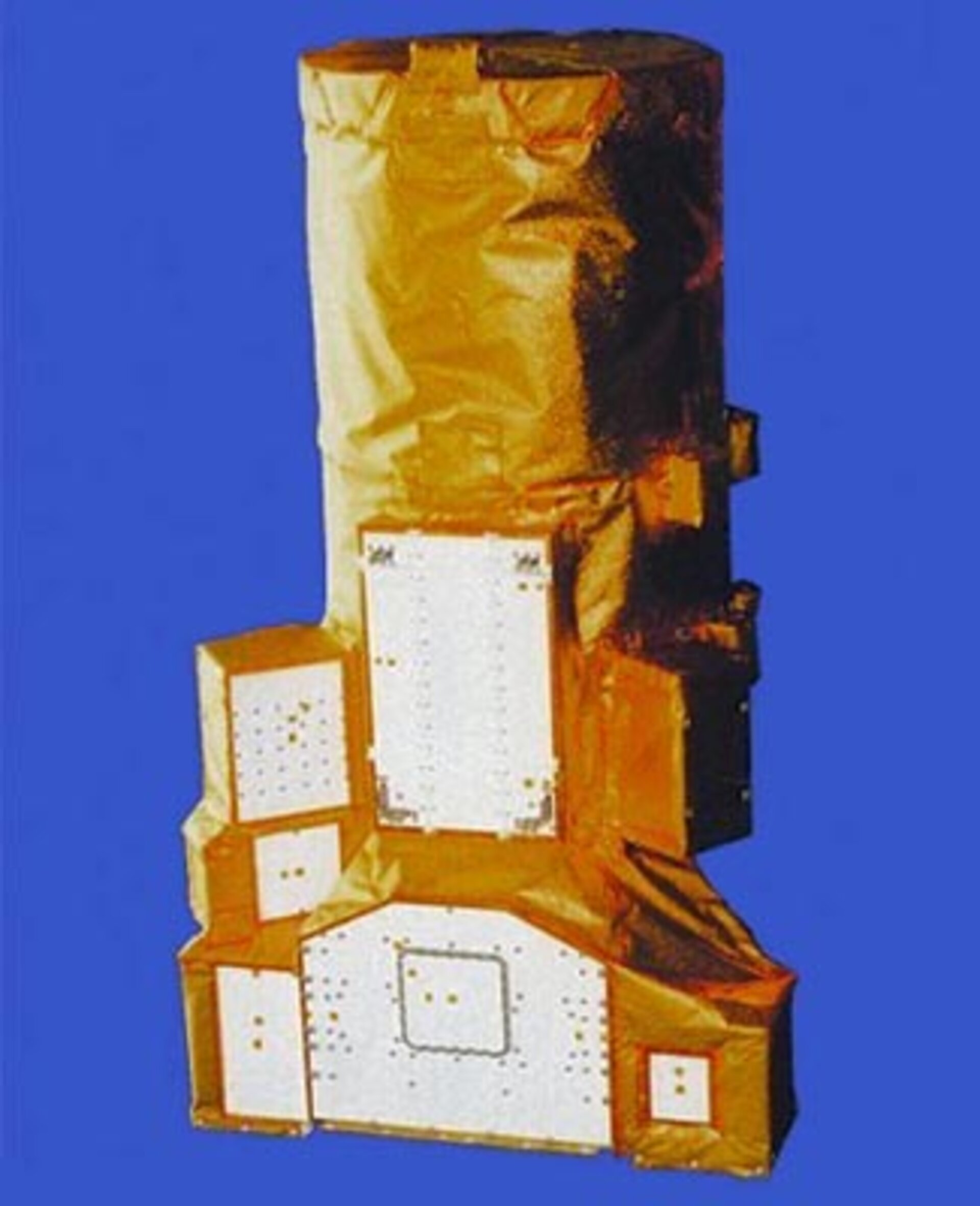
Standing 5 metres high and more than 4 tonnes in weight, the Integral spacecraft was impressive. The satellite had two main parts. The service module was the lower part of the satellite and contained all spacecraft subsystems. The payload module was mounted on the service module and carried the scientific instruments.
To limit the costs of the mission the service module is a rebuild of the one developed for XMM-Newton, ESA's X-ray Multi-Mirror satellite. It is a closed structure made of composite material, a combination of aluminium and carbon fibre. It houses the satellite systems, including solar power generation, power conditioning and control, data handling, telecommunications and thermal, attitude and orbit control.
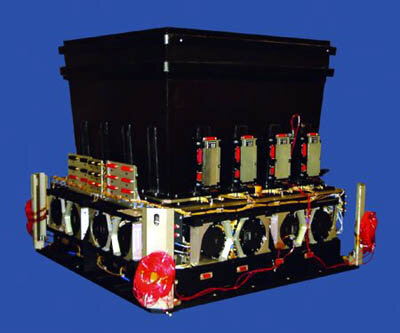
The four scientific instruments of Integral's payload module weighed 2 tonnes, making this payload the heaviest ever placed in orbit by ESA. This was due to the need to shield the detectors from background radiation in order to make them sensitive. There were two main instruments detecting gamma rays. An imager gave the sharpest gamma-ray images so far. A spectrometer gauged gamma-ray energies extremely precisely. Two other instruments, an X-ray monitor and an optical camera, helped to identify the gamma-ray sources.
There was a special support structure 4 metres above the platform with the instrument detectors. This carried so-called 'coded masks'. These metal masks produced the images of the gamma-ray sources. Since gamma rays cannot be focussed by conventional lenses or mirrors, Integral had to use an entirely different technique to make its images, known as the coded mask technique. A coded-mask telescope is a pinhole camera with not just one but many pinholes.